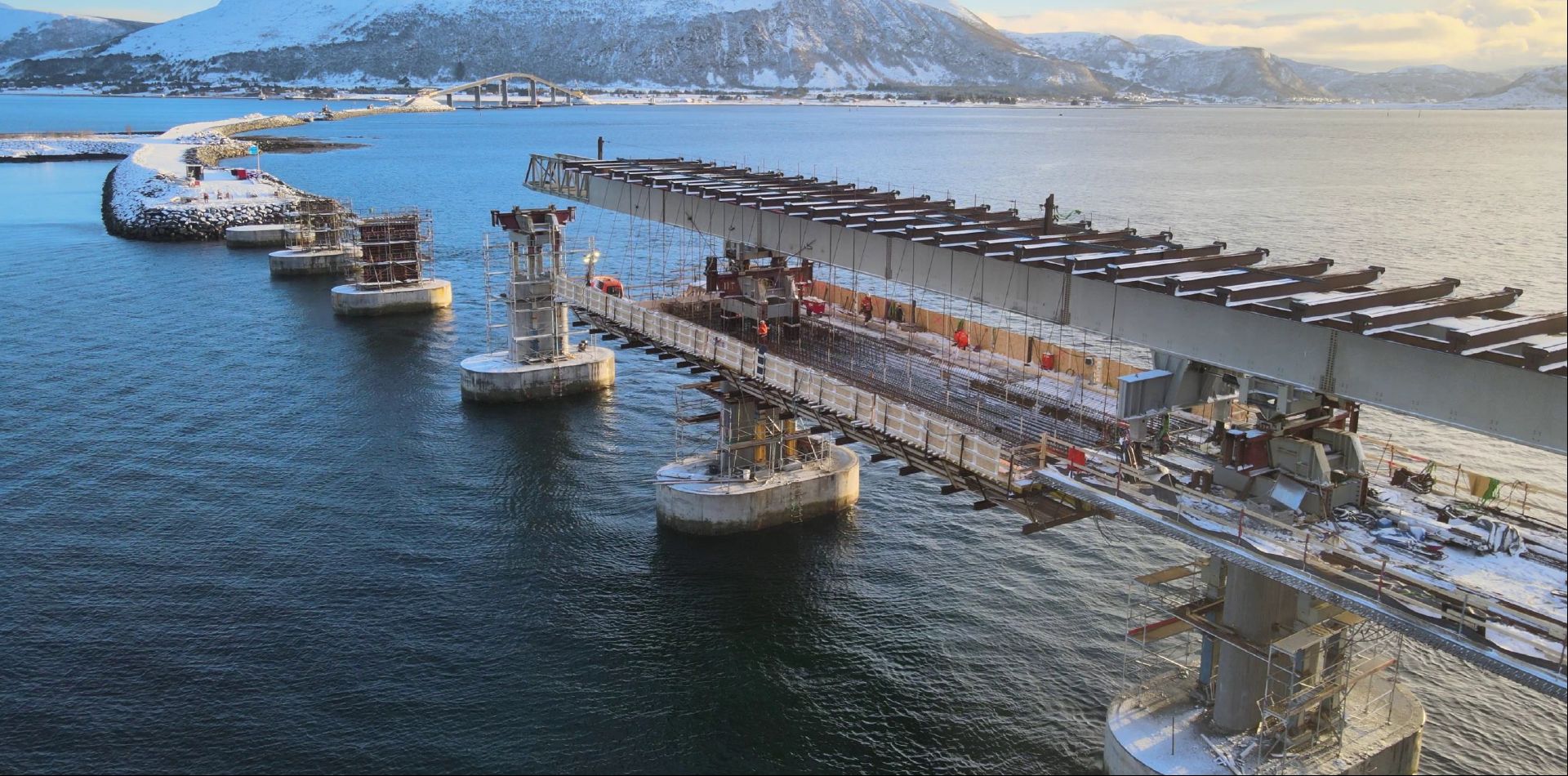
Overhead Form Traveller for the Nydal bridge

Overhead Form Traveller Nydal bridge

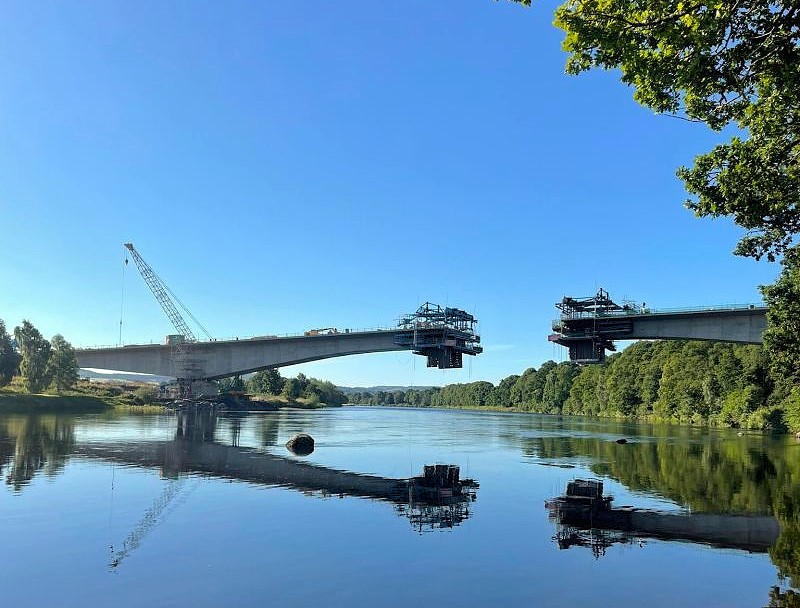
The Nydal bridge – Nydalsbrua

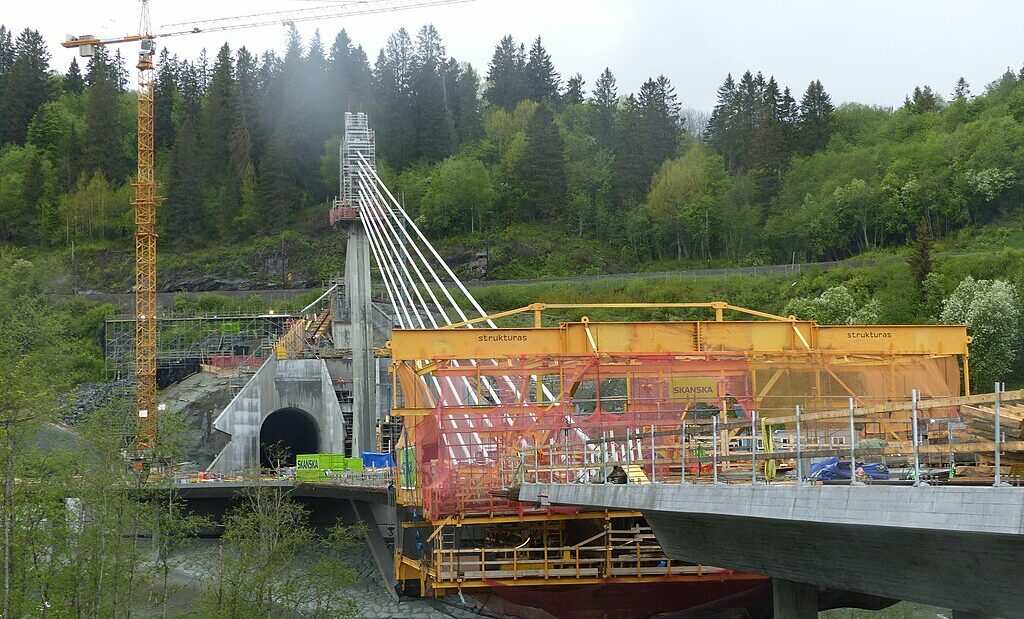
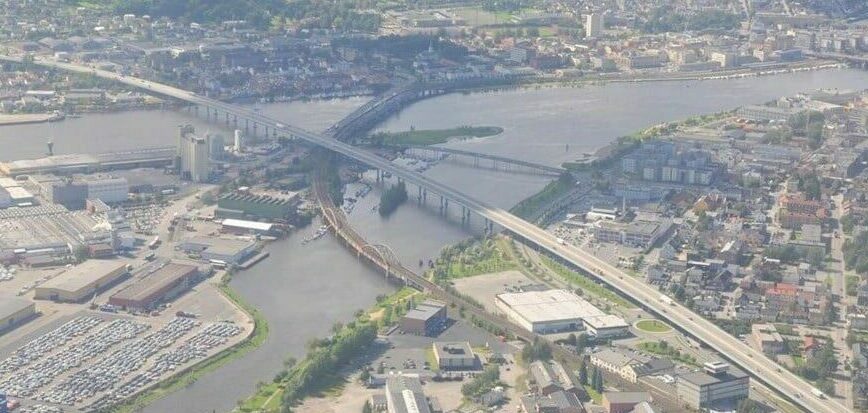
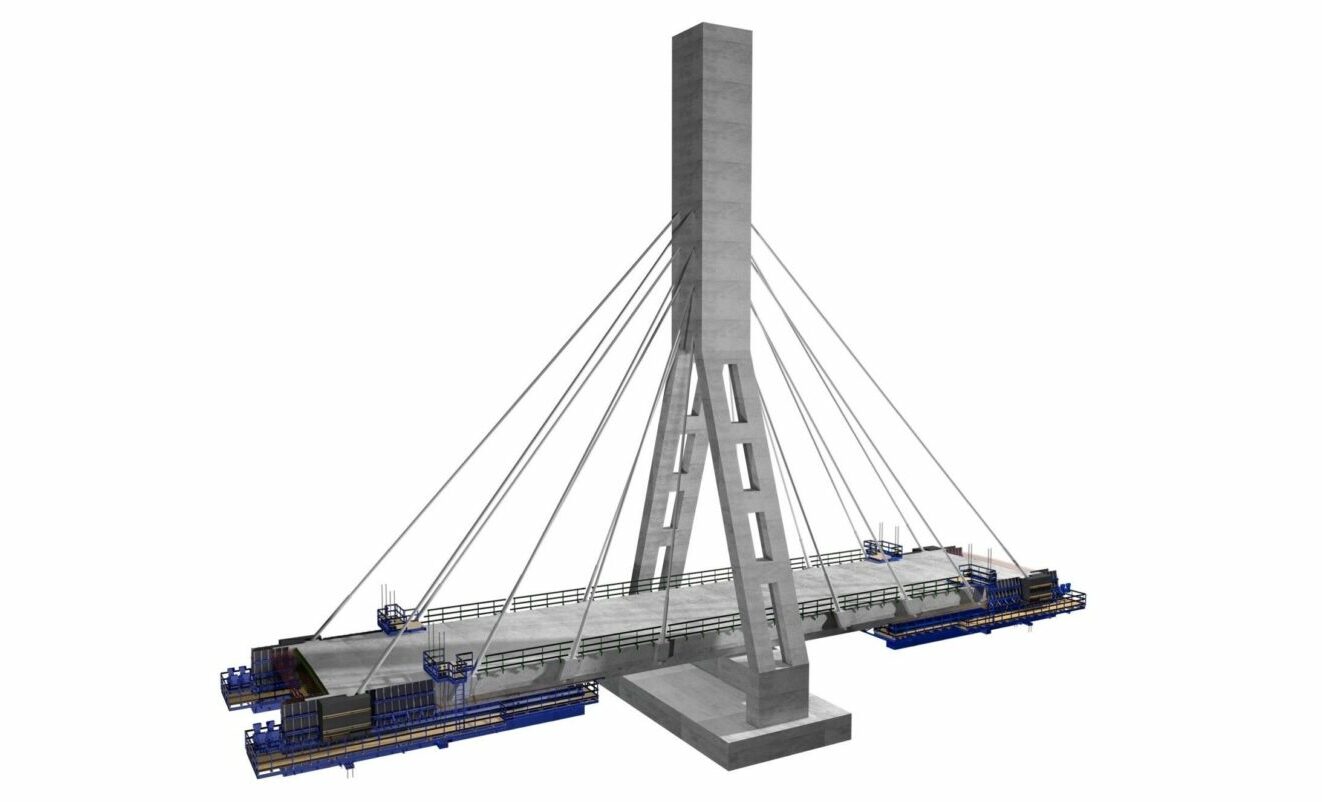
Roundabout transition to the cable-stayed bridge.

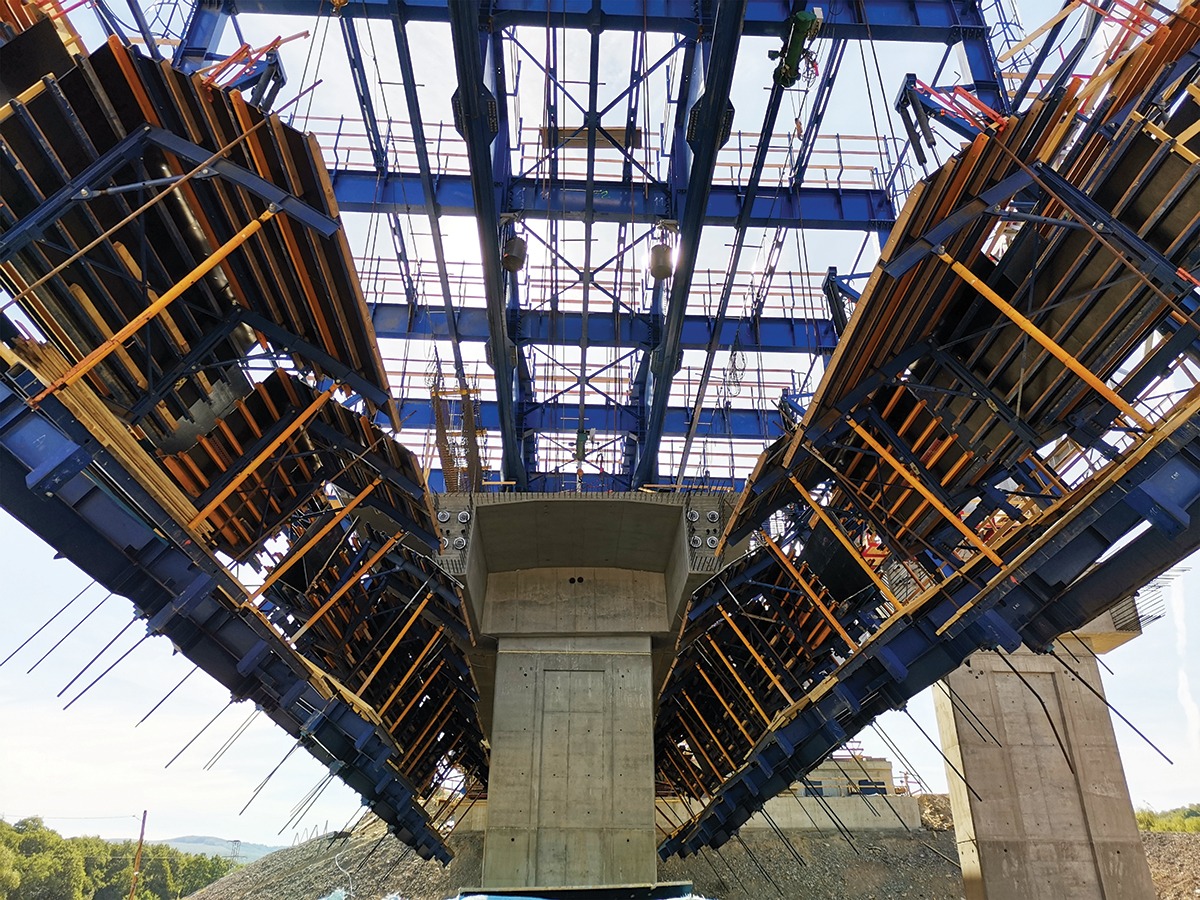
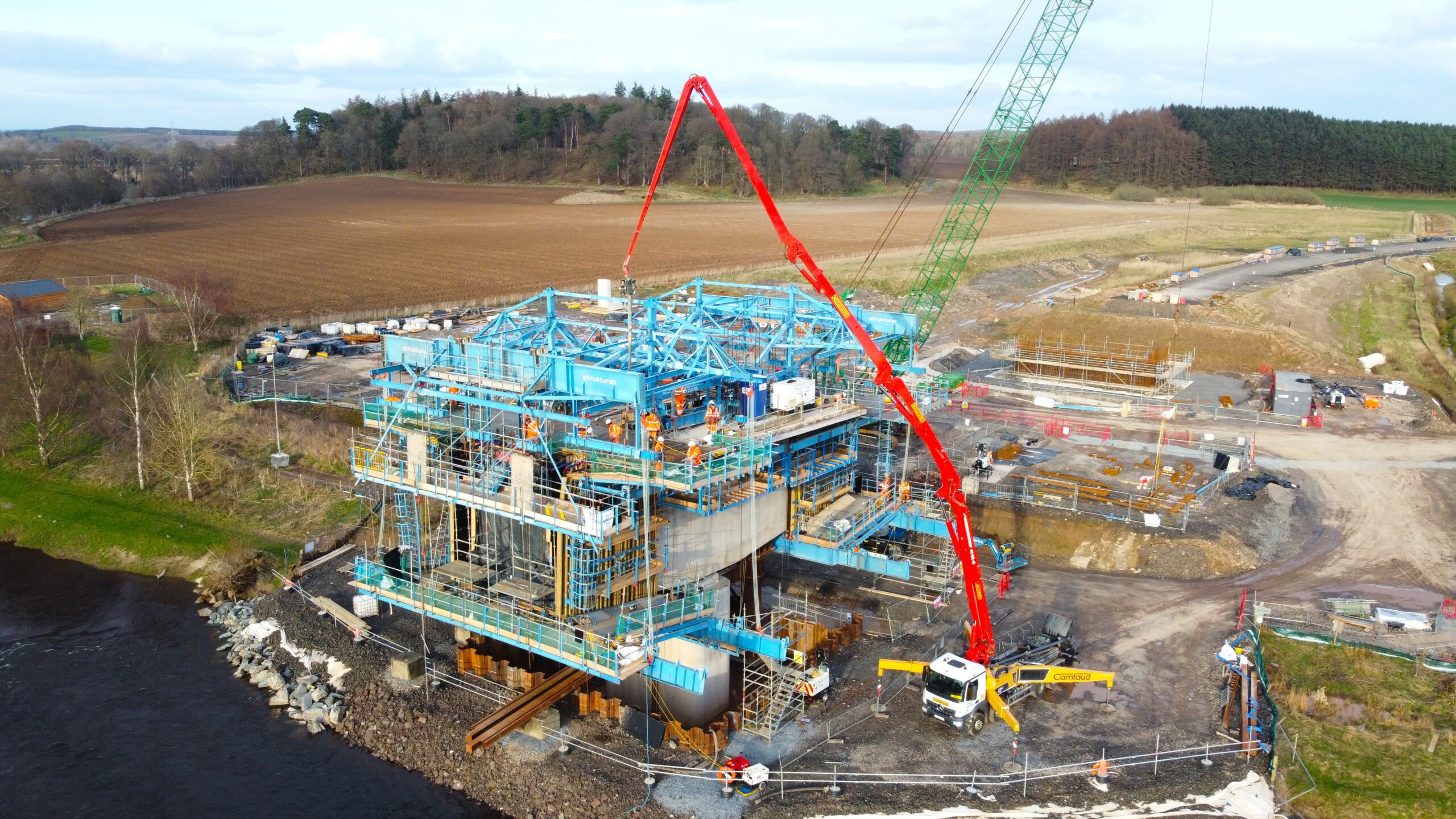
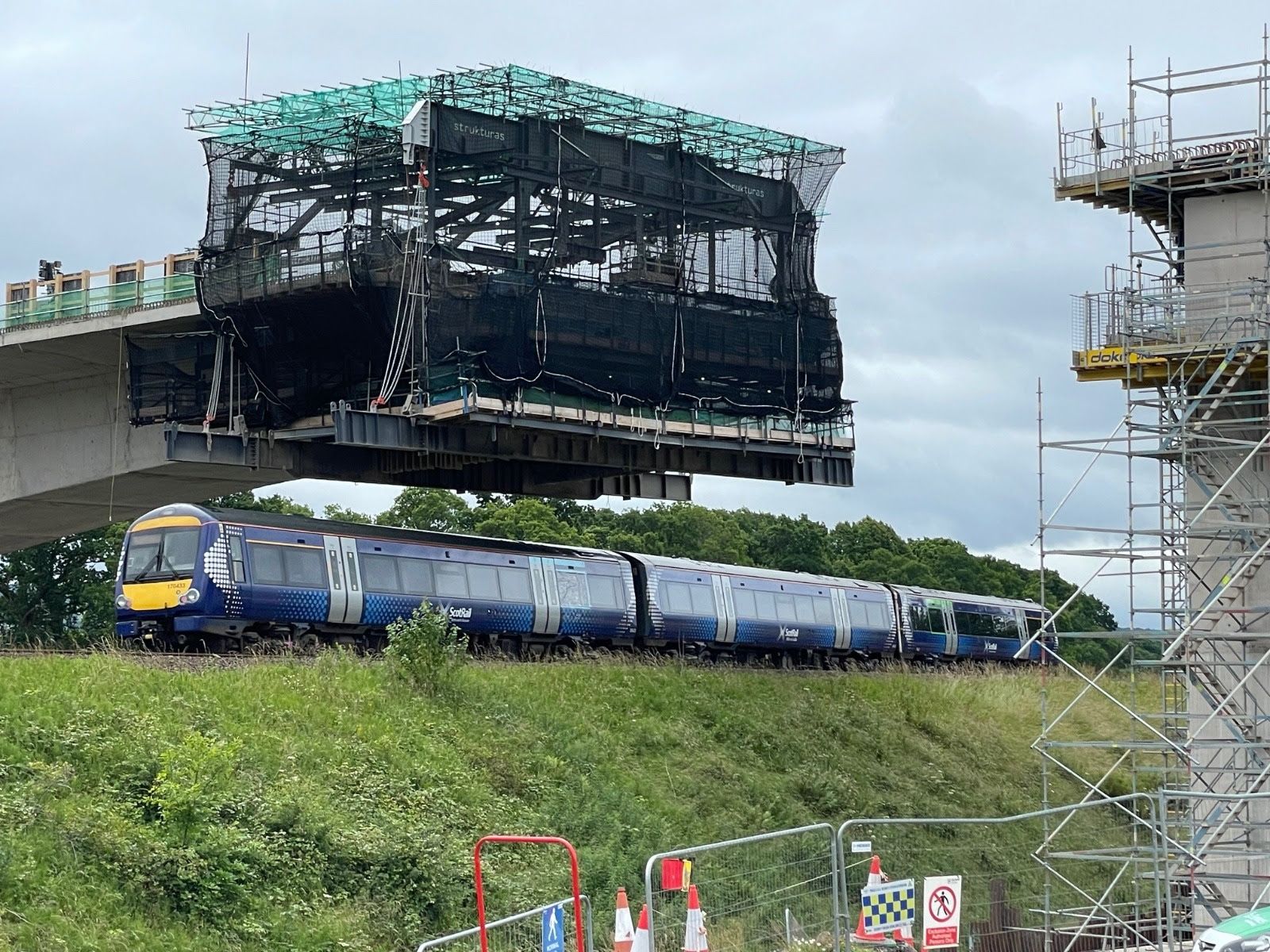
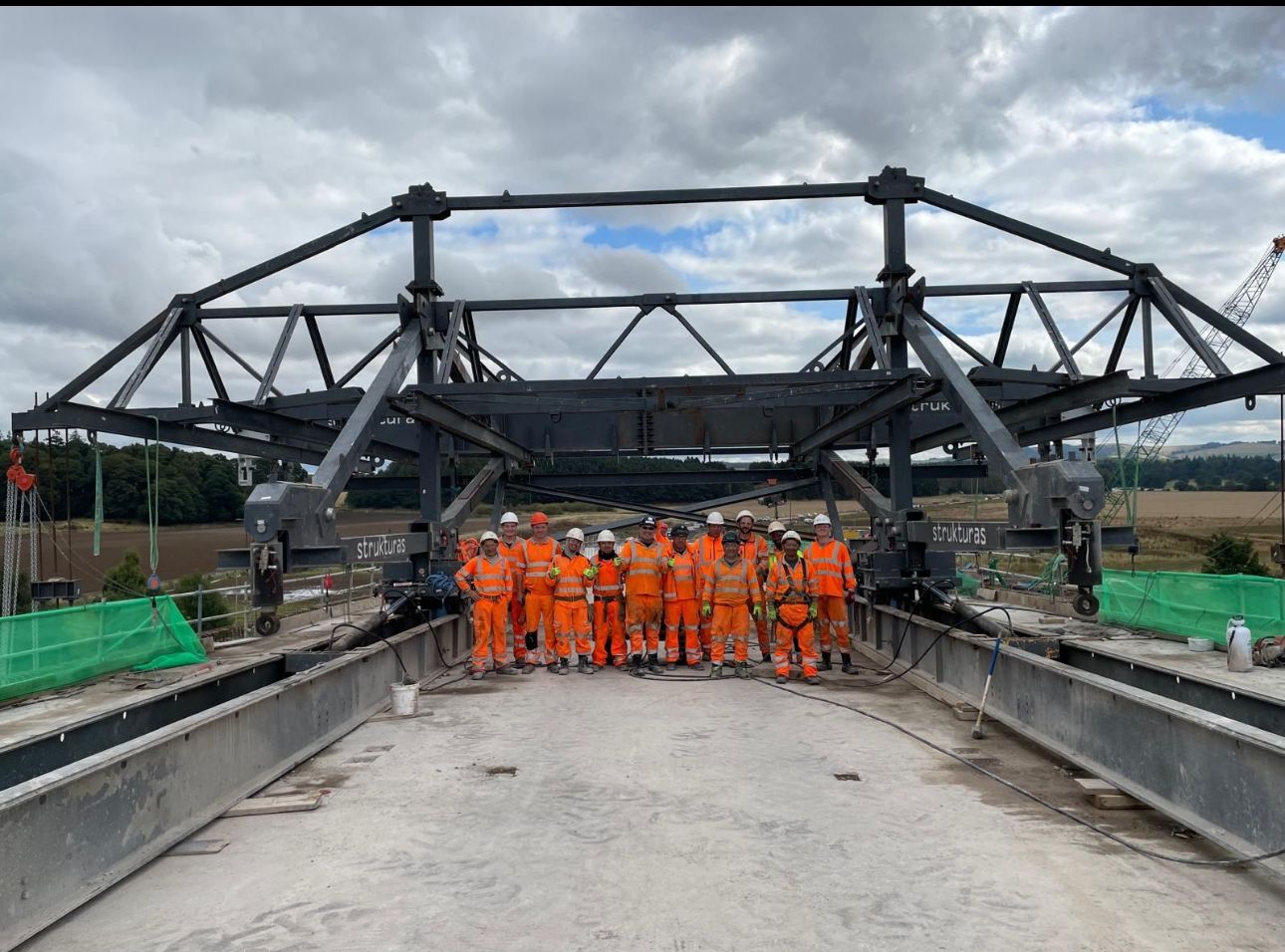
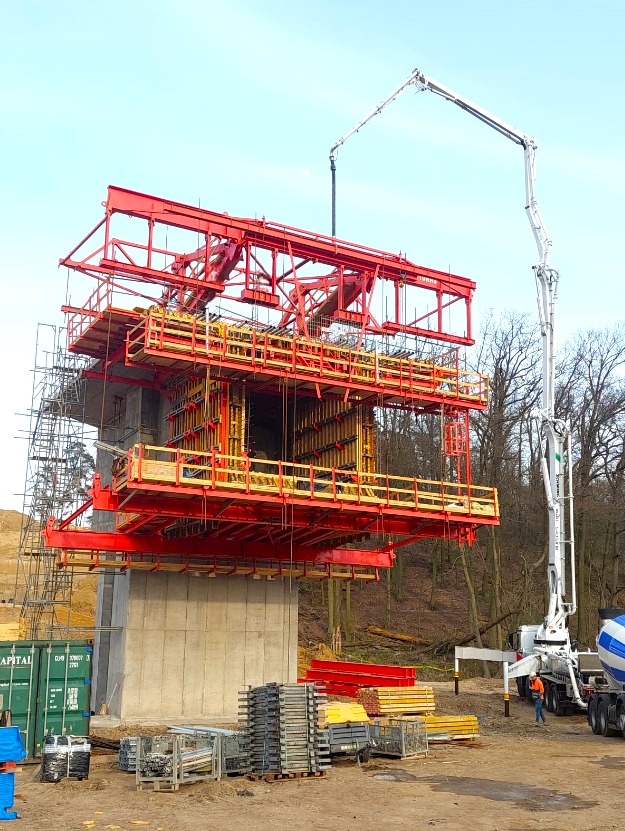
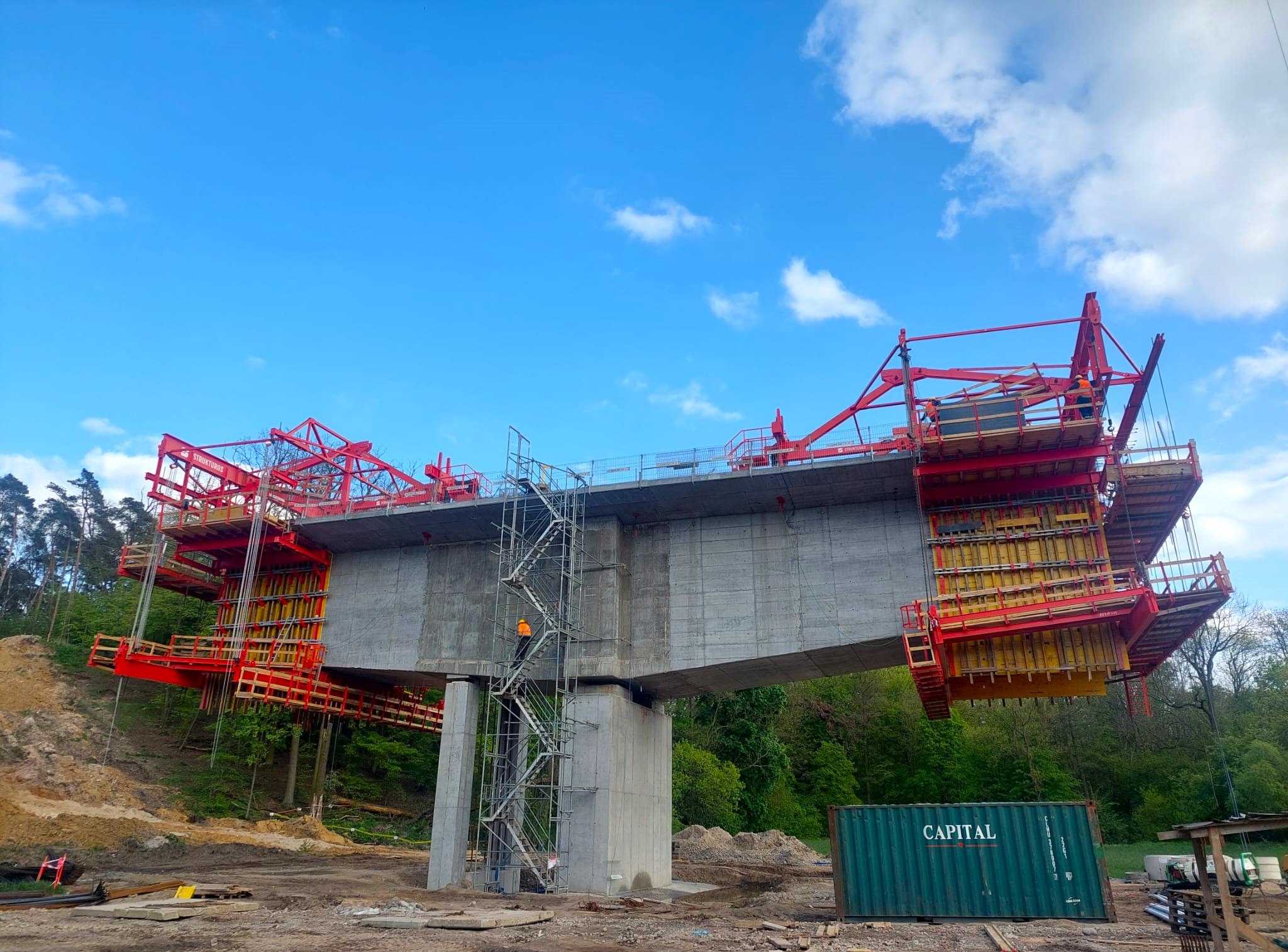
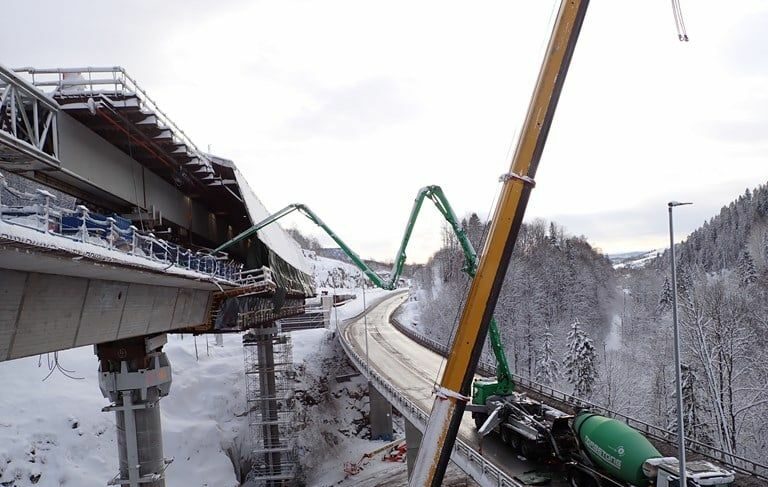
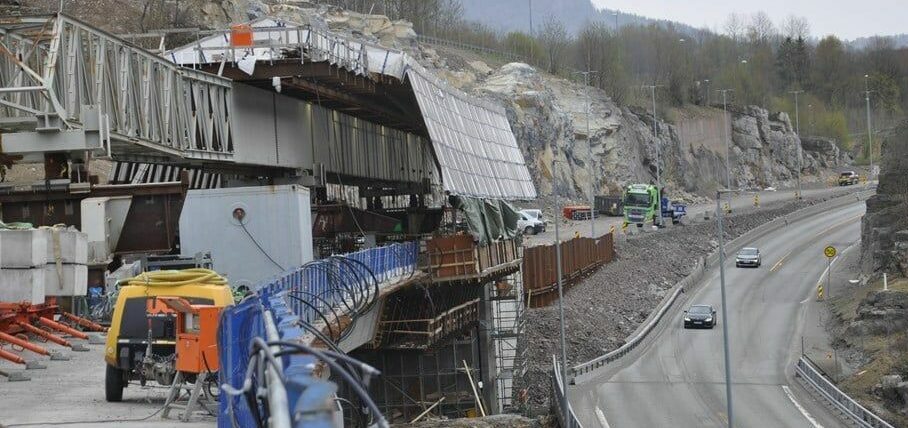
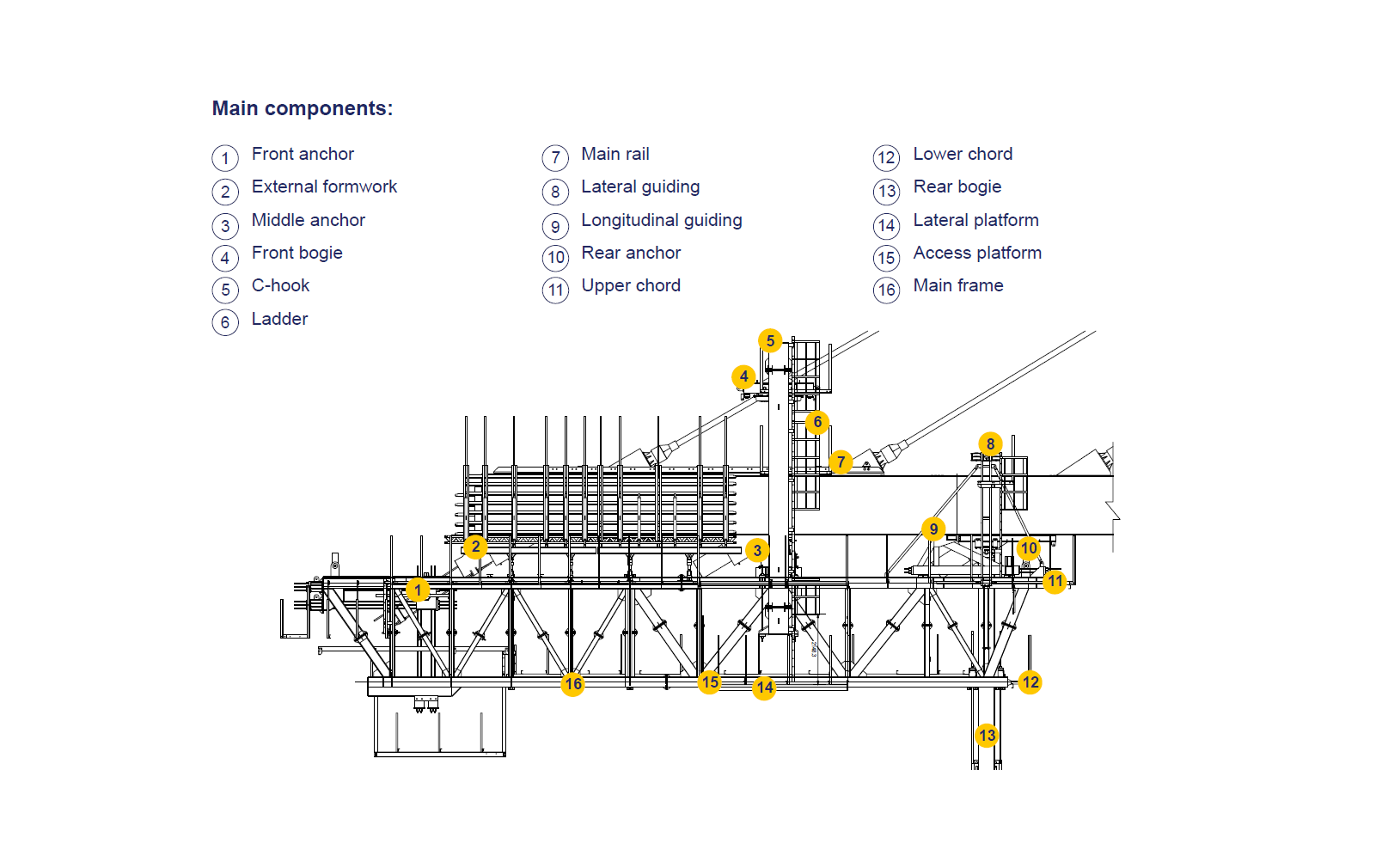
Overhead Form Traveller with segment length of 8,50m.

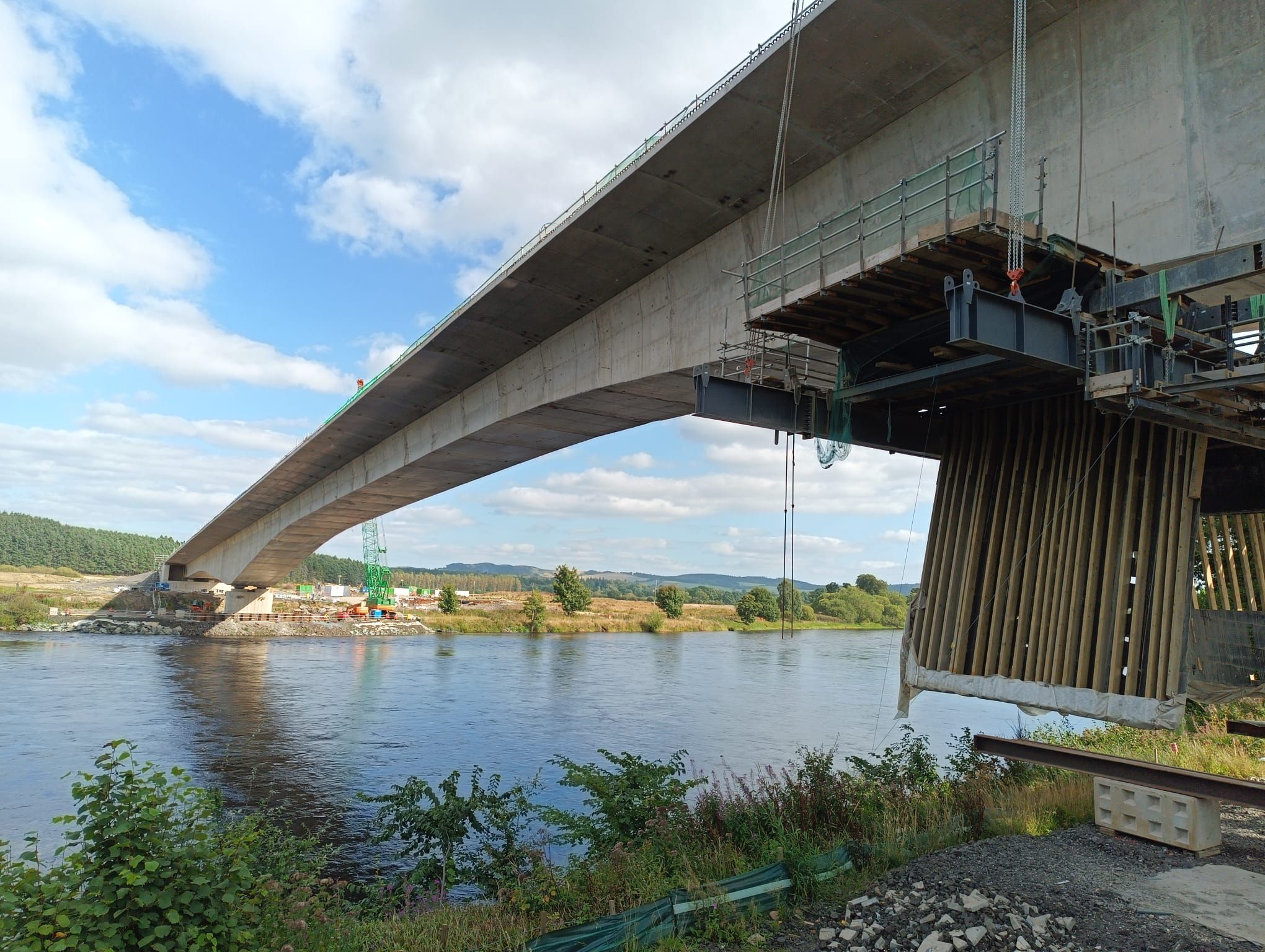
The Nydalsbrua is a 183-meter long cable-stayed bridge over the Nidelva in Trondheim, which has replaced the existing Sluppen bridge.

Nydalsbrua is the winner of Norwegian Betongtavlen 2023!

Well done Nydalsbrua project team!

Skanska is the bridge’s contractor, Aas-Jakobsen AS designer and Plan arkitekter AS have designed Nydalsbrua.

The Statens vegvesen – Norwegian Public Roads Administration was the client.

Photo credits to Grzegorz Gucwa from Skanska team.

To see more projects we have completed with form travellers SEE THIS LINK

If you have a project where you would like us to have a look and make a proposal, feel free to contact our local agent or our head office in Norway. CONTACTS  

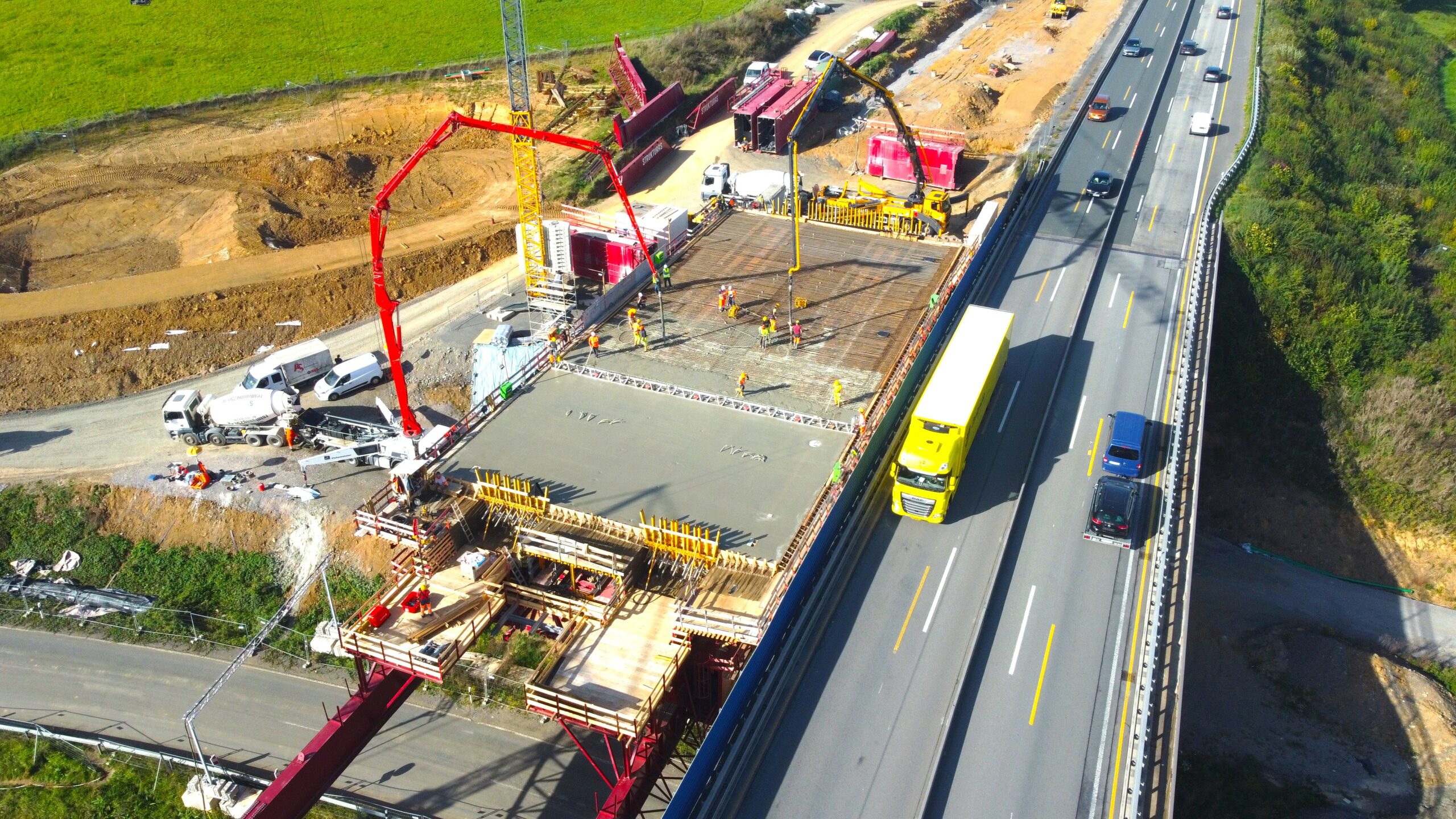
Span by span construction of the new TB Heubach bridge

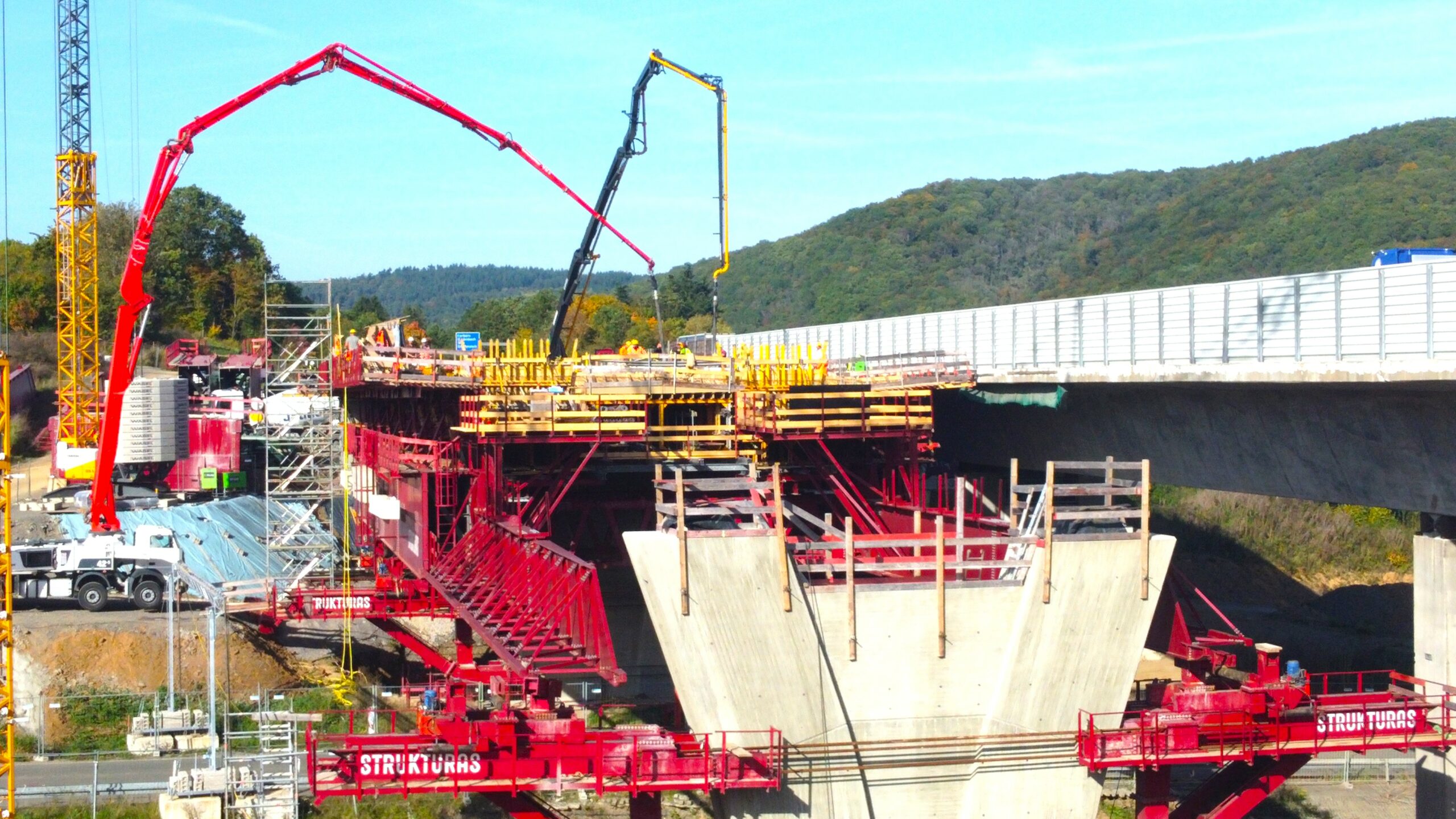
Strukturas MSS Heubach new bridge construction
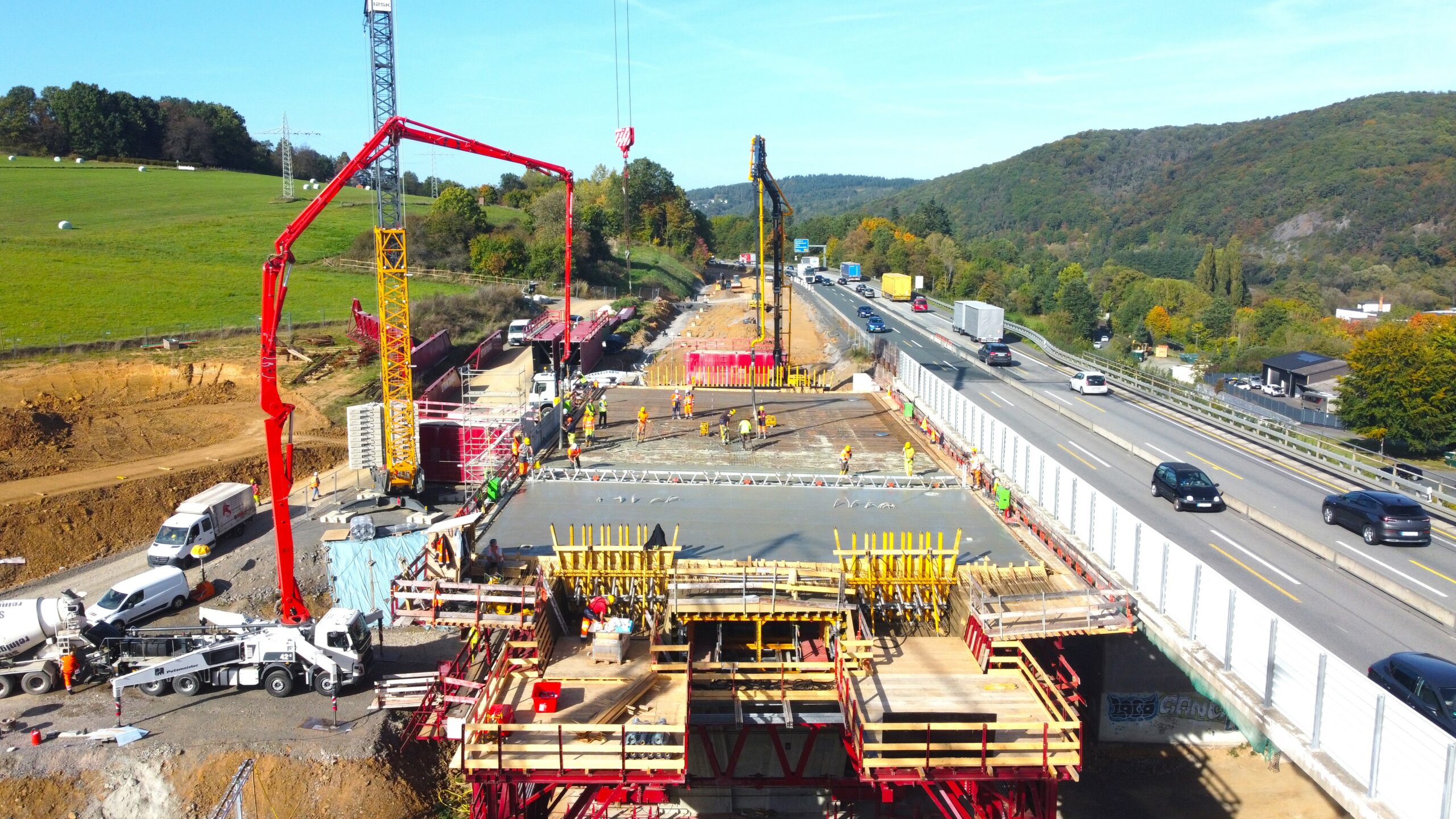
The Heubach valley bridge consists of two parallel structures, which were demolished and rebuilt in two construction phases.
 
Demolition of the old bridge and the construction of the new Heubach bridge was awarded by Die Autobahn GmbH des Bundes to the contractor Implenia.
Movable Scaffolding System ensures the minimal intervention to existing infrastructure.
Using MSS for new construction allows the existing highway and the road bellow to remain open throughout most of the construction period.
After finished demolition the same MSS is also used for the construction of the new TT section decks. As a result this approach saves time and resources, by making the construction process more efficient.

The MSS installation works was carried out by professional site team from Strukturas as.

Highlights & Facts:

Max Span: 48,0m
Max MSS Span: 39,1m
Weight of the concrete bridge: Approx 426 KN/m
Width Of Bridge Slab: 18.3m
Min. Hor. Radius: R= 2500m
Max Crossfall: 4.53%
Max Long Slope: 0,63%
Deflection of MSS: MAX L/400

The replacing of old bridge superstructures with MSS is an effective and safe technical solution.

Here is the link to the blog post about the demolition of the same bridge using the same MSS

See the video below and do not hesitate if you wish to consult about your bridge!

STRUKTURAS

WE MAKE IT SIMPLE!

First segments of balanced cantilever bridge are casted at Gostyn Bypass in Poland

Gostyn, Poland, Form Traveller

We are thrilled to share that first segments of balanced cantilever bridge are casted at Gostyn Bypass in Poland.

On behalf of Strukturas project team leaded by Maciej Masłowski we are sending our congats to Gostyn Bypass MGP/PZDd-14 bridge reinforced concrete team leaded by Alicja Kosz-Koszewska from G&M Sp. z o.o.
The consortium of MIRBUD SA and KOBYLARNIA S.A. is the General Contractor.

Strukturas has a great partner Hünnebeck by BrandSafway Poland team, leaded by Daniel Hutnik.

It’s good to feel a strong support and see great performance in designing and supplying formwork for bridge foundations, piers and hammerheads.

Information about the Form Traveller delivered to this project:
Max. Segment Length: 5,00 meters
Max. Segment Width: 11.78 meters
Max. Segment Weight: 175 tons with 5.0 meters
Max. Longitudinal Slope: 0,7%
Max. Crossfall: 2,0%

Facts:
✅Assembly of FT is done by Strukturas site team
✅ Hammerhead was asymmetrical with temporary supports on one side – asymmetric FT start
✅ Concreting segments and launching FT is symmetrical on each pendulum
✅ Strukturas is using Hunnebeck H20 wooden beams for external FT formwork.
✅ Besides FT steel structure Strukturas is supplying the client with all wooden parts too

STRUKTURAS
WE MAKE IT SIMPLE!

If you would like to learn more about using form travellers for your bridge, send us an email la@strukturas.no and we will contact you as soon as possible!

Strukturas Overhead MSS for Bridge SO 203

SO 203 Motorway bridge over Malši 

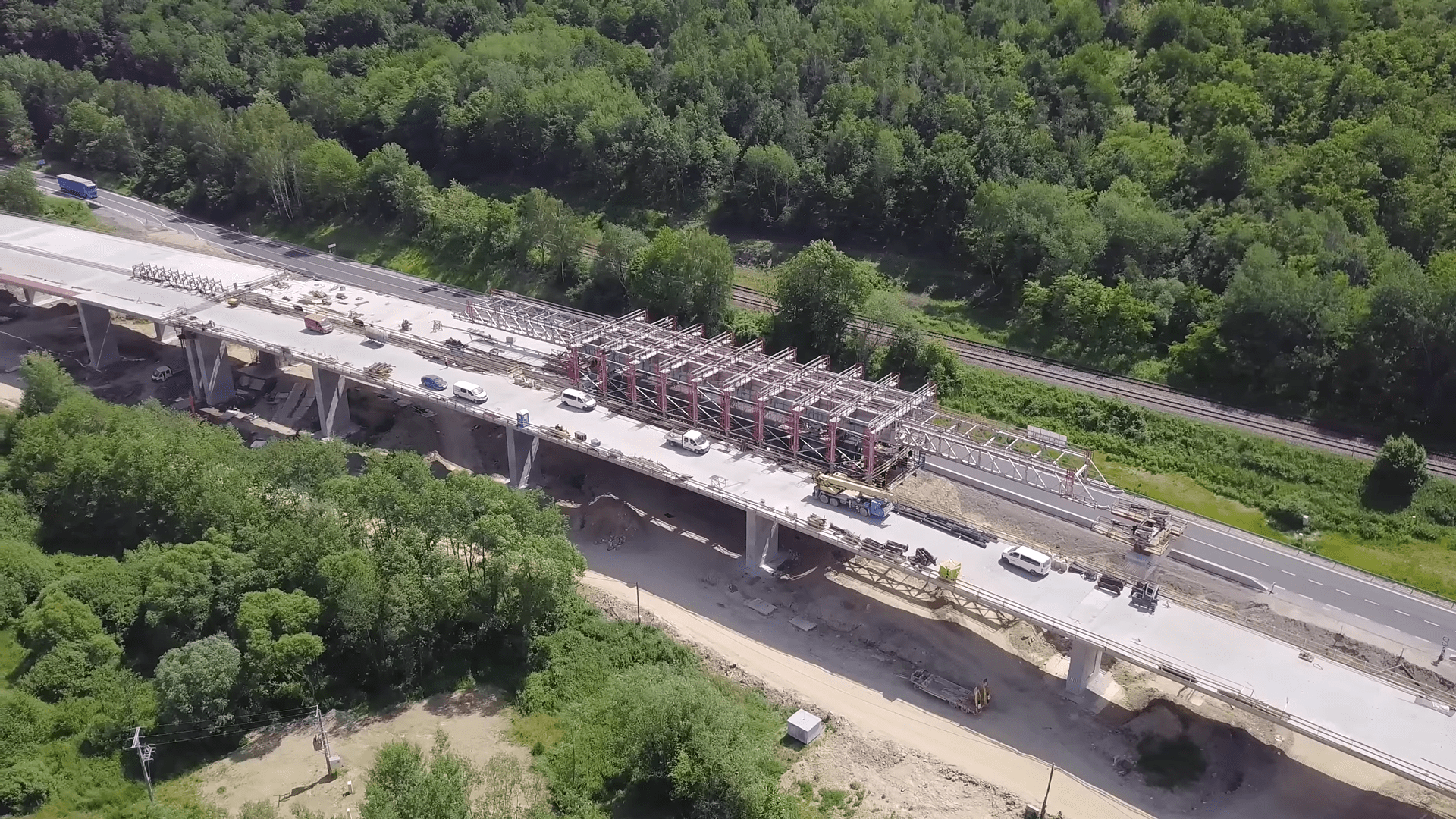
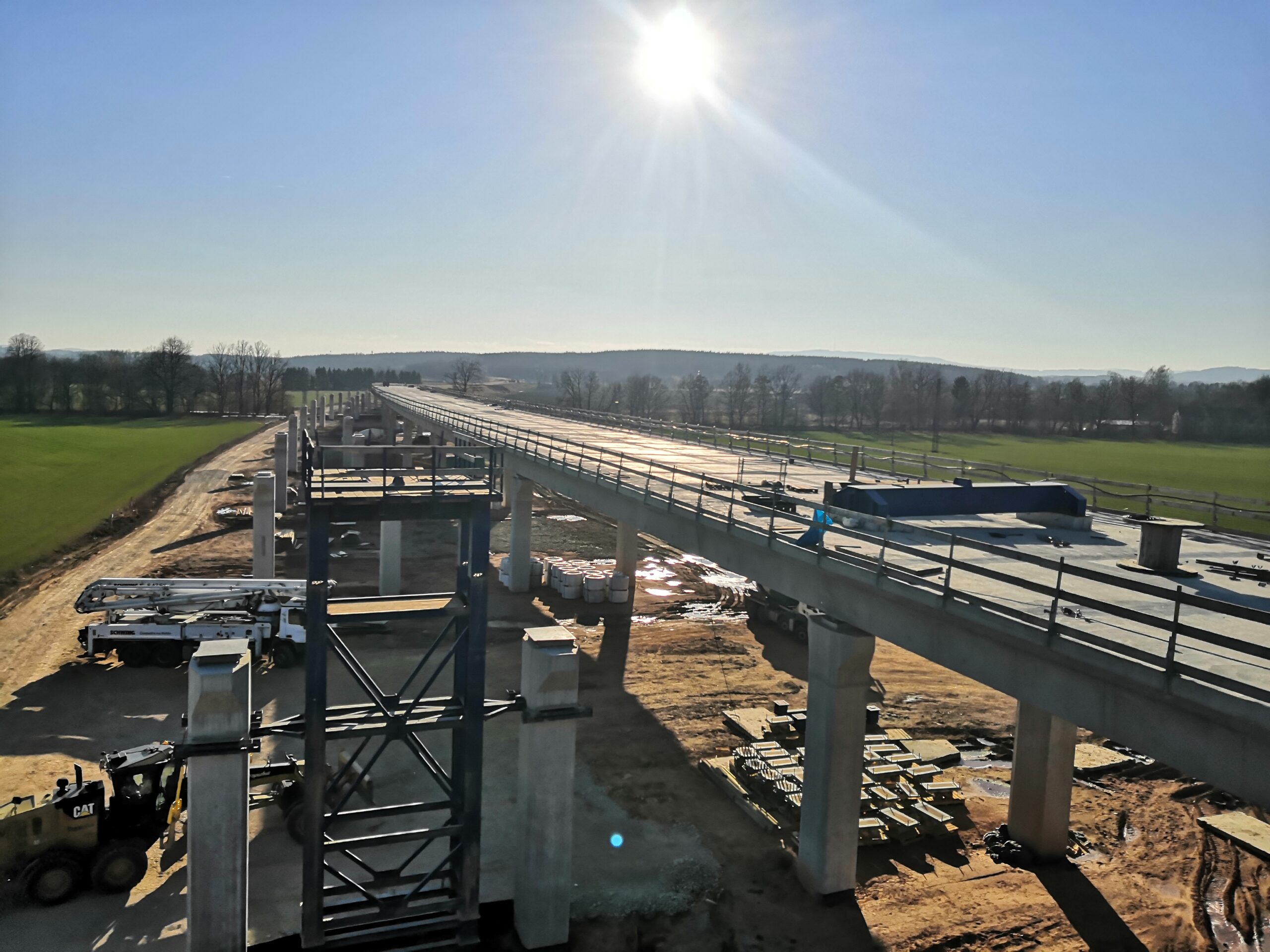
800 m bridge was designed as a flyover with 19 spans.
It contains 2 parallel decks with the width of 14,4m.
The height of the bridge above the ground is 10 m at its highest point.  

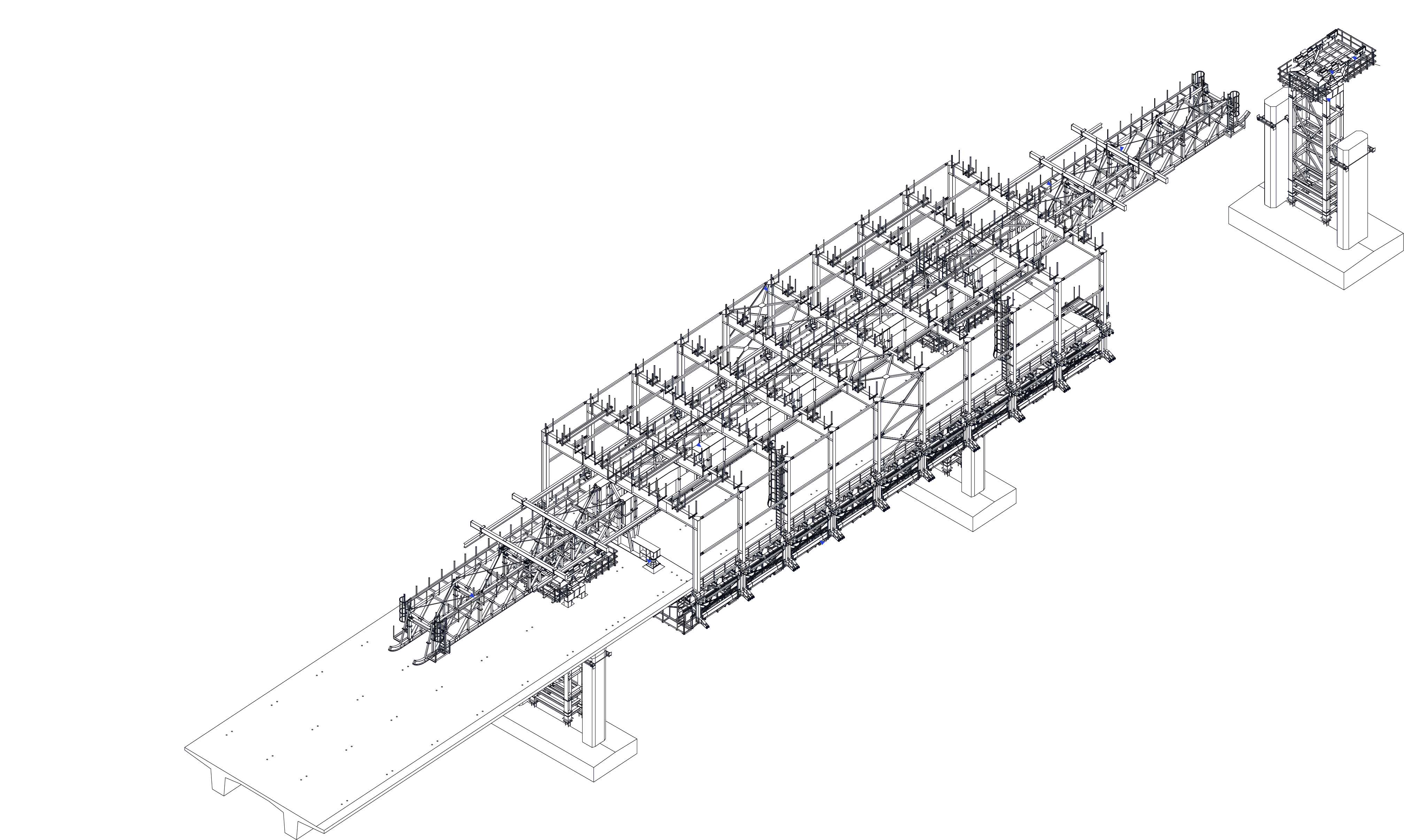
Strukturas Overhead MSS named SO 203 was used for construction of long deck of the bridge project D3 in the Czech Republic, close to Ceske Budejovice.

Highlights & Facts:
  • Max Span: 42,0m
  • Max MSS Span: 35m
  • Weight of Superstructure: Approx 28,6t/m
  • Width Of Bridge Slab: 14,4m
  • Min.Hor.Radius: R= 2700m
  • Max Crossfall: 2,5%
  • Max Long Slope: 0,7%
  • Deflection of MSS: MAX L/400

Client: Doprastav, a.s.

The Movable Scaffolding System was designed as an overhead type with two main I beams. Opening of the formwork and launching the MSS is was ensured by hydraulic cylinders.
The entire steel structure weighing 525 tons was manufactured in China, in a certified factory, and was transported to the construction site in 12 meter containers.
The complete production of the MSS took three months, and its subsequent transport across half the globe took about five weeks.
Assembly took place completely directly on the construction site using 30,000 high-strength bolts.
Typical span by span concreting cycle of 42 m length bridge spans takes 14 days.

MSS SO 203 - 3D model picture
STRUKTURAS Overhead MSS SO 203 at concreting first span second deck of project D3 close to Ceske Budejovice in the Czech Republic.

The story of legendary MSS Drammensvogna

The story of legendary MSS Drammensvogna – 50 years in action 
 
Last week we signed one more MSS redesign contract with Skanska, who owns legendary MSS Drammensvogna.
This time it shall be used at bridge Vadløkkjbrua on the E6 south of Trondheim, Norway.
 
Vadløkkjbrua will be the 19th project made with this MSS!
 
MSS Drammensvogna, one of the first MSS was builded in 1973 for Norway the motorway bridge in Drammen, Norway.
The E18 motorway bridge in Drammen is a four-lane girder bridge on the E-18 that crosses the outlet of the Drammen river between Brakerøya and Bangeløkka. The bridge has free spans of up to 60 meters and a sailing height of up to 12 metres.
Until now it is the longest bridge in Norway – 1,890 meters!
Movable Scaffolding System - MSS
Revolutionary MSS technology has proven its productivity.
The contractor for the bridge was Ingeniør Thor Furuholmen A/S, one of the largest companies in Norway at the time. They later merged with Ing. F. Selmer A/S to Selmer – Furuholmen AS, which today is Skanska Norge AS.
In collaboration with the consulting company Taugbøl & Øverland A/S (now COWI), the MSS was designed and put into production.
Construction work began in the autumn of 1973. The span by span casting of the bridge deck was carried out with a newly developed type of MSS, 131 meters long (800 tonnes weight), which enabled full casting at a speed of up to 100 meters of bridge per 14 days. Bridge deck has been casted 4 weeks before end of construction schedule.
 
Since that time the MSS Drammensvogna has been redesigned for many bridge projects in Nordic countries as underslung and overhead MSS.
On the engineering side, competence on the equipment has been maintained internally at Skanska, and there has also been good cooperation with for the consulting with us –  company Strukturas as.
 
All the projects accomplished with the Drammensvogna MSS:
1. E18 Drammen Drammensbrua 1973-75
2. E39 Kristiansand Gartnerløkka bridge 1978
3. Stockholm Johanneshov Bridge 1981-83
4. Strømstad Skee bridge 1986
5. E6 Oslo Lodalen bridges 1986-87
6. Sweden Obbola bridge 1988-89
7. Molde Bolsøy Bridge 1990
8. Skien Menstad bridge 1990-91
9. Askøy Askøy Bridge 1990
10. Storeklubben, Askøy Storeklubben viaduct 1989
11. Troms Dyrøy Bridge 1994
12. Porsgrunn Frednesbrua 1994-95
13. Gardermobanen Mork/Nessa/Kvisldalen 1995-96
14. Sykkylkven Sykkylvsbrua 1999-2000
15. E18 Drammen Parallel motorway bridge 2003-2004
16. E16 Bagn Bagn bridge 2017
17. Nordøyvegen Lauke and Hamnaskjersund bridge 2020-21
18. E16 Bjørum-Skaret Isielva bridges 2022-24
19. Vadløkkjbrua on the E6 south of Trondheim 2024-25
 
Founder of Strukturas Tore Gjølme has followed this MSS since the beginning and will participate also at the 19th project for Drammensvogna. 
He is 78 years old and still going strong!
 
Credits to Statens vegvesen – Norwegian Public Roads Administration

Follow us on social media for more turnkey projects!

 Underslung Form Traveller Ariari Puerto Lleras, Meta, Colombia

Underslung Form Traveller Ariari

Underslung Form Traveller Ariari – Puerto Lleras, Meta, Colombia

Connecting the downtown area of Puerto Lleras with the existing Vista Hermosa county road, known as “Trocha Siete” with a bridge over the Ariari River.
It is a cable-stayed bridge with a length of 270 m, made up of spans of 70 m, 135 m and 70 m and a deck width of 11.6 m. Bridge supported by two pylons approximately 52 m high and 20 m wide at the base.
The superstructure is made up of a concrete slab that is supported on longitudinal and transverse by structural steel beams.
Balanced cantilever construction method of the deck – Cast-In-Situ with Form Travellers.

The Underslung Form Traveller solution can be adapted to different types of bridge decks, such as arch bridges and cable-stayed bridges, leaving enough room to assemble the temporary or final cable stays, and allowing easy launchback to the initial assembly position.
The external formwork of this type of Form Traveller is supported by the main structure, leaving enough room to install the pre-assembled rebar cage. When the rebar cage is pre-assembled, the Strukturas Underslung Form Traveller is the perfect choice.

Highlighs & Facts:

Segment Length: 7,75m
Length of Hammerhead: 19,9m
MAX Segment Weight: 132,7ton
MAX Width Superstructure: 12,8m
Min.Hor.Radius: R=1195m
Max Long Slope: 7,0%
Crossfall: 0%
Deflection of Main Beam: L/400
Critical Wind Speed During Launching: 20,0 m/sec
Critical Wind Speed During Concreting: 32,0 m/sec
Client: CONCREARMADO LTDA.
Project Location: Puerto Lleras, Meta, Colombia

STRUKTURAS
WE MAKE IT SIMPLE !

See the video below and do not hesitate if you wish to consult about your bridge!

TB Heubach Bridge demolition

MSS-Heubach-demolition-second-span-2
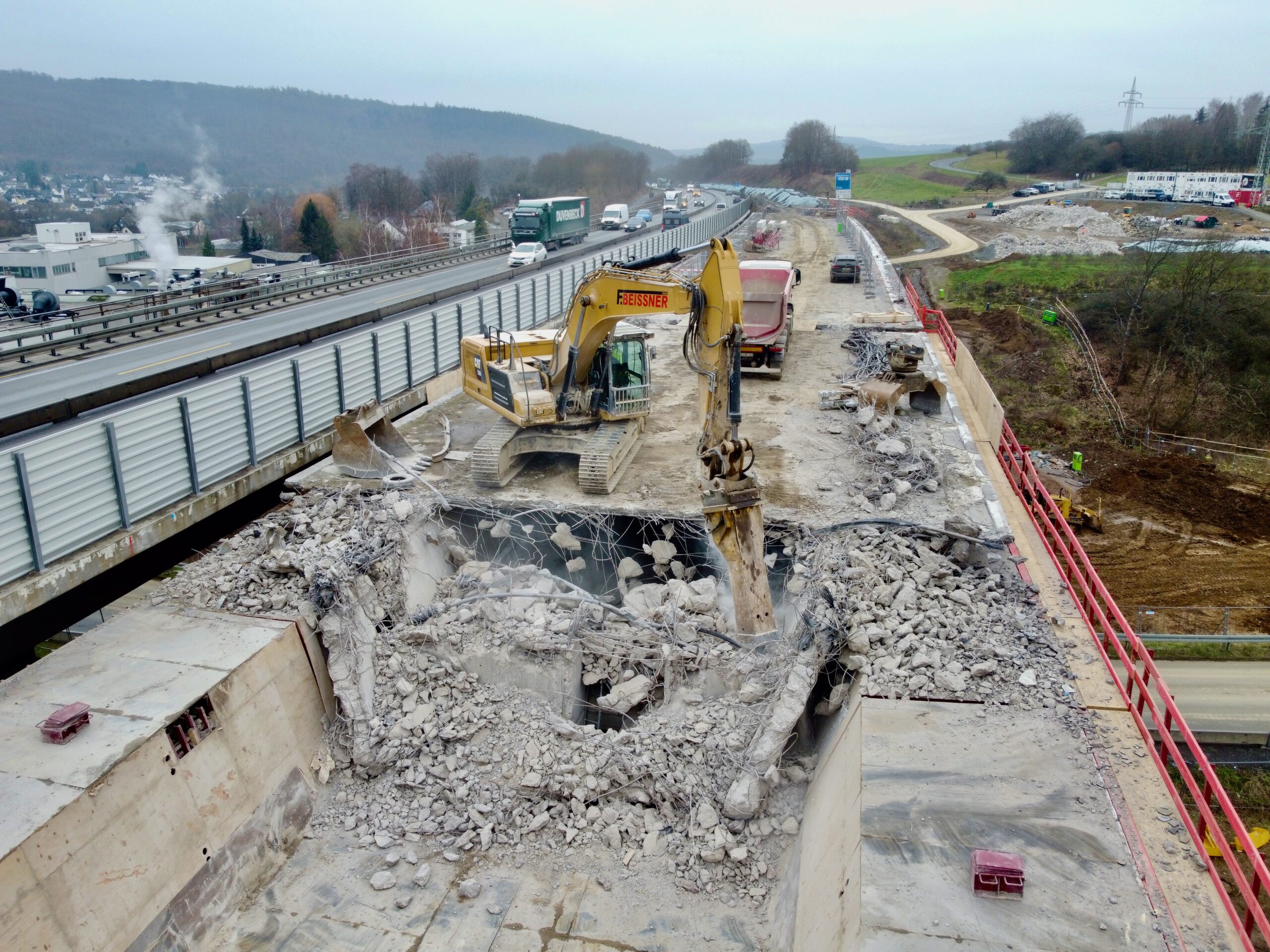
Implenia, a leading construction services company, decided to use an Strukturas Movable Scaffolding System (MSS) Underslung for the demolition of existing concrete decks on the TB Heubach Bridge in Germany.
 
Moreover this same MSS is also used for the construction of the bridge’s new TT section decks. 
 
The Heubach valley bridge consists of two parallel structures, which will be demolished and rebuilt in two construction phases.
Bridge info:
Year of construction of existing building: 1968
Length: 184 meters
Width: 16.5+16.5 meters
Bridge spans: 30,6 + 37,5 + 45 + 37,5 + 30,6 meters
Max. height above ground: 18 meters
 
Demolition of the old bridge and the construction of the new Heubach bridge was awarded by Die Autobahn GmbH des Bundes.

MSS at assembling final stage

Deck demolition

The Strukturas MSS solution is particularly innovative because it allows the conversion of the MSS formwork from a box section, which is used during the demolition phase, to a TT section, which is used during the construction of the new bridge decks. This approach saves time and resources, making the construction process more efficient.
The challenging conditions on the job site made the assembly of the MSS particularly demanding, and the Strukturas MSS assembly team had to plan and execute the operation to the best of their ability.
Movable Scaffolding System ensures the minimal intervention to existing infrastructure.
Using MSS for demolition allows the existing highway and the road bellow to remain open throughout most of the demolishing period.
The engineering challenge – to avoid an overload of the superstructure during the demolition and to ensure a safe load transfer within the load capacity of the MSS.
 

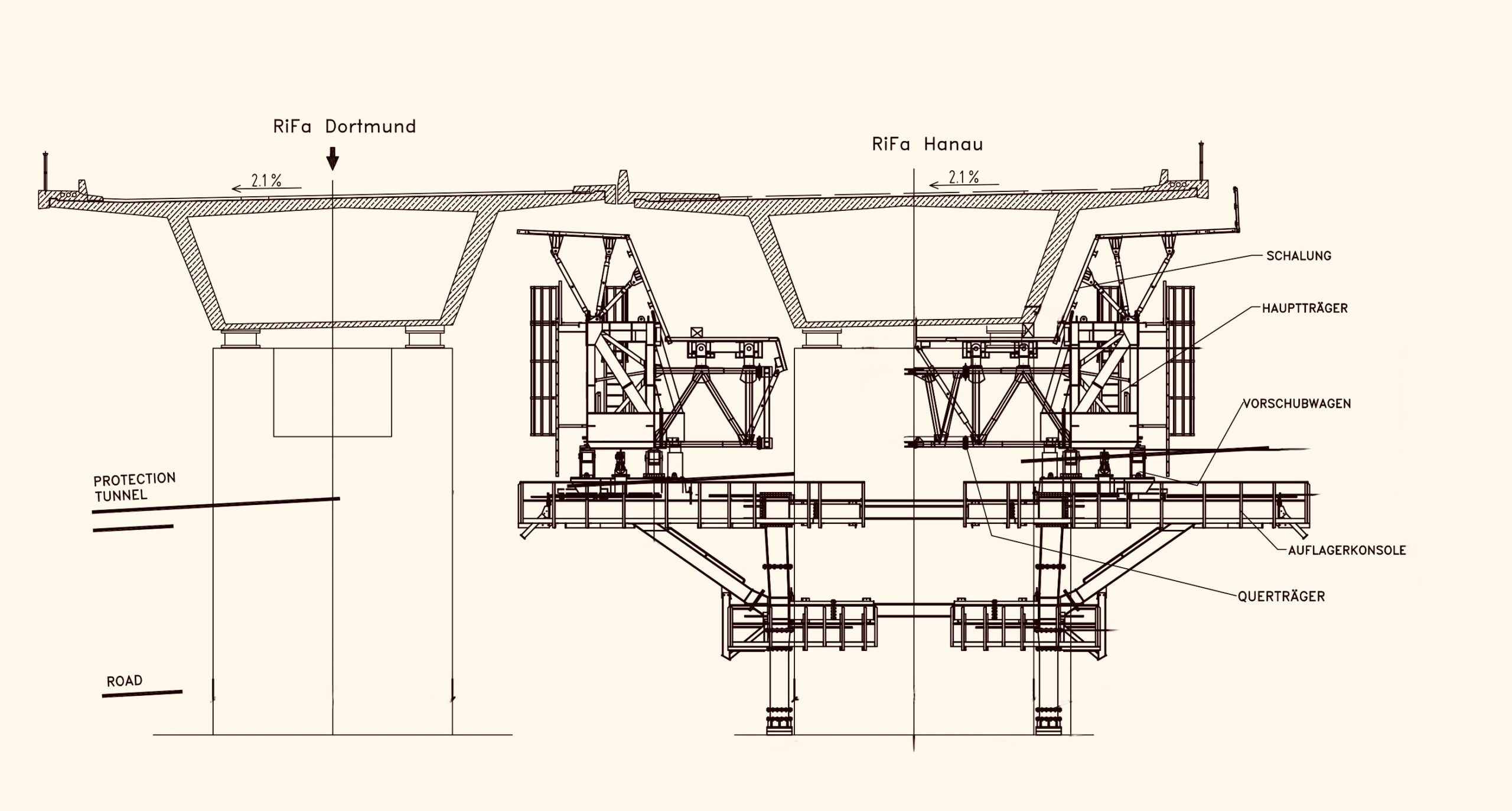
MSS general cross section view when used to demolish the existing concrete decks.

Highlights & Facts:
Max Span: 45,0m
Max MSS Span: 45,0m
Weight of the concrete bridge: Approx 250 KN/m
Width Of Bridge Slab: 16.5m
Min. Hor. Radius: R= 2500m
Max Crossfall: 2.1%
Max Long Slope: 0,63%
Deflection of MSS: MAX L/400

The demolition of old bridge structures with MSS is an effective and safe solution for many bridges.

See the video below and do not hesitate if you wish to consult about your bridge!

STRUKTURAS

WE MAKE IT SIMPLE!

Strukturas MSS approved as safe construction method to build bridge over the railway

The Bane NOR – Norwegian National Rail Administration has approved Strukturas MSS – Movable Scaffolding System as a safe construction method to build the bus road bridge over the railway line in Stavanger.

Movable Scaffolding System - MSS
MSS over the railway

The joint venture of Risa AS and Contur AS, with COWI as adviser, won the competition to build the Bussveien through Jåttåvågen, between Vaulen and Gausel in Stavanger.

The implementation of Strukturas as overhead MSS allows the railway to remain open throughout most of the construction period.
There is thus no need for a separate safety culvert over the railway, and train traffic can run while the biggest part of the concrete works is in progress.
When a contractor has to cast concrete or launch the overhead MSS over the railway they have to do it while there is no train traffic.

But they can do this work either at night when there is no train traffic or in periods where Bane NOR has approved stoppages in train traffic over several days. 
But most of the time concrete workers can work inside of the Strukturas as overhead MSS with ongoing traffic below.

If we had built in the usual way with traditional formwork, we would have had to secure the railway with a safety culvert and take additional safety measures to safeguard train traffic and other traffic under the bridge while the work is in progress, says Per Ove Stokkeland, project manager in Rogaland fylkeskommune .

Follow us on social media for more turnkey projects!

Special services for one of our first customers!

Our client, Mota-Engil, currently the largest Portuguese construction company present in various markets worldwide, has awarded Strukturas the redesign project of an Overhead MSS originally not provided by us and which had been stored for several years in their yard in Poland.

General Overhead MSS view
Rear launching support view
Workshop rebuilt stage
External steel formwork trial assembling at the steel workshop

Strukturas’ redesign introduced significant modifications to the MSS, including a hinge joint between the main girder and the front nose, allowing it to be used on plan view curved decks, the addition of a rear concreting support, which allows for the transportation of pre-assembled U-shaped reinforcement using electrical winches, and the supply of a hydraulically operated internal formwork.

Front nose trial assembling at main yard
Hinge detail at main girder
View from the rear
Front nose general view

Mota-Engil transported the MSS from Poland to Portugal, where it is currently being used in the construction of railway viaducts. The rebuilt MSS steel structure was done in Portugal. Mota-Engil gave a special attention to pre-assembly and testing both at the workshop and at their central yard, due to the MSS being stored in Poland for several years.

Strukturas has been supplying various bridge building equipment, including Formtravellers FT and Movable Scaffolding Systems MSS, to Mota-Engil for around 30 years. Our the first supply was made in 1994 of an Underslung MSS to the company, that was then called Engil and later included in the Mota group, giving rise to the current Mota-Engil.

Hydraulic operated internal formwork delivered by Strukturas
External steel formwork
New rear concreting view
Front and intermediate supports

Formwork, Mechanisation and Site Operations in Movable Scaffolding Systems

Formwork, Mechanisation and Site Operations in Movable Scaffolding Systems

Beyond the main steel structure, the formwork system and site operations are critical to the performance and cost-effectiveness of a Movable Scaffolding System.


Internal and external formwork: configuration and mechanisation

In box-girder decks, both internal and external formwork can be integrated into Overhead or Underslung MSS. The internal formwork configuration is governed by the internal geometry of the box, not by the MSS type, so the solutions are broadly similar.

Typical characteristics:

  • Normal panel length (both internal and external): 5–6 m.
  • Internal formwork systems are most efficient when they are hydraulically operated:
    • The system often consists of formwork panels 5–6 m long,
    • A rail system, and
    • A transport trolley that moves the folded internal formwork from span to span, powered hydraulically.

To ensure efficient operations, external and internal formwork panels are usually connected by threaded ties (e.g. Dywidag bars) passing through the deck webs.


Geometric conditions for using mechanised internal formwork

To make full use of mechanised internal formwork, some design decisions must be taken early in the bridge conception:

  • The internal diaphragm typically located above the pier axis should be designed with a central opening of adequate size.
  • This opening must allow the passage of the folded internal formwork on its transport trolley.
  • Traditional diaphragms with narrow man-access openings are not compatible with fully mechanised formwork.

In theory, diaphragms can be concreted in two stages to create a larger passage opening, but:

  • This usually requires extensive use of reinforcement couplers.
  • The resulting cost is high and usually not competitive.

A better solution is to adjust the slab and web thicknesses near the diaphragm, allowing the diaphragm to be sized with a sufficiently large opening for the internal formwork.


Crossfall, rotation of the section and pour sequence

Deck geometry in cross-section is also important for MSS optimisation:

  • Ideally, the deck cross-section should be geometrically constant, and variations in transverse slope should be obtained by rotating the whole cross-section.
  • If the top slab rotates with the change in crossfall while the bottom slab remains horizontal, the web height becomes variable.
  • This often forces the deck to be concreted in two stages, complicating both the formwork and the construction cycle.

Designing with MSS in mind means favouring simple, repeatable cross-sections and rotations.


Formwork surfaces: plywood vs steel

The most common formwork surface in MSS is:

  • Phenolic plywood, typically 21 mm thick.

Steel formwork skins are technically possible but usually less attractive in practice:

  • Rebuilding or adapting steel formwork for future projects is expensive.
  • With plywood:
    • The underlying steel structure is easily reused and modified for new projects.
    • Plywood sheets are screwed to timber sections bolted to the steel ribs and can be replaced if the number of spans is large or the surface wears out.

For typical deck lengths and project sizes, phenolic plywood offers the best balance of cost, flexibility and finish quality.


Handling of reinforcement with Overhead MSS

Overhead Movable Scaffolding Systems are often equipped with electric winches that allow the transport of pre-assembled reinforcement cages or large reinforcement modules.

Some winch systems use toothed racks and toothed wheels, which:

  • Ensure safe handling of loads on decks with longitudinal slopes.
  • Reduce manual handling and increase productivity on site.

MSS as machinery under the Machinery Directive

Due to the presence of movement (launching, formwork opening/closing, internal trolley, etc.), Movable Scaffolding Systems and Formtravellers fall under the definition of machines in the Machinery Directive.

This classification implies:

  • Detailed risk analyses must be carried out.
  • The design must consider the risk hierarchy defined in the Directive.
  • All user safety aspects (access, fall protection, emergency stops, guards, etc.) must be addressed systematically.

The result is equipment that is not only structurally safe, but also safe to operate.


Construction cycle, crew and launching speed

The typical operations when using an MSS include:

  • Opening the formwork
  • Launching the MSS to the next span
  • Closing and adjusting the formwork (including cambering)
  • Preparing for reinforcement
  • Concreting and prestressing

The crew size required depends on span length, deck width and cycle time, but typically:

  • An MSS requires a team of around 12–14 people to handle operations efficiently.

Regarding launching:

  • A typical launching speed is about 10 m per hour.
  • Higher launching speeds are technically possible, but:
    • The kinetic energy of the moving MSS increases with speed.
    • Any accidental contact with supports or obstacles leads to much higher impact forces.
    • The small time savings from faster launching rarely justify the increased risk.

In practice, controlled, moderate speed is the standard for safe MSS operations.


Pre-assembly, transport and bolted connections

During original manufacture:

  • MSS steel structures are usually partially pre-assembled in the workshop.
  • All components are marked with references to simplify correct on-site assembly.

For transport:

  • Parts are typically designed to fit into 40’ containers or onto standard TIR truck platforms.

On site, proper planning of assembly and dismantling is essential:

  • Correct definition of lifting points and sequences.
  • Control of the centre of gravity in each assembly phase.
  • Safe access for cranes and auxiliary equipment.

Bolted connections in MSS can be:

  • Friction (slip-critical) connections with pre-stressed bolts, or
  • Shear connections with non-pre-stressed bolts.

Each option has implications:

  • Friction connections require:
    • Calibrated torque wrenches,
    • Strict tightening procedures,
    • Non-reuse of pre-stressed bolts.
  • Shear connections are usually simpler and cheaper, and are commonly adopted when design allows it.

Design Criteria Document: the key to choosing the right MSS

To evaluate whether a given MSS is suitable for a specific deck, a Design Criteria Document is essential. This document must clearly define:

  • Loads from the fresh concrete
  • Safety factors
  • Wind speeds:
    • During launching
    • During concreting
    • Under storm conditions
  • Materials and steel grades
  • Maximum span and deck weight
  • Live loads and construction loads, among other parameters

The cost and site performance of an MSS depend heavily on these technical definitions. A well-prepared Design Criteria Document is the foundation for choosing or designing the right system for each project.

STRUKTURAS
WE MAKE IT SIMPLE!

If you have any questions or would like to discuss the possibilities for your bridge project, please get in touch with your local agent or our head office in Norway: CONTACTS