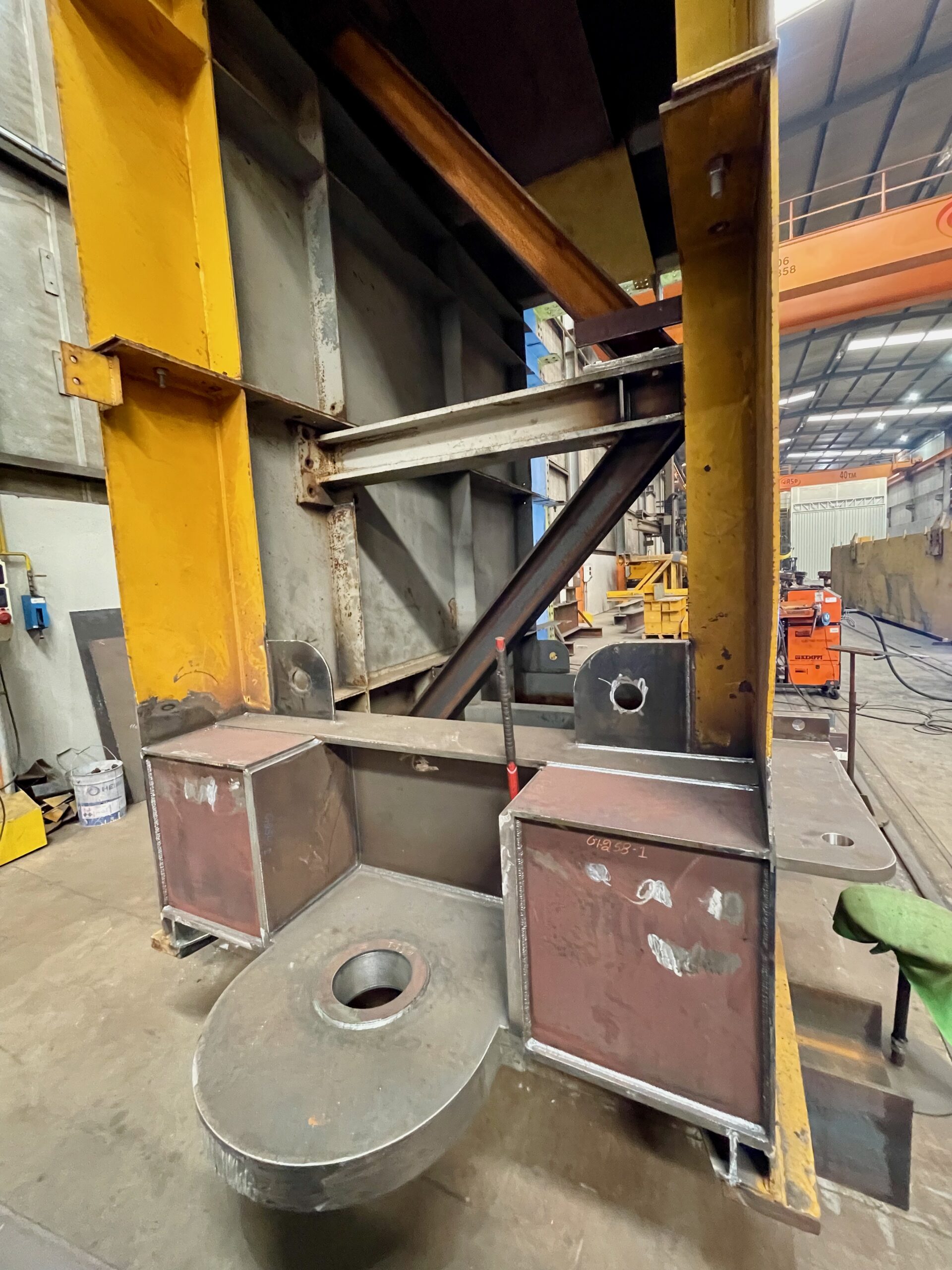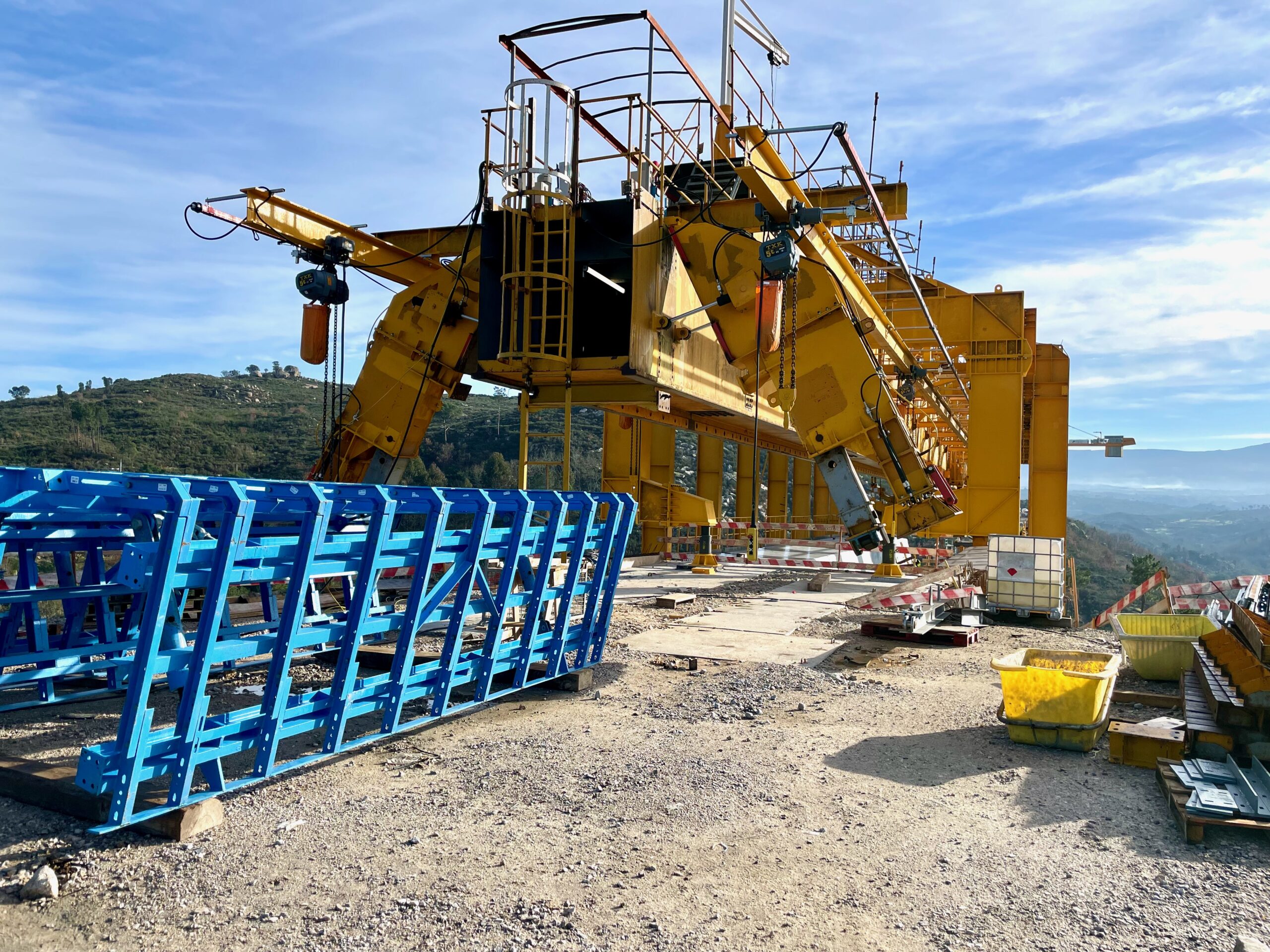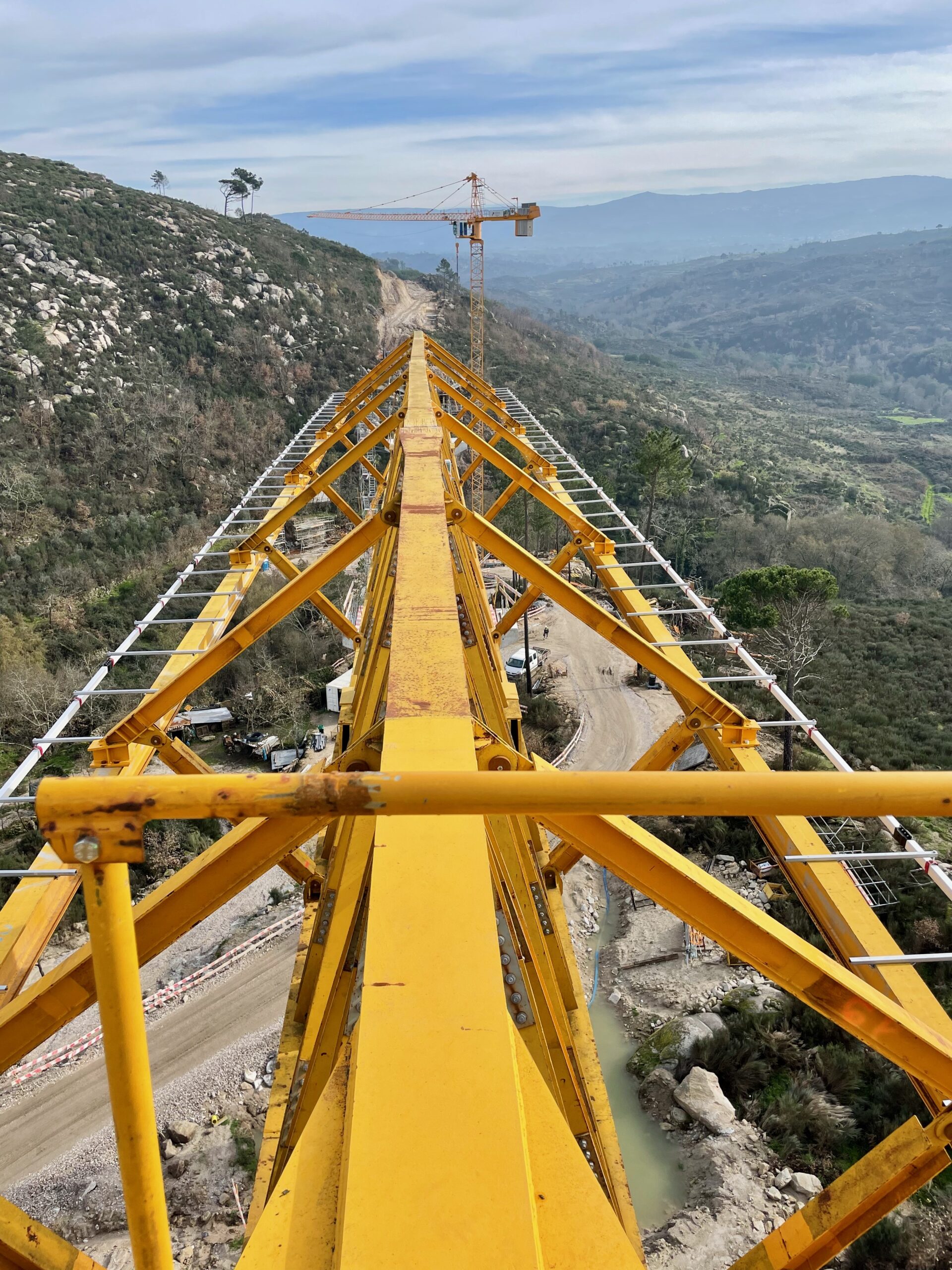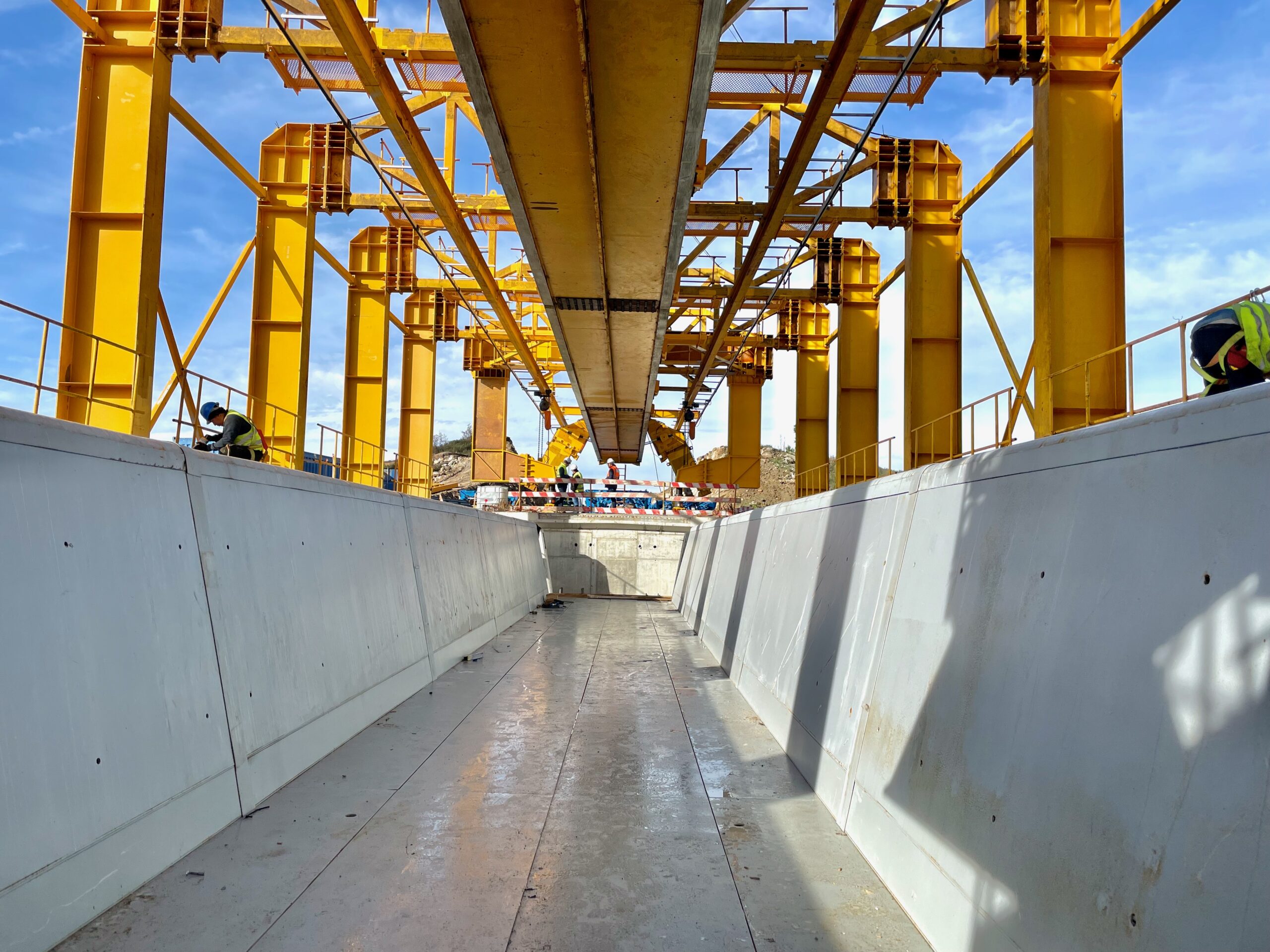
Movable Scaffolding Systems (MSS): Types, Design Rules and Advantages

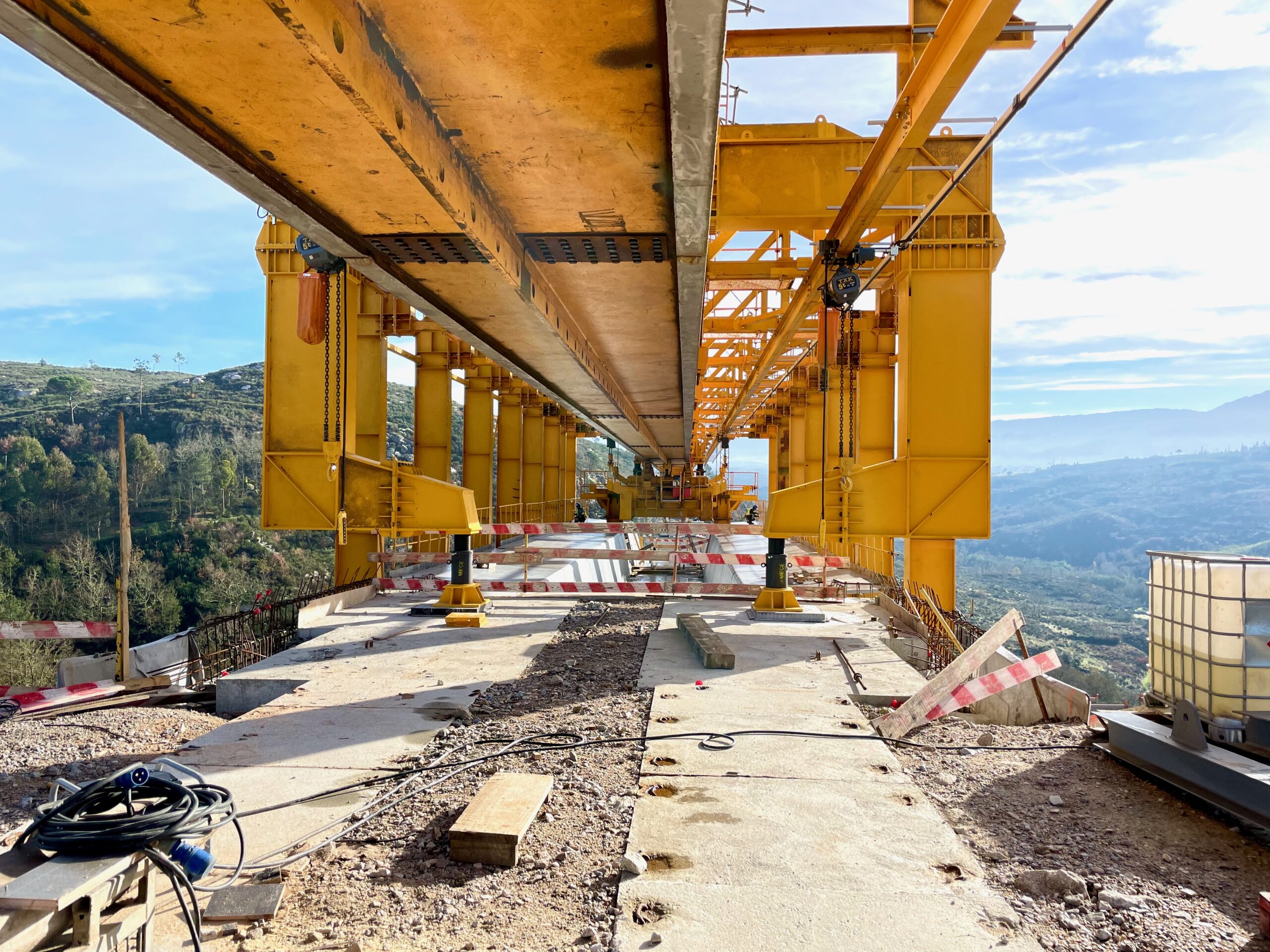
Movable scaffolding system

Movable Scaffolding Systems (MSS): Types, Design Rules and Advantages

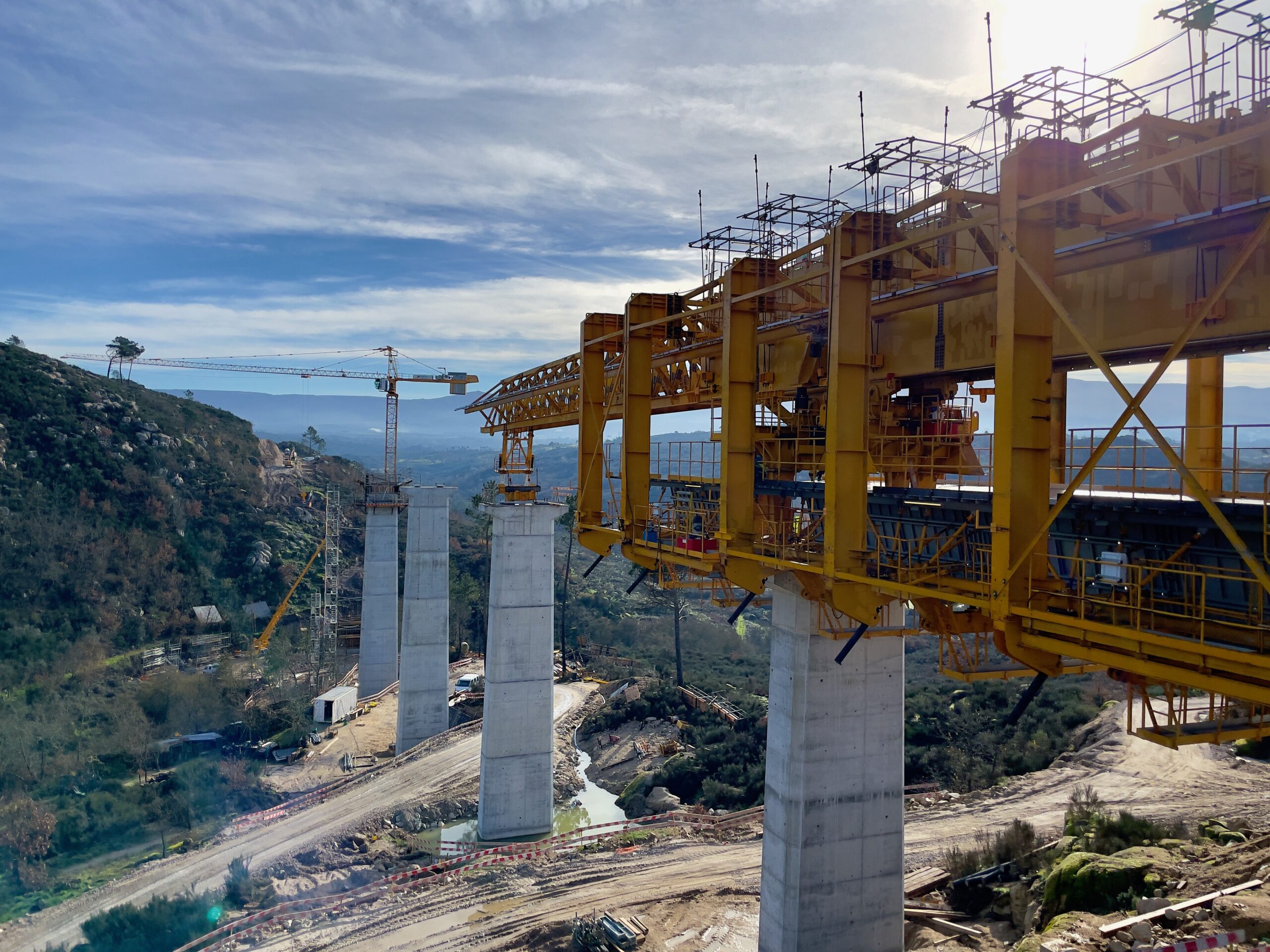
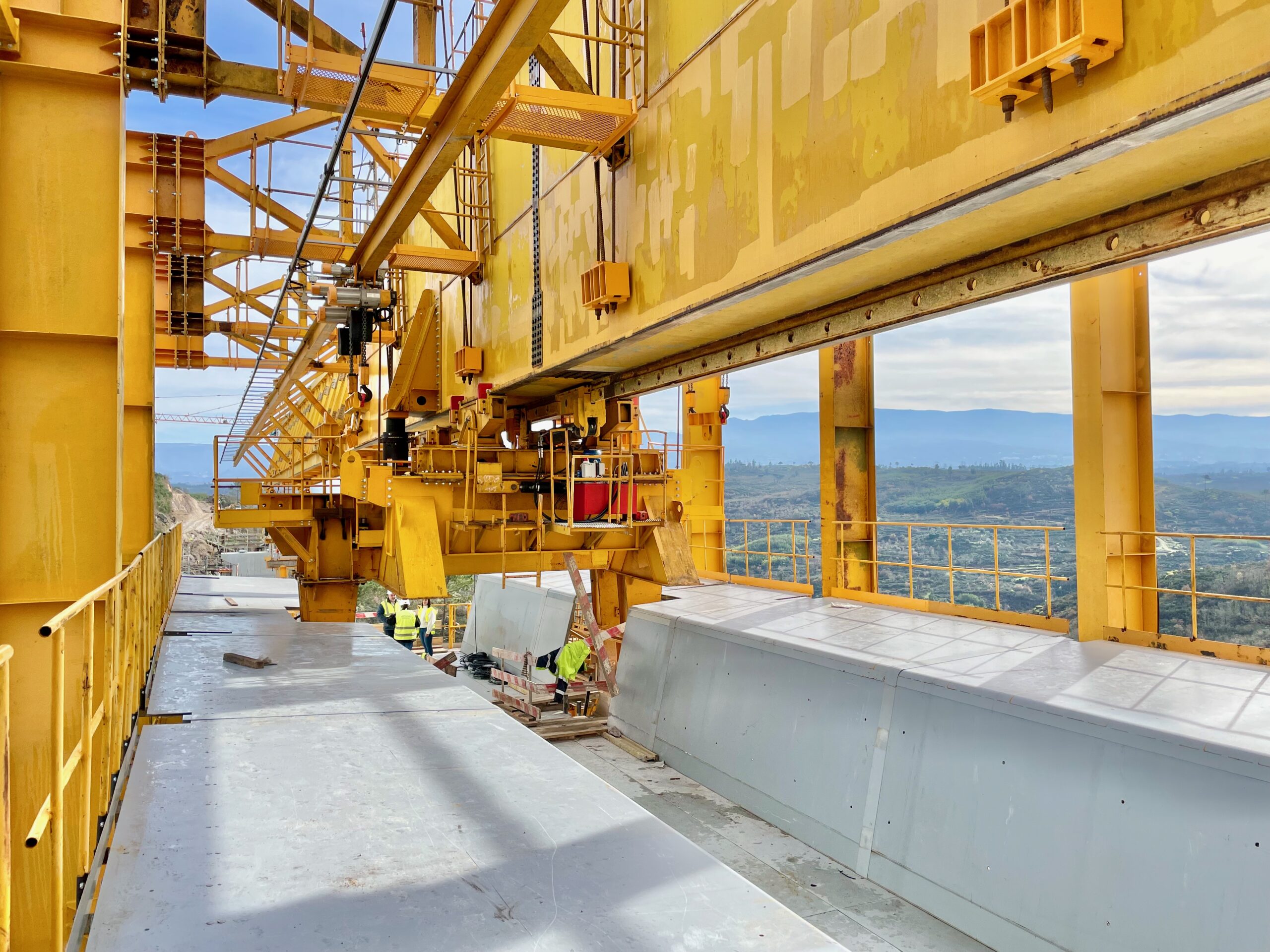
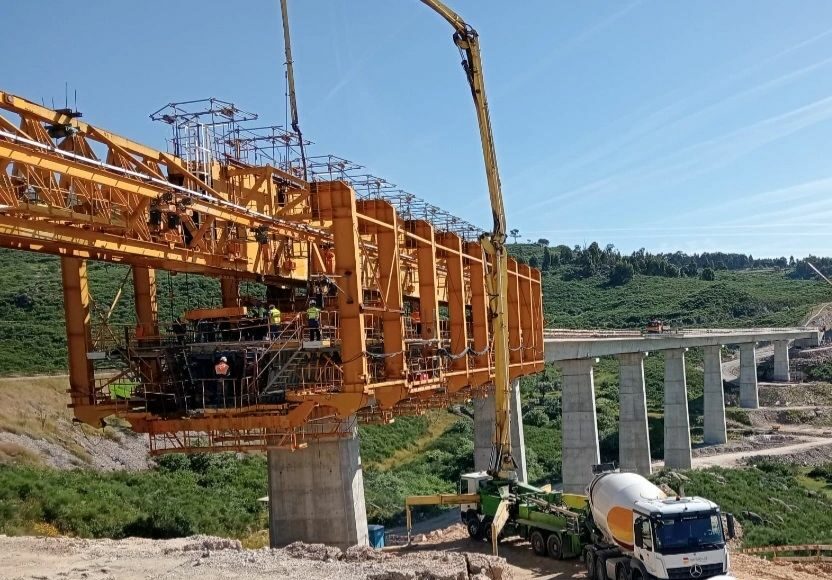
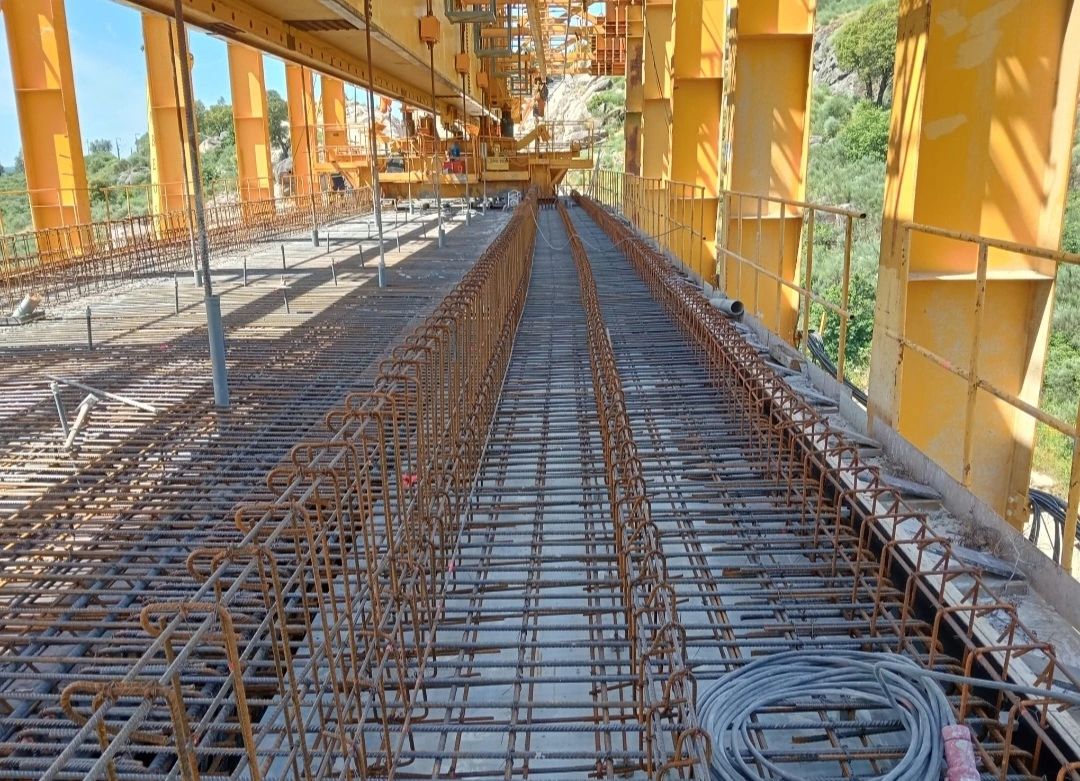
Movable Scaffolding Systems (MSS) have become one of the most efficient solutions for constructing prestressed concrete bridge and viaduct decks on piers, span by span. They combine structural efficiency with repeatable construction cycles and long equipment life.

Types of Movable Scaffolding Systems

There are two main types of MSS:

  1. Overhead Movable Scaffolding Systems
    • The main steel structure is located above the deck.
    • The formwork is suspended from this upper structure.

  2. Underslung Movable Scaffolding Systems
    • The main structure is located under the deck.
    • The formwork rests on the lower structure.

From the point of view of weight and cost, both types are generally equivalent when designed for the same maximum span and deck weight per meter.

Site assembly: practical differences between Overhead and Underslung MSS

The main difference between the two systems appears during on-site assembly and dismantling:

  • Overhead MSS
    • Can typically be assembled and dismantled behind the abutments.
    • This can simplify logistics, especially where access under the bridge is difficult (rivers, railways, deep valleys, congested traffic).

  • Underslung MSS
    • Is usually assembled between the abutment and the first (or last) pier.
    • Dismantling is typically done between the abutment and the first/last pier as well, unless a phased construction of the abutment allows part of the MSS to pass through it.

These aspects are crucial when planning crane operations, temporary works, and site sequencing.

Structural performance and deformability limits

In the structural design of MSS, deformations are carefully controlled:

  • For the overall MSS span, a maximum total deformation of L/400 is usually adopted, where L is the span of the MSS (axis-to-axis distance of its supports).
  • For local elements, such as individual formwork profiles, a typical limit is L/250 for the relevant element span.

This control ensures that the final deck geometry (including camber and alignment) stays within strict tolerances and that formwork reactions are close to those assumed in design.

Design codes and fabrication standards

The steel structure of a Movable Scaffolding System is usually designed and manufactured under well-defined standards:

  • Eurocode is used for the assessment of structural safety.
  • EN 1090 governs the quality control of steel fabrication.

In practice, MSS structures are also:

  • Modelled in 3D or represented in detailed 2D drawings.
  • Supplied with precise weights for all components, essential for planning lifting and assembly operations safely.

General advantages of MSS solutions

Key advantages of Movable Scaffolding Systems include:

  • Optimized material consumption in the bridge deck (concrete, reinforcement and prestressing) due to favorable construction load conditions.
  • Environmental benefits: MSS equipment typically has a useful life exceeding 50 years, making it reusable on many projects.
  • Low operating energy consumption compared to many alternative heavy construction methods.
  • Independence from ground bearing capacity and terrain relief, since the system is supported by the piers.

These features explain why MSS is often the preferred solution for repetitive spans on viaducts and long elevated structures.

Longitudinal slopes and safety in MSS launching

In theoretical terms, there is no strict limit on longitudinal slope for decks built with MSS. The longitudinal launching system is:

  • Hydraulically driven, and
  • Equipped with a mechanical brake, typically a pin system, that holds the MSS safely in place when the drive cylinder is retracted.

In addition, the hydraulic cylinders used for MSS launching are usually equipped with safety valves:

  • In case of a hydraulic pipe rupture, these valves block the oil inside the cylinder.
  • This stops unintentional movement and prevents uncontrolled displacement of the MSS.

These safety and control systems allow MSS to be used safely even on decks with significant longitudinal slopes.

STRUKTURAS
WE MAKE IT SIMPLE!

If you have any questions or would like to discuss the possibilities for your bridge project, please get in touch with your local agent or our head office in Norway: CONTACTS  

Modern methods for constructing prestressed concrete bridge decks and viaducts

Strukturas Underslung MSS

Modern methods for constructing prestressed concrete bridge decks and viaducts

The construction of prestressed reinforced concrete bridge decks and viaducts is currently dominated by a set of well-established methods and specialist equipment. Broadly, these solutions can be divided into in situ concrete bridges and prefabricated bridges, each with its own structural and construction logic.

Among in situ methods, three types of equipment are particularly widespread today:

  • Ground-supported falsework
  • Pier-supported falsework
  • Incremental Launching equipment


Pier-supported falsework: Formtravellers (FT) and Movable Scaffolding Systems (MSS)

Pier-supported falsework is especially relevant when the site conditions make ground-supported systems impractical.

Two types of equipment are currently dominant:

  • Formtravellers (FT)
  • Movable Scaffolding Systems (MSS)


They serve different structural solutions:

  • Formtravellers are used for decks constructed by the cantilever method, typically segment by segment, balanced around piers.
  • Movable Scaffolding Systems are used for decks designed as continuous concrete beams supported on the columns, where each span is concreted in its final position.


In both cases, the deck is concreted in sections:

  • With Formtravellers, typical segment lengths are up to 5 m, and in special cases can reach 10 m.
  • With Movable Scaffolding Systems, the deck is cast span by span. Construction joints are usually placed at about 1/5 of the span length, where bending moments are close to zero.


Incremental Launching Method (ILM)

The Incremental Launching Method is used for the construction of continuous decks in concrete, steel or composite (steel–concrete) solutions. The deck is prefabricated in sections behind an abutment and then pushed longitudinally over the piers using hydraulic cylinders.

Structurally, ILM is also suited to beam-type decks, which naturally raises the comparison with MSS.


MSS vs Incremental Launching: key differences

Both MSS and ILM are used to build continuous beam decks, but the way the deck is formed and loaded during construction is very different:

  • In Incremental Launching:
    • The deck is prefabricated by sections behind the abutment.
    • The entire deck is pushed over the top of the columns with hydraulic cylinders.
    • During construction, any given section of the deck may be subjected to very high stresses, often close to or higher than those in service.


  • In Movable Scaffolding Systems:
    • The MSS incorporates the full formwork and support structure.
    • Each deck span is concreted directly in its final position, supported by the system and the piers.
    • The forces in the deck and columns during construction are of the same order of magnitude as in the final service stage.


Material efficiency and structural design implications

From a structural design perspective, Movable Scaffolding Systems typically allow the minimum consumption of concrete, reinforcement and prestressing steel. The reason is simple:

  • With MSS, construction loads resemble service loads, so the deck does not need to be over-dimensioned for extreme temporary load cases.
  • With ILM, the launching process causes unfavourable and often critical stress states along the deck during construction, which must be considered in design.

There are also geometric and project-level advantages that favour MSS in many cases:

  • MSS allows decks with variable radii both in plan and elevation, adapting well to complex motorway or railway alignments.
  • MSS solutions are independent of ground bearing capacity and relief, since they are supported on the piers rather than the ground.


For designers and contractors, this often translates into more flexible geometry, leaner structures and fewer constraints from site ground conditions when MSS is used.

STRUKTURAS
WE MAKE IT SIMPLE!

If you have any questions or would like to discuss the possibilities for your bridge project, please get in touch with your local agent or our head office in Norway: CONTACTS  

Construction Methods for Prestressed Concrete Bridge Decks and the Role of Form travellers

Form Traveller Strukturas

Construction Methods for Prestressed Concrete Bridge Decks and the Role of Formtravellers

The construction of prestressed reinforced concrete bridge decks and viaducts can generally be divided into two large families:

  • In situ concrete bridges, where the deck is cast on site.
  • Prefabricated bridges, where large structural elements are manufactured in a factory environment and later assembled on site.

Within the in situ family, several types of equipment are commonly used for the construction of prestressed concrete decks. Today, the main ones are:

  • Ground-supported falsework
  • Pier-supported falsework
  • Incremental Launching systems

Among these, pier-supported falsework plays a key role when ground access is difficult (rivers, valleys, railways) or when ground-supported systems would be uneconomical or unsafe.


Pier-supported falsework: Formtravellers and Movable Scaffolding Systems

The most widely used pier-supported systems are:

  • Formtravellers
  • Movable Scaffolding Systems

These two families serve different structural solutions:

  • Formtravellers are used to construct bridge and viaduct decks by the cantilever method. The deck is built in successive segments projecting from a pier, usually in symmetric pairs, one on each side of the pier axis.
  • Movable Scaffolding Systems are used for bridge and viaduct decks designed as concrete beams supported on columns, where spans are cast in situ with support on the piers.

In both cases, the deck is constructed in sections:

  • With Formtravellers, the deck is built in segments, typically up to 5 m long. In some special cases, segment length can be increased up to 10 m.
  • With Formtraveller Systems, the deck is also constructed in sections, but typically one full span at a time. Concreting joints are usually placed at approximately 1/5 of the span length, where the bending moment is close to zero.

Types of Formtraveller 

Formtraveller have evolved into several specialised configurations to respond to different types of structures:

  1. Overhead Formtraveller
    • The main structure is located above the deck.
    • The formwork is suspended from this upper structure.
  2. Underslung Formtraveller
    • The main structure is located under the deck.
    • The formwork rests on the lower structure.

  3. Arch Formtraveller
    • A specialised solution developed to allow the casting of concrete arch segments.

  4. Wing Formtraveller
    • Typically used to cast deck wings, either for composite decks or for fully concrete decks.

Advantages of Formtraveller 

Formtraveller offer several important advantages for the construction of bridges and viaducts:

  • They allow large spans to be cast in situ by the cantilever method, segment by segment.
  • Segments are usually cast in symmetric pairs from each column, which balances cantilever moments and is structurally efficient.
  • They are environmentally friendly, as their useful life can exceed 50 years, allowing reuse on many projects.
  • Their energy consumption during operation is generally low compared to alternative heavy construction methods.

Overhead vs Underslung Formtraveller: how to choose?

  • For the same segment length and segment weight, the Overhead Formtraveller System is usually lighter and cheaper than the Underslung solution.

This makes the overhead configuration particularly attractive.

STRUKTURAS
WE MAKE IT SIMPLE!

If you have any questions or would like to discuss the possibilities for your bridge project, please get in touch with your local agent or our head office in Norway: CONTACTS  

Krondorf Bridge demolition

The Strukturas rental Underslung MSS Randselva was dismantled autumn 2021 in Norway and sent directly to Germany for the demolition of the Krondorf Bridge on the A3 south of Nürnberg.


The northbound deck is being demolished as the traffic is running on the southbound deck. After domolished deck and new construction on the north bond deck, the Strukturas rental Underslung MSS will be used to demolish and build also the south bond deck.

Start MSS assembling

Deck demolition

MSS operation

World-leading bridge builders do also build factories

Herøya Industripark recently published an article about us:

Strukturas team moved from Langesund into the industrial environment at Herøya.

“We see a great drive in industry at Herøya. We want to be here because we can contribute, help build the new factories that are planned,” says Terje Johannessen, new head of industry and offshore at Strukturas.

Terje is back in Strukturas after five years in Bilfinger. Prior to that, he worked with steel structures in Strukturas for 22 years. Now he leads the company’s industrial venture after recently retired Paul Andersen.

Our team knowledge is in demand and it has turned into hundreds of giant steel and concrete bridges all over the world. Moreover we have also provided our services to Industry since 1991. Now we will also use the knowledge to help build factories. 

“I have recently been involved in building a factory,” comments Terje. “Under the auspices of Bilfinger, I was the engineering manager for NEL Hydrogen. They have now built the world’s largest factory for the production of electrodes here at Herøya.”

He mentions several industrial projects he has been involved in in recent years, such as REO (Rare Earth Objects), Hydro’s new aluminum factory at Karmøy, conversion of test facilities for Yara in the research park and the Bamboo project.

“I hope that my experience is useful for developing the industrial part,” says Terje. “The job will be to bring in industrial projects where we can contribute on steel and concrete. We can take part in all construction projects, and we are particularly strong in steel. I know many people here in the environment, and I am very pleased that we have moved to Herøya. Now we will further develop and focus on expanding the industrial department.”

Structural Design, Geometry and Safety of Formtraveller 

Underslung Form Traveller Ariari

Structural Design, Geometry and Safety of Formtraveller 

Formtraveller are complex steel structures that support fresh concrete, reinforcement, construction live loads and self-weight during both casting and launching stages. Their structural design must comply with strict criteria for deformation, safety and geometric compatibility with the bridge deck.


Deformation limits and design codes

During the design stage, maximum deformability is carefully controlled:

  • For the main structure of the Formtraveller, a maximum global deformation of L/400 is normally considered, where L is the span of the main structure.
  • For local elements, such as individual formwork profiles, the usual limit is L/250 for the span of the profile in question.

These limits ensure proper deck geometry, correct camber and acceptable stress distributions in both the temporary equipment and the permanent structure.

Regarding design standards:

  • Eurocode is typically used for the assessment of structural safety.
  • EN 1090 is used for quality control of the fabrication of the steel structure.

Connections, anchorage and checks on the permanent structure

Formtravellers are connected to the concrete deck using anchors made of threaded bars, which pass through blockouts in the bottom and top slabs. These anchors transmit:

  • Vertical loads
  • Stability-related forces during both casting and launching

Before casting a segment, it is essential that the reactions from the Formtraveller (in both casting and launching configurations) are submitted to the bridge designer. The designer must:

  • Verify the columns and
  • Check the deck section
    for all relevant construction-stage load combinations.

These checks are critical, since cantilever construction can produce more severe stresses in some sections during construction than in the final service condition.

Geometric conditions: diaphragms, web spacing and internal formwork

The geometric conception of the deck has a strong influence on the practicality of using Formtraveller, particularly when internal formwork is present.

Key aspects include:

  • Position of diaphragms
    • To allow mechanised internal formwork to be launched from segment to segment, the internal diaphragm should be placed at the rear of the segment. Same is applied to the external diaphragms and external formwork.
    • If diaphragms are located near the front of the segment, the internal formwork behind them cannot be launched forward and must be dismantled or lowered, which is inefficient and time-consuming.
    • Concreting diaphragms in two stages to create a passage for the internal formwork may be possible in some cases, but this is a decision for the bridge designer and may complicate reinforcement arrangement.

  • Distance between deck webs
    • For optimal use of Formtraveller formwork, it is very important that the distance between the deck webs remains constant along the deck.
    • Constant web spacing facilitates repetitive, standardised internal and external formwork and simplifies tie arrangements.

Longitudinal slope and launching safety

From a theoretical point of view, there is no absolute limit on longitudinal slope for decks built with Formtraveller Systems. However:

  • When the deck longitudinal slope is large, some modifications are needed:
    • The Formtraveller must be able to stay horizontal during casting, to ensure correct concrete distribution and work conditions.
    • During launching, the system must be able to follow the deck slope.
  • A braking device must be included, ensuring that the Formtraveller remains safely in position on top of the rails during launching, especially on significant slopes.

The hydraulic cylinders used for longitudinal launching typically include a safety valve:

  • In the event of a hydraulic pipe rupture, this valve blocks the oil inside the cylinder.
  • This instantly stops the movement and prevents uncontrolled displacement of the Formtraveller.

Classification under the Machinery Directive

Because Formtraveller involve movement (launching, formwork opening/closing, internal formwork repositioning), they fall under the definition of machinery in the Machinery Directive.

This classification requires:

  • Detailed risk analyses, covering all operating modes.
  • Application of the risk reduction hierarchy defined in the Directive.
  • Design solutions that address user safety in a systematic way (access, fall protection, guarding, emergency stopping, etc.).

In practice, a compliant Formtraveller is not only structurally sound, but also engineered as a machine with safety-integrated design.

STRUKTURAS
WE MAKE IT SIMPLE!

If you have any questions or would like to discuss the possibilities for your bridge project, please get in touch with your local agent or our head office in Norway: CONTACTS  

FT Sibiu: casting deck segments in Romania

FT Sibiu Strukturas

In Talmaciu near the historic city of Sibiu two Strukturas FT pairs was delivered to Hünnebeck to concrete the central cantilever deck of a bridge integrated in the new highway under construction.

PORR România took one more engineering adventure, this time TEN-T Sibiu-Pitești Motorway in Romania.

Main activities:
🔸 Motorway with two lanes in each direction, hard surface width of 26m along the length of 13.170km
🔸Two road junctions: Sibiu and Boița
🔸Two service spaces of type S1 at km 8.200 left, km 8.200 right
🔸A maintenance and coordination centre in the area of the Boița road junction
🔸A viaduct with 10 spans at km 10.470, at a length of 414.70m
🔸A viaduct with 8 spans at km 12.375, at a length of 651.40m
🔸27 bridges and passages
🔸27 culverts

Two Strukturas as FT pairs was delivered to Hünnebeck by BrandSafway to concrete the central balanced cantilever deck of a bridge integrated in the new highway under construction.

Do you want to create something really great
Let’s talk about how Strukturas as can supply you bridge building technical solutions and equipment. 

The bellow two YouTube videos shows

  1. Huennebeck Project of the year 2021 video;
  2. and an interesting time-lapse of an early project stage.

Formwork, Operations and Logistics in Formtraveller

Formwork, Operations and Logistics in Formtraveller 

The efficiency of a Formtraveller depends heavily on how the formwork is designed and handled, and how site operations and logistics are planned. This includes panel dimensions, formwork surfaces, internal formwork launching, crew size, launching speed and workshop pre-assembly.


Internal and external formwork: configuration and handling

In typical applications, the external and internal formwork panels have a length of about 5.8 m, assuming a maximum segment length of 5 m in the concrete deck.

Internal and external panels are connected using threaded ties, such as Dywidag bars, passing through the deck webs. This creates a closed, stable formwork box that can carry fresh concrete and construction loads.

The internal formwork in Formtravellers is usually launched manually from one segment to the next:

  • Chain tackles are commonly used to move the internal formwork along rails.
  • Hydraulic cylinders can also be adopted, but the standard solution in many projects remains manual.
  • The rails on which the internal formwork rests are launched together with the main structure of the Formtraveller.

As mentioned earlier, the position of internal diaphragms must allow the internal formwork to pass. If diaphragms are too close to the front of the segment, the internal formwork may need to be dismantled behind the diaphragm.


Formwork surfaces and materials

The most common formwork surface used in Formtraveller Systems is:

  • Phenolic plywood, usually 21 mm thick.

Steel formwork surfaces are technically possible but rarely preferred:

  • Rebuilding steel formwork for future projects is costly.
  • For typical segment lengths and project sizes, plywood offers a better economic balance.

The usual arrangement is:

  • Plywood sheets are screwed to timber sections.
  • Timber sections are bolted to the steel ribs of the formwork structure.
  • Parts of the internal and external web formwork are often made using wooden beams.

If the number of segments is very high, the phenolic plywood can be replaced during the life of the Formtraveller, while the underlying steel structure remains reusable.


Handling reinforcement: limits and special solutions

As a rule:

  • Overhead Formtraveller do not normally allow the transport of pre-assembled reinforcement cages on the system itself.

However, in some specific projects where:

  • The deck webs are vertical or nearly vertical, and
  • Pre-assembled web rebar panels are desired,

it may be possible to develop special transport rails integrated into the Formtraveller. In such cases:

  • A crane installs the pre-assembled web reinforcement panel.
  • The load is then transferred from the crane to the special rails of the Formtraveller.

These are project-specific solutions, not the standard configuration.


Crew size, launching speed and construction cycle

To operate a Formtraveller– including:

  • Opening the formwork
  • Launching from one segment to the next
  • Closing the formwork
  • Introducing camber
  • Preparing the formwork for reinforcement
  • Concreting the segment

– a dedicated crew is required. 

The exact crew size depends on the segment weight, deck width and the target construction cycle, but in general:

  • A team of 8 to 10 people per pair of Formtravellers is typical.

Regarding relocation speed:

  • The normal launching speed of a Formtraveller is around 10 m per hour.
  • Increasing the launching speed does not make practical sense, since the maximum segment length is only about 5 m. The marginal time savings are minimal, and the risks associated with higher movement speeds increase.

The typical construction cycle for a pair of segments using Formtravellers is approximately:

  • 1 week per pair of segments,
    assuming standard times for reinforcement assembly, prestressing operations, concrete curing, and formwork operations.

Workshop pre-assembly, transport and on-site planning

During the original manufacture of a Formtraveller System:

  • The steel structure is usually partially pre-assembled in the workshop.
  • All components are marked with references, indicating their position in the final assembly.

For transport:

  • Parts are designed to fit in 40-foot containers or on TIR truck platforms.

On site, careful planning of assembly and dismantling is essential:

  • Correct definition of lifting points for sub-assemblies.
  • Ensuring that the centre of gravity of each assembly stage remains within safe limits.
  • Guaranteeing suitable access for cranes and transport equipment.

Accurate weights of all parts must be known:

  • Typically derived from 3D models or detailed 2D drawings.
  • If there is any uncertainty, scales can be used to confirm the component weights.

Design Criteria Document: selecting the right Formtraveller 

To evaluate whether a given Formtraveller is suitable for a specific bridge deck, it is essential to prepare a Design Criteria Document. This document must clearly define at least:

  • Loads from the concrete segments and launching situation
  • Safety factors
  • Wind speeds:
    • During launching
    • During concreting
    • Under storm conditions
  • Materials and steel grades
  • Maximum span
  • Live loads and other construction loads

The cost and site performance of a Formtraveller depend strongly on these definitions. A well-prepared Design Criteria Document is therefore the key technical basis for:

  • Deciding whether an existing system can be reused or adapted, or
  • Designing a new system optimised for the specific project.

In most successful cantilever projects, the Formtraveller is not an afterthought but an integral part of the initial design strategy for the bridge.

STRUKTURAS
WE MAKE IT SIMPLE!