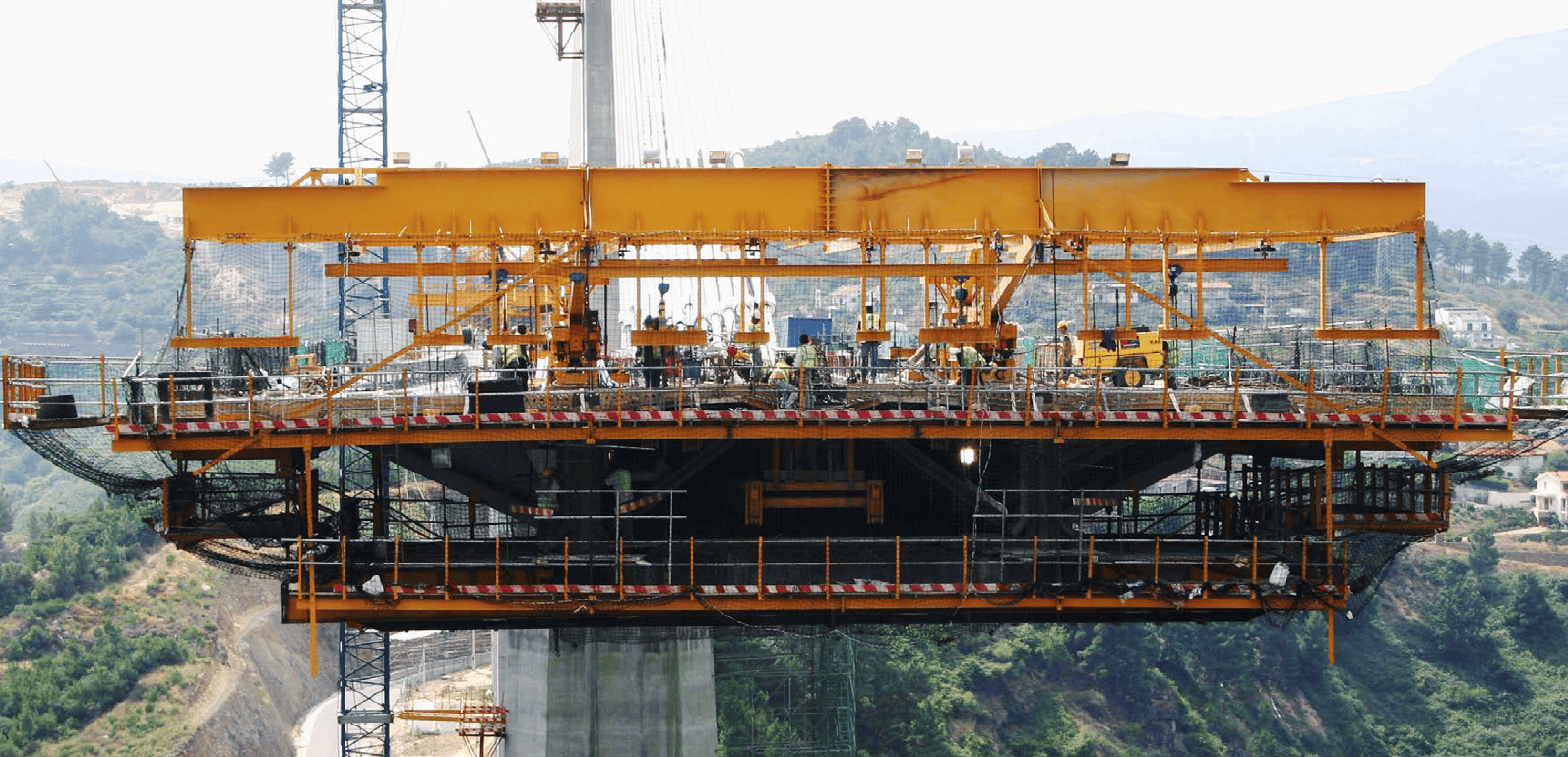
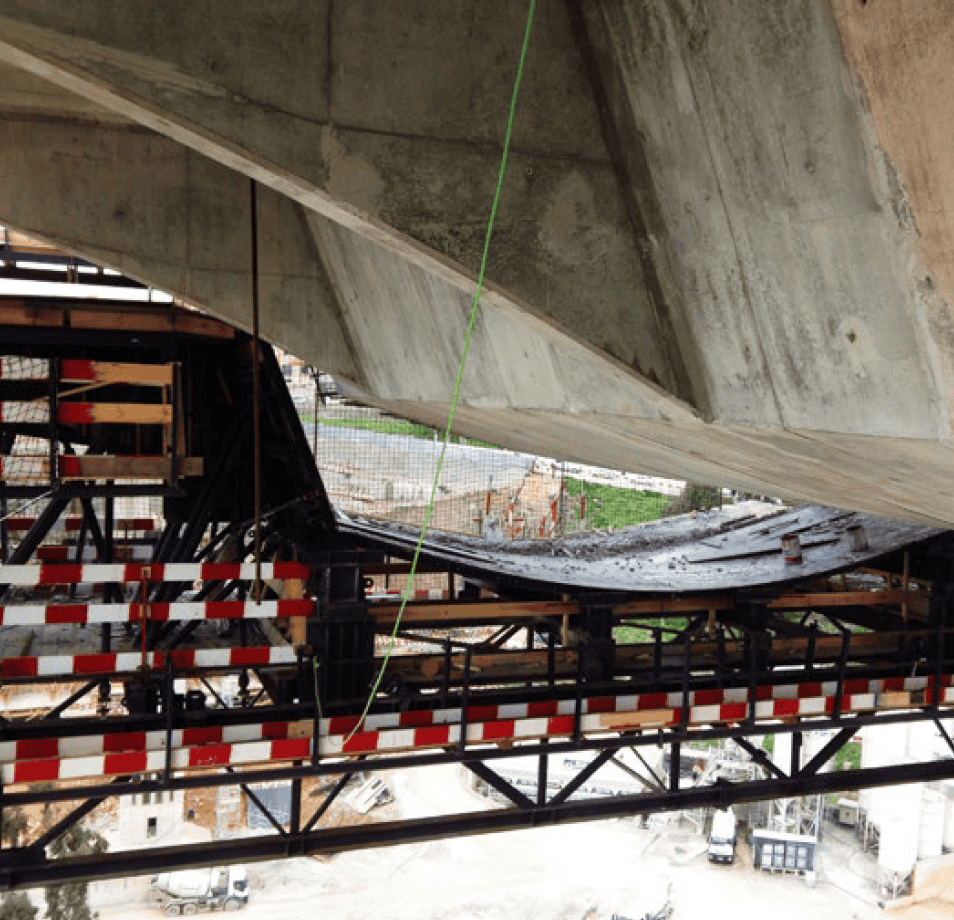
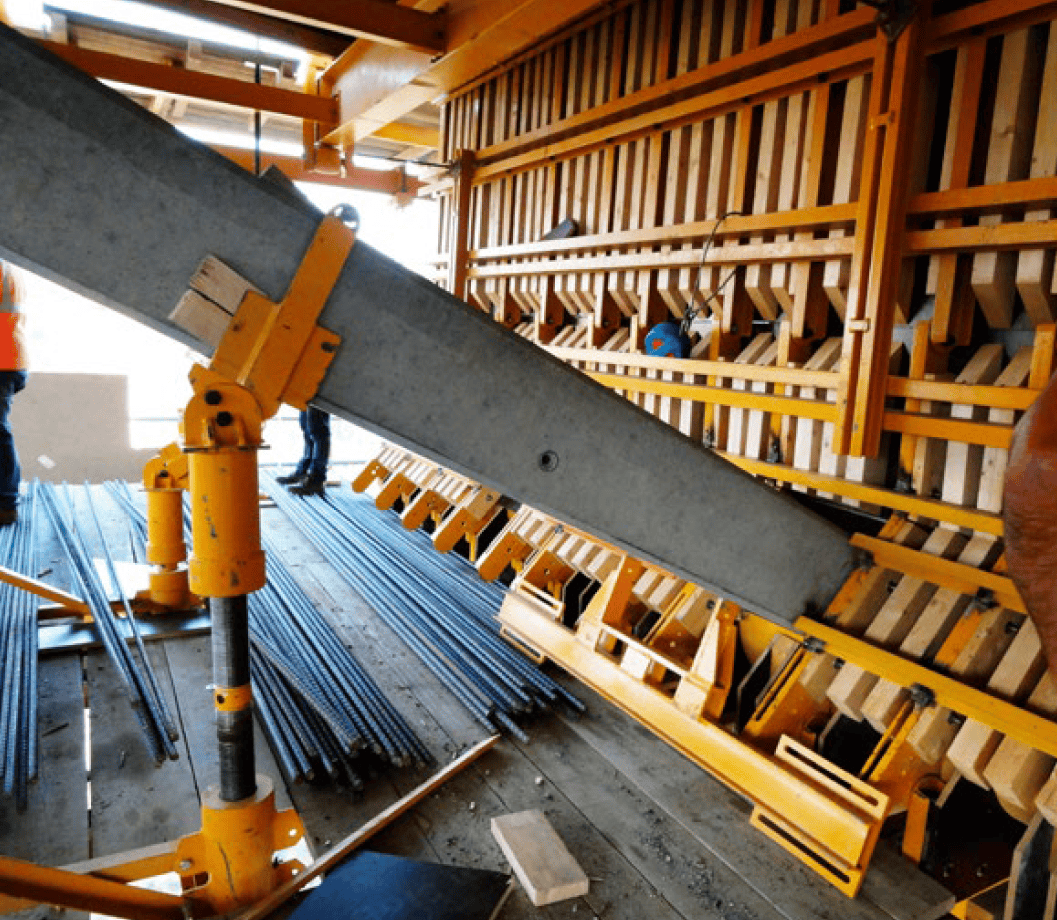
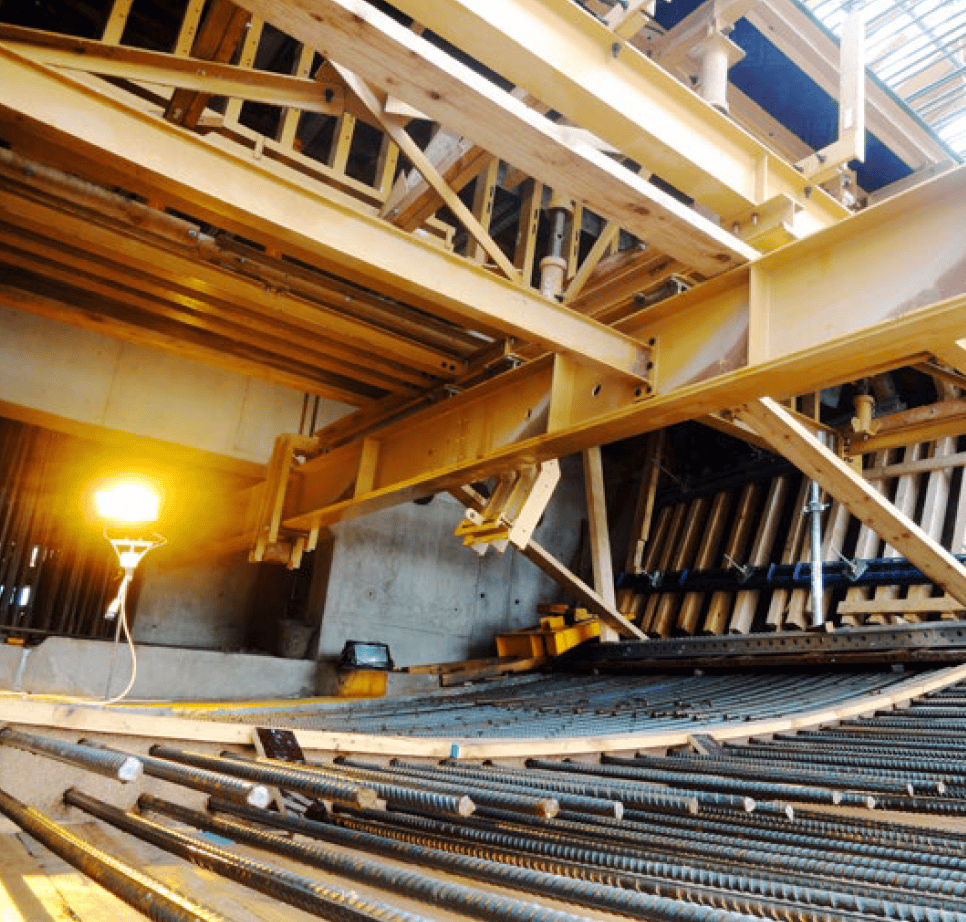
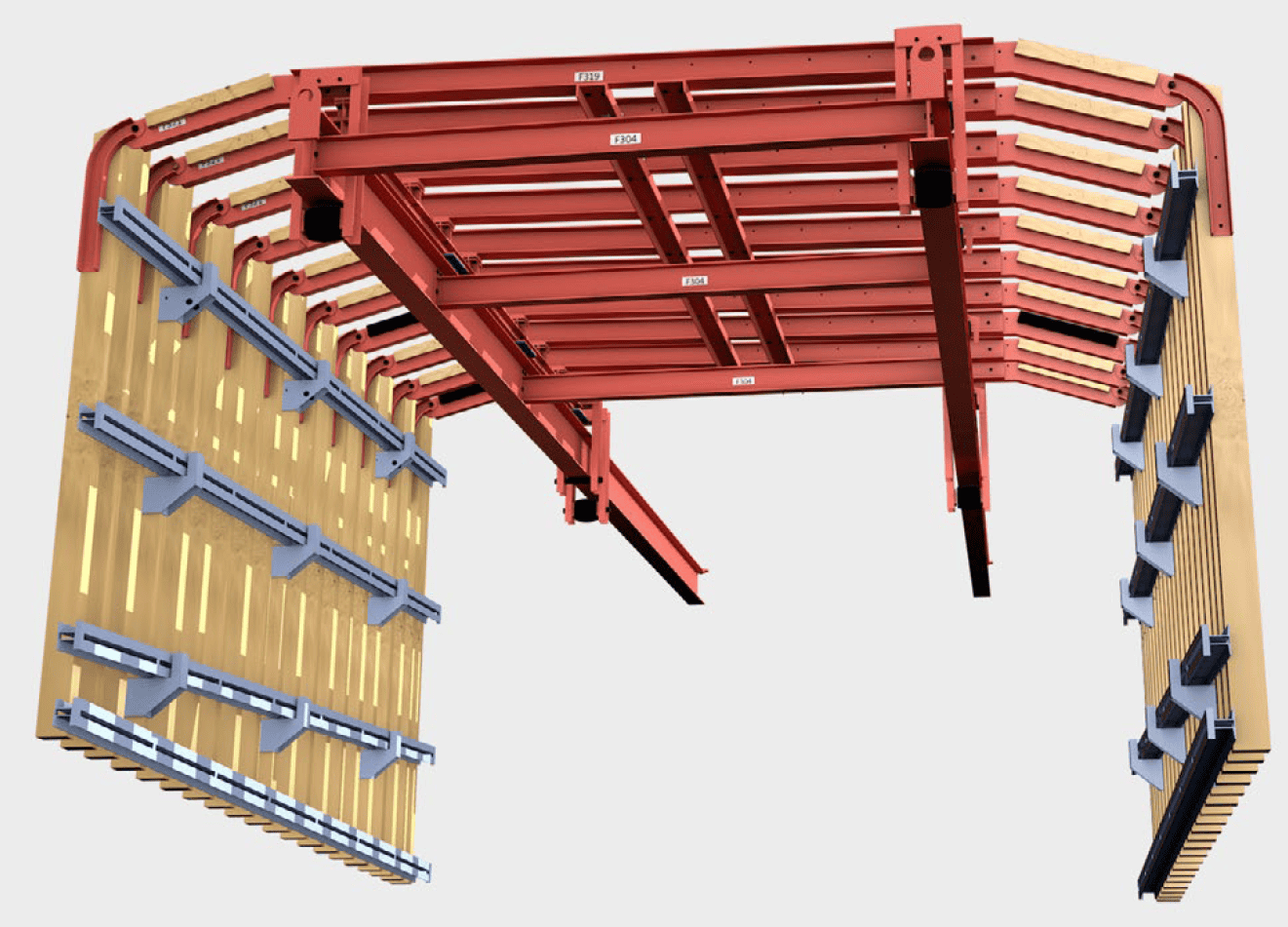
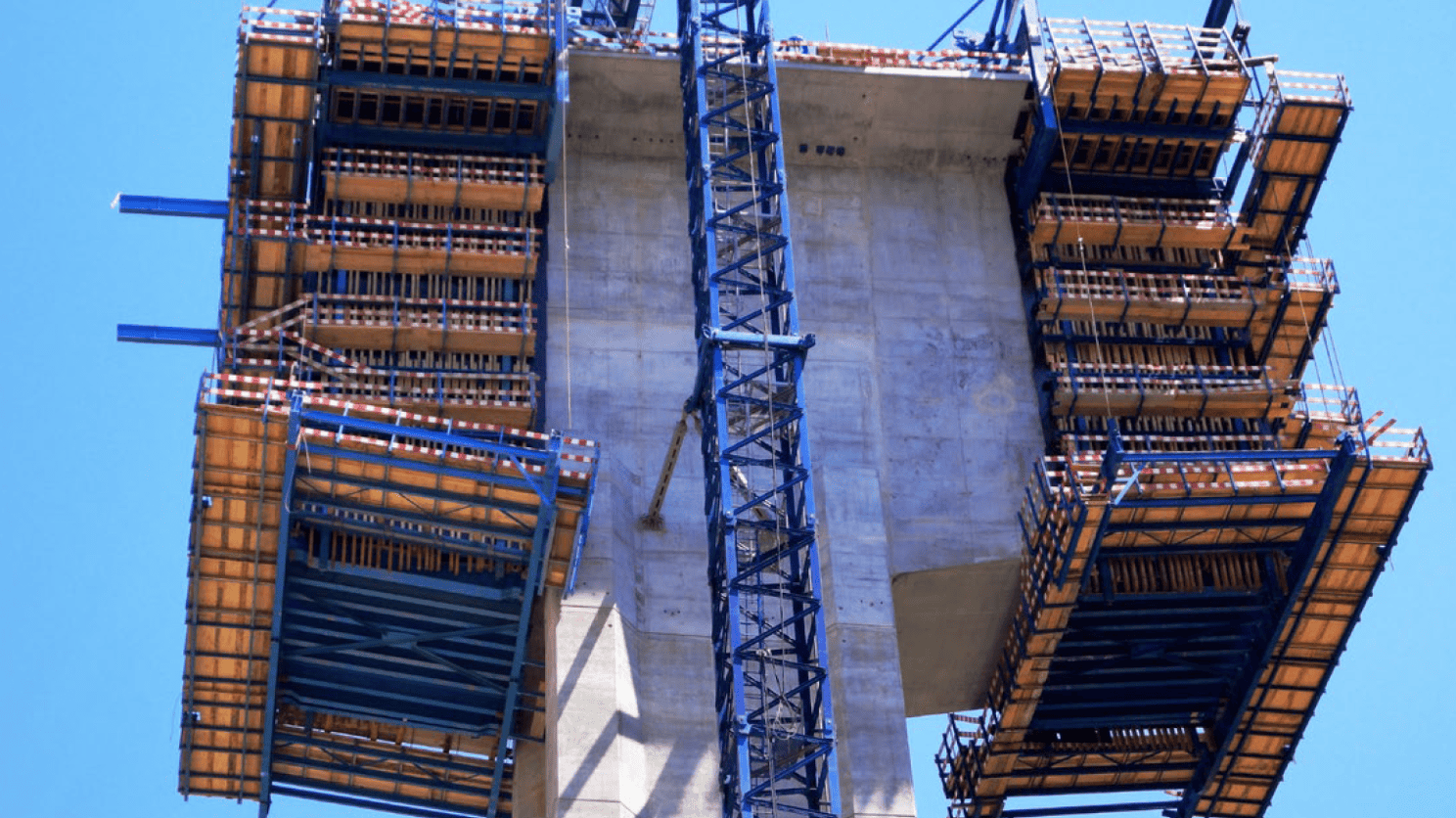
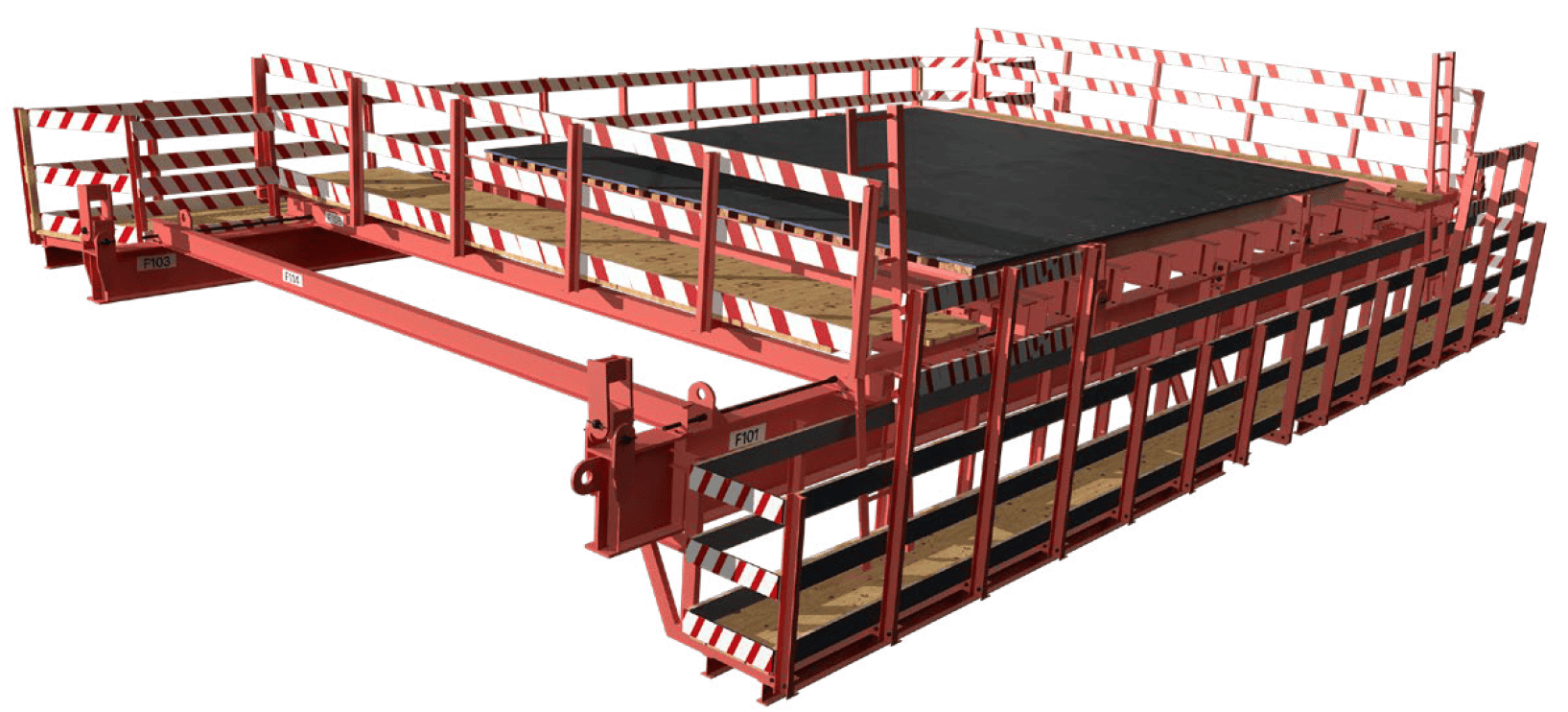
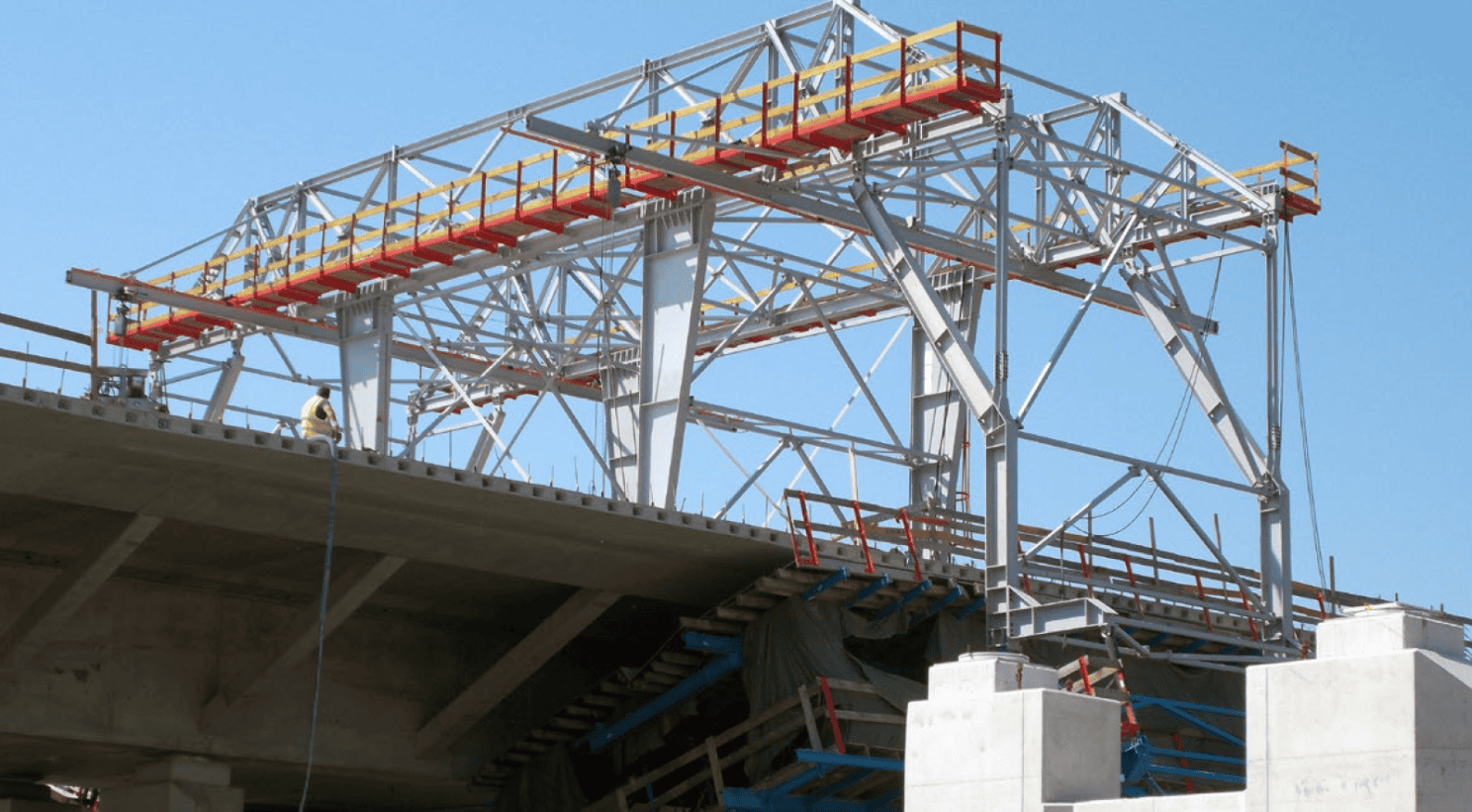
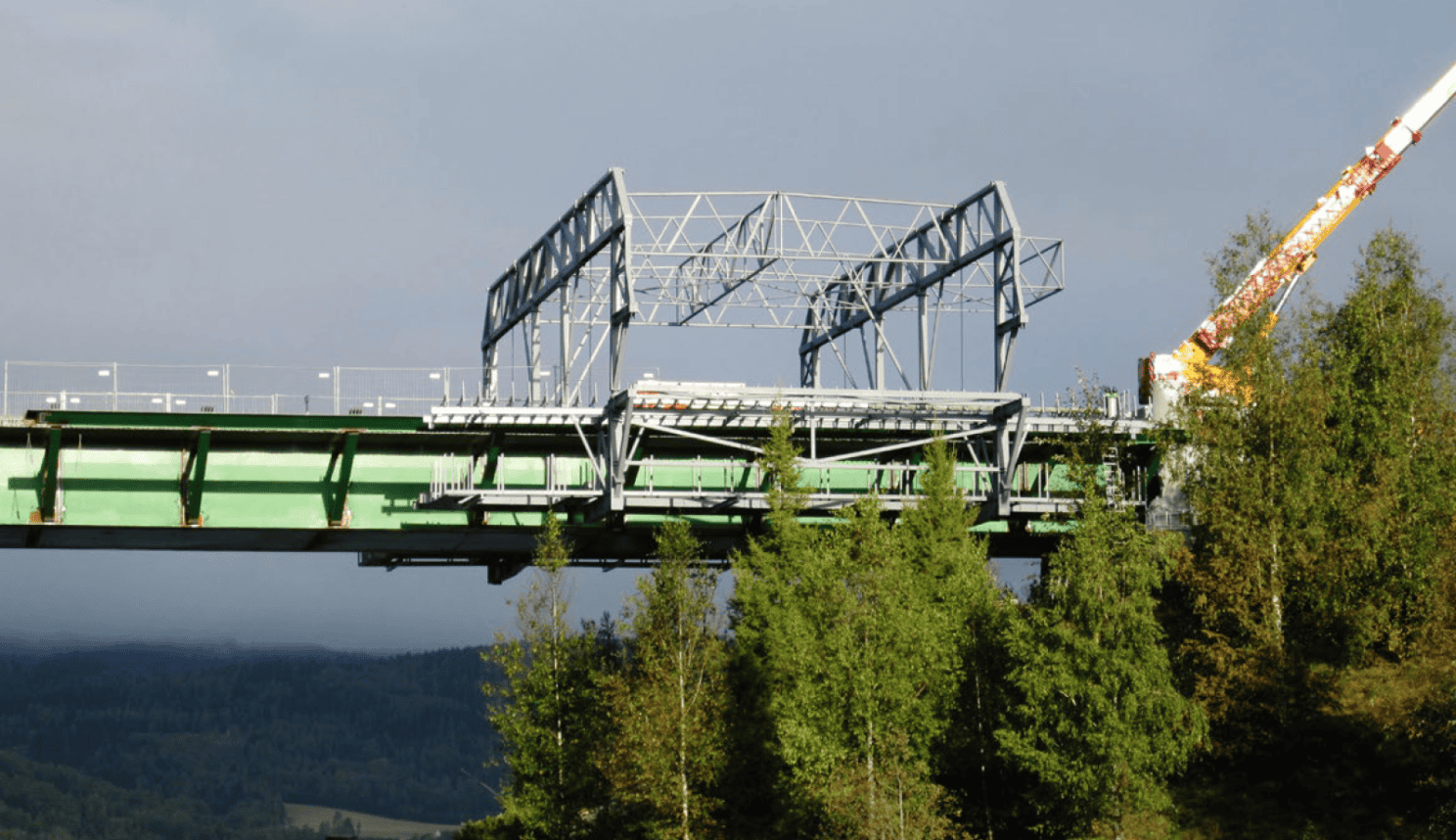
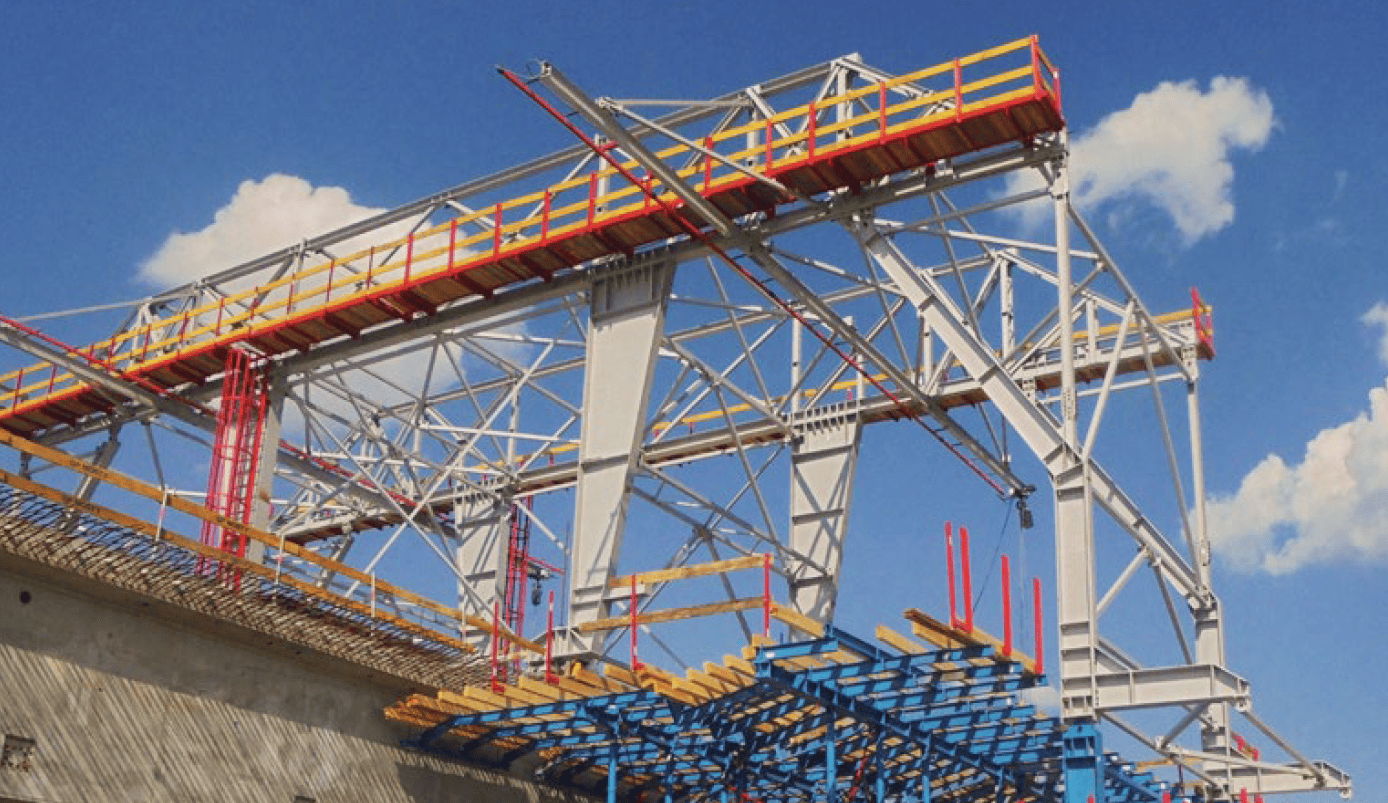
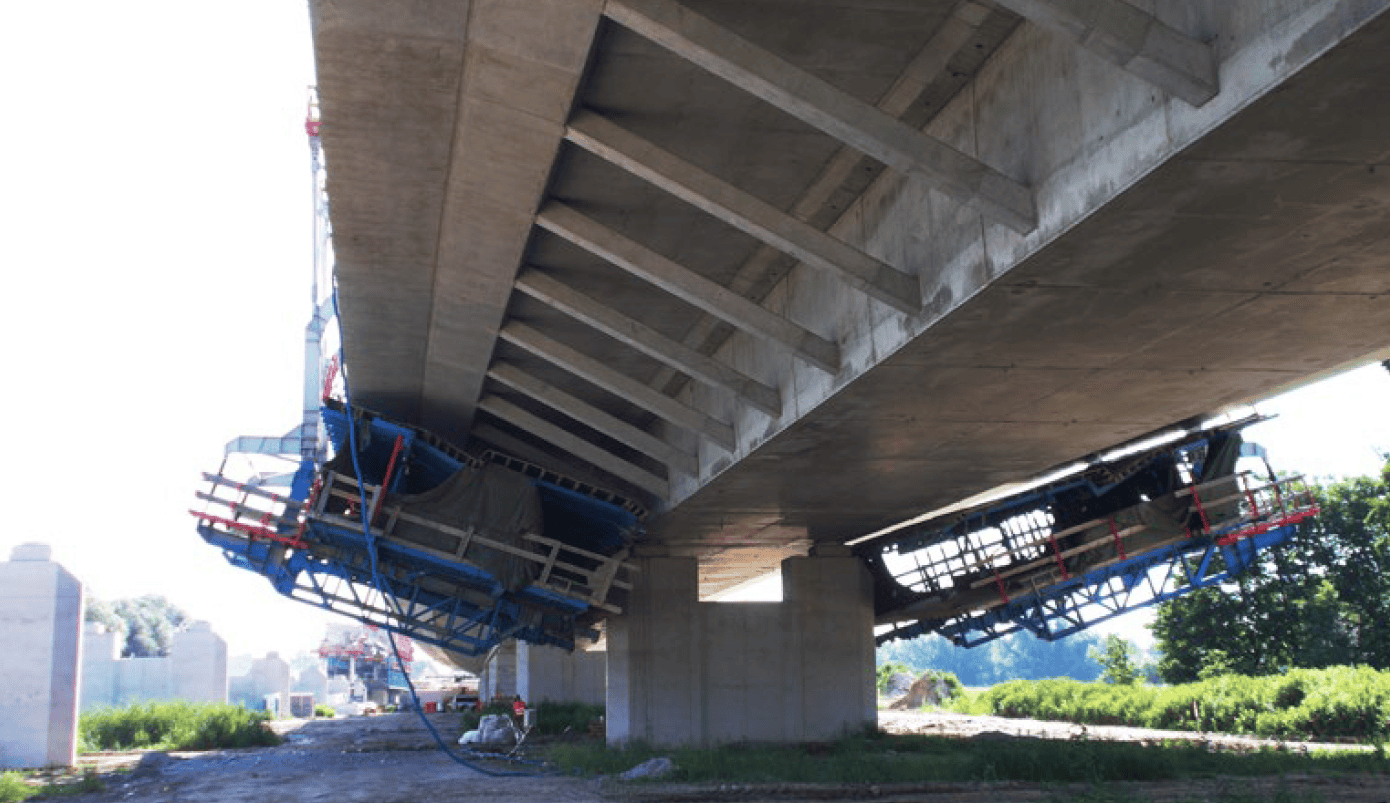
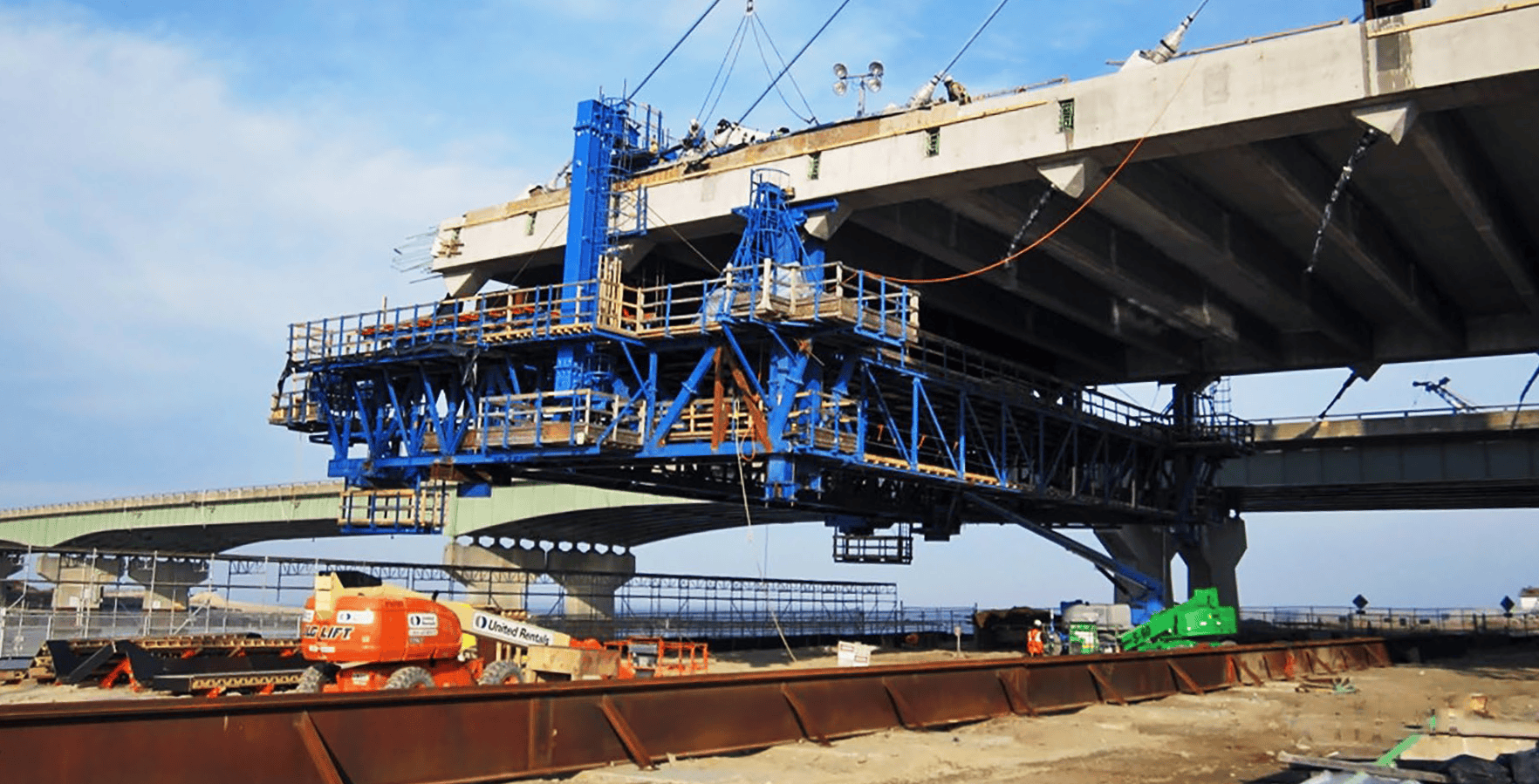
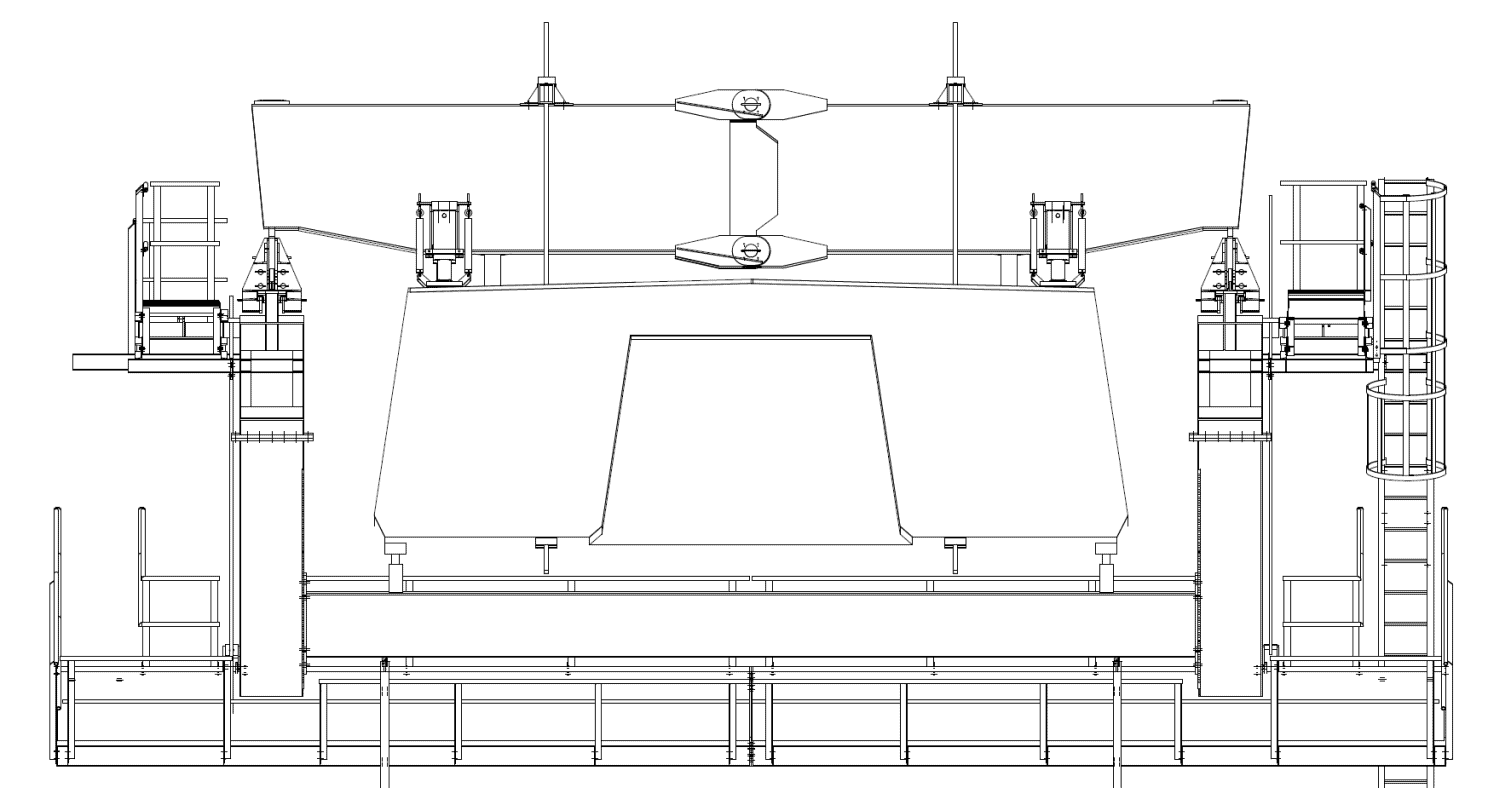
External formwork of wide deck

Form Travellers FT

Content

  1. General
  2. Overhead Form Traveller system
  3. Underslung Form Traveller system
  4. Wing Form Traveller system
  5. Arch Form Traveller system
  6. Safety and quality
  7. Services

General

Strukturas as engineering team is committed to quality and safety in every aspect of the working environment, because quality builds trust – trust builds business.

Strukturas as constant engineering succession raised a few generations of engineers filled with wisdom of the seniors and supplementation of up to date digital tools.

Hundreds of successfully executed projects globally showcase Strukturas as leadership and adaptability.

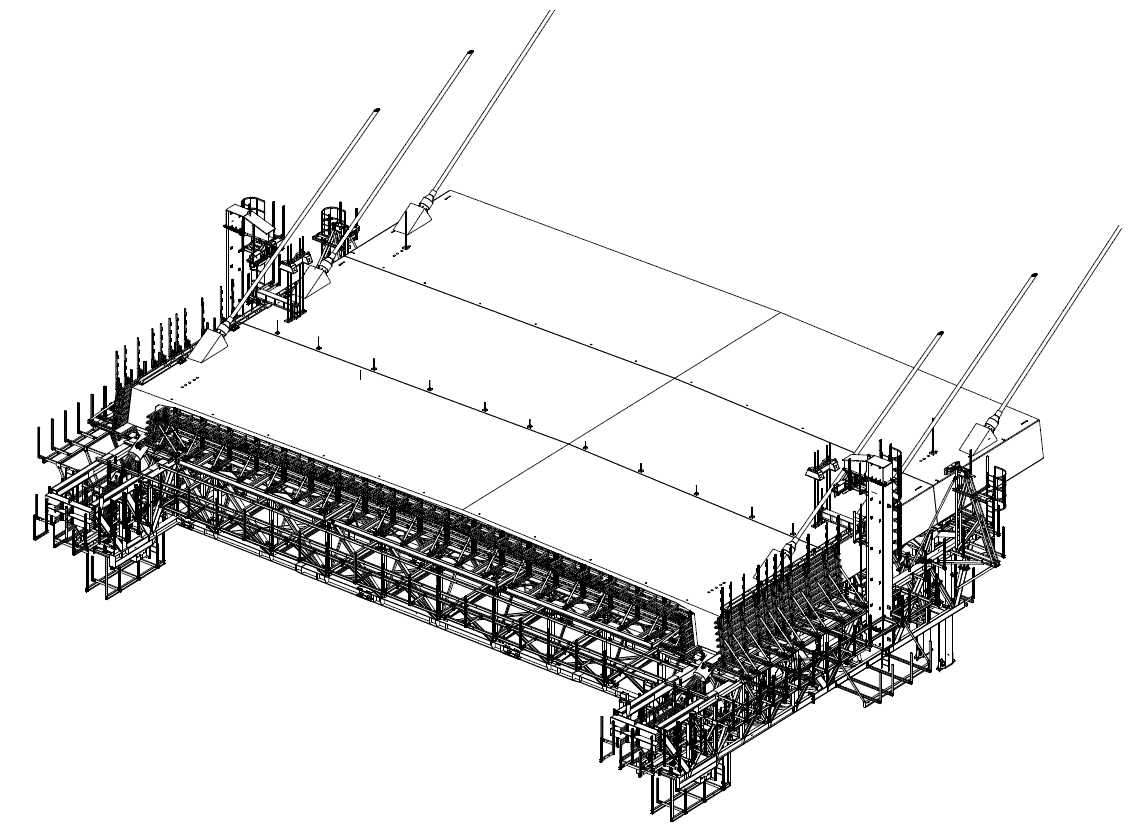
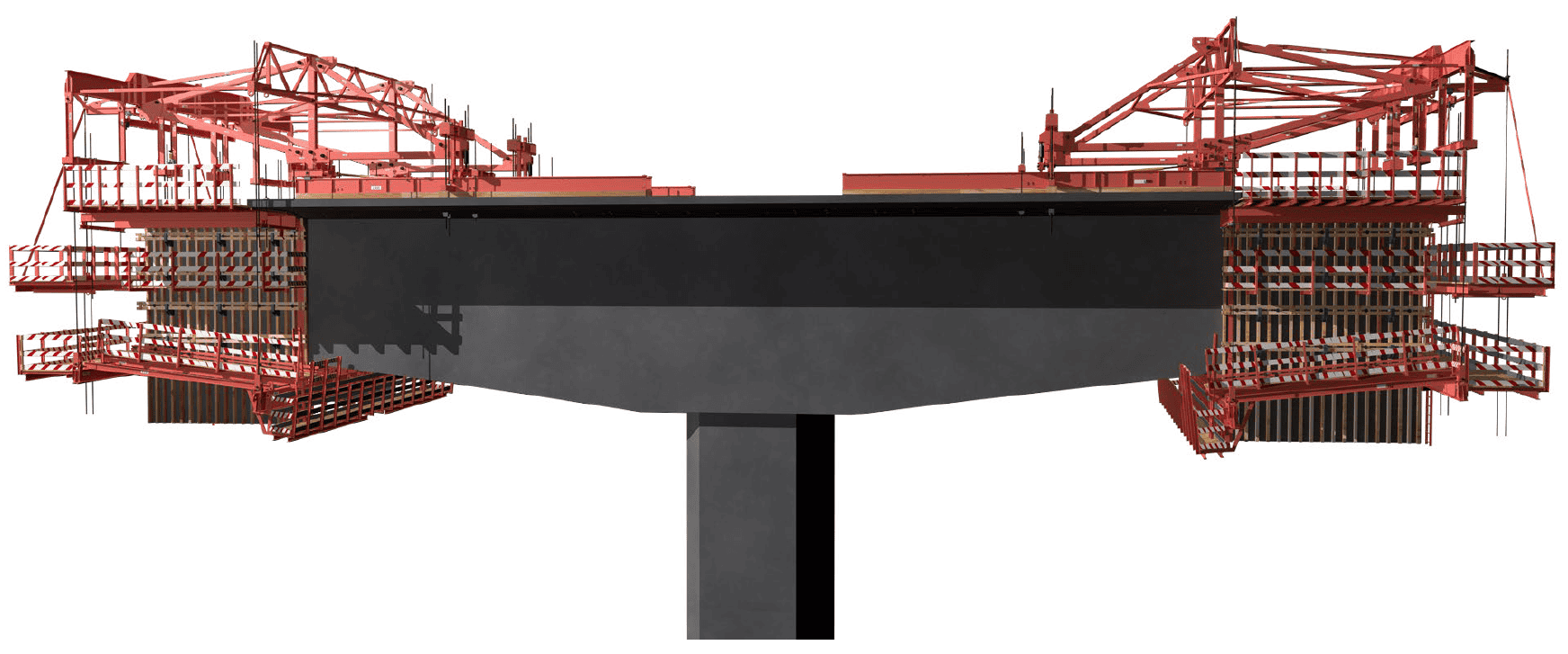
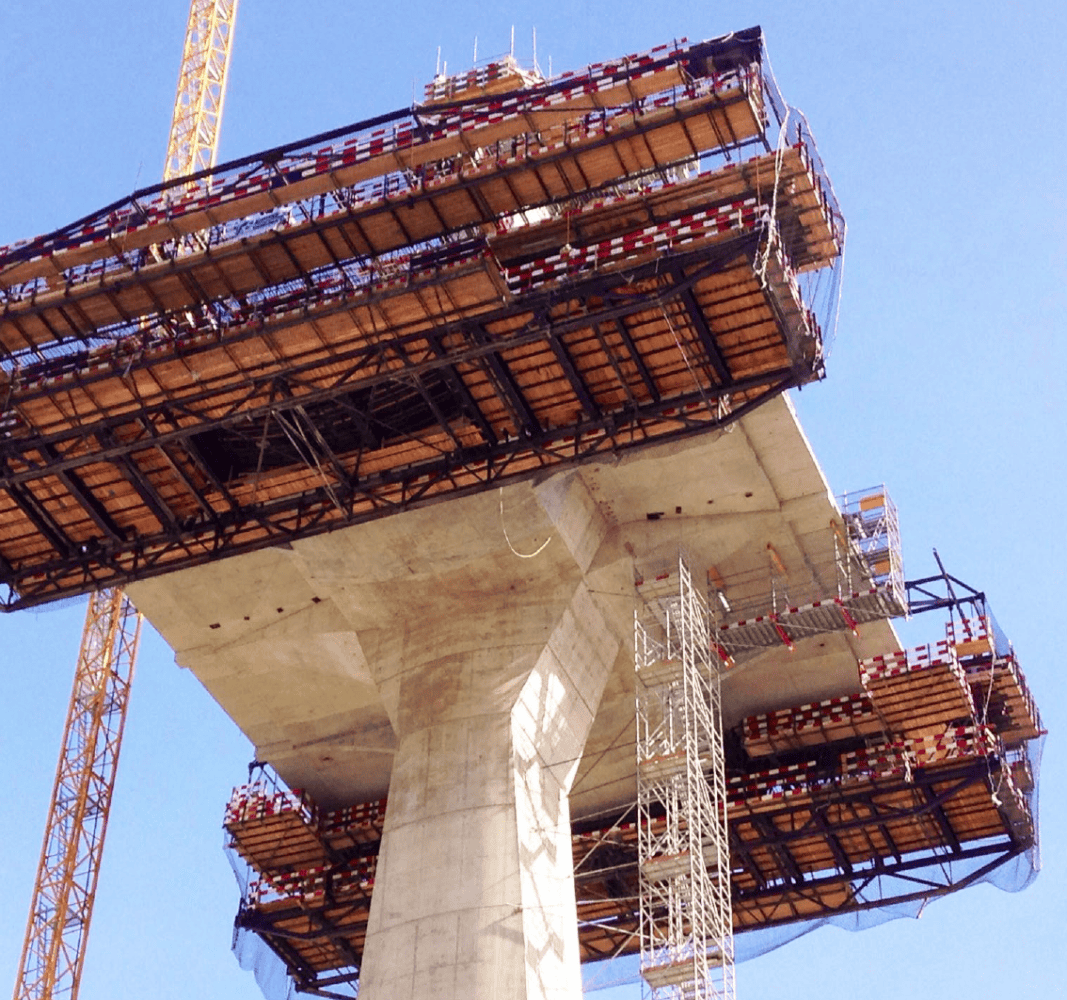
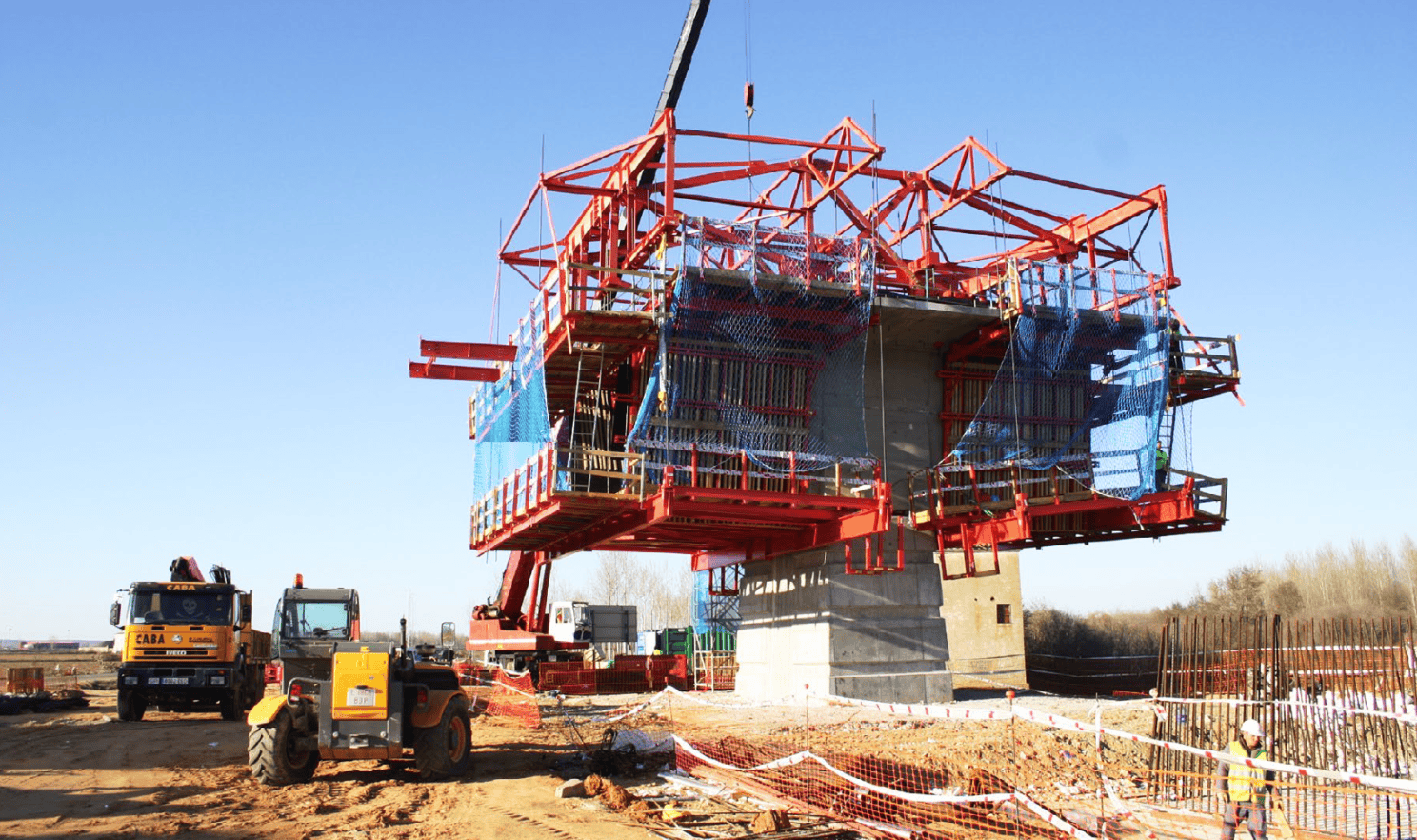
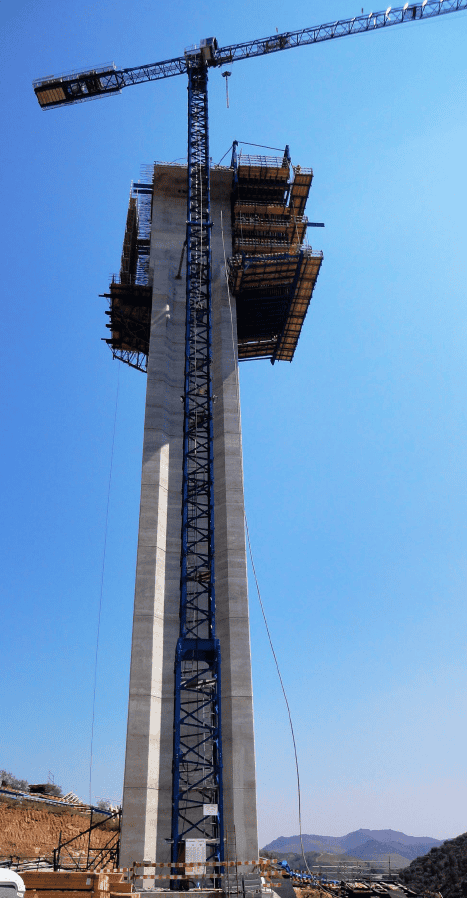
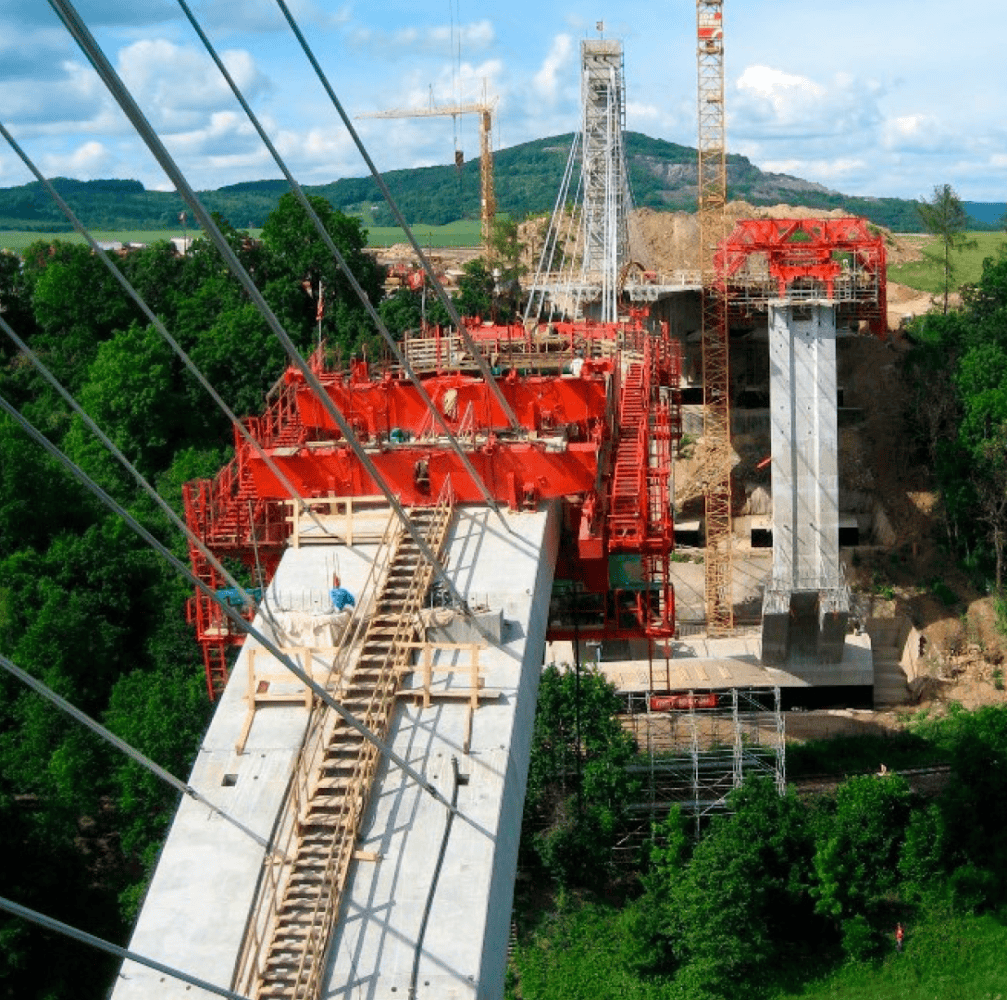
The Strukturas as Form Traveller (FT) system is a competitive and reliable solution for balanced cantilever construction method. With our 50 years of experience in conception and designing bridge building equipment, we currently offer the market an economical and versatile formwork solution used to cast in situ bridge and viaduct deck segments.

Both the overhead and underslung Form Traveller (FT) systems have been designed to be used in building prestressed reinforced concrete decks built with the balanced cantilever method, whether suspended or not by stays.

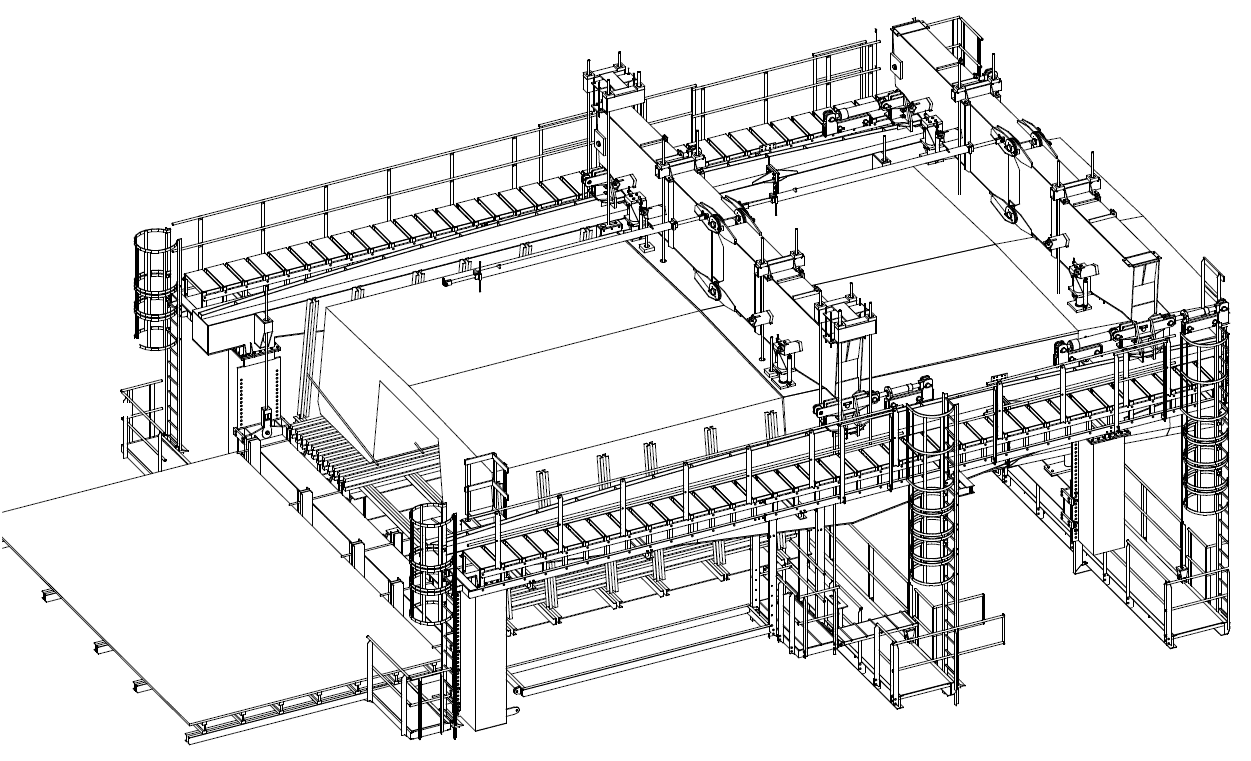
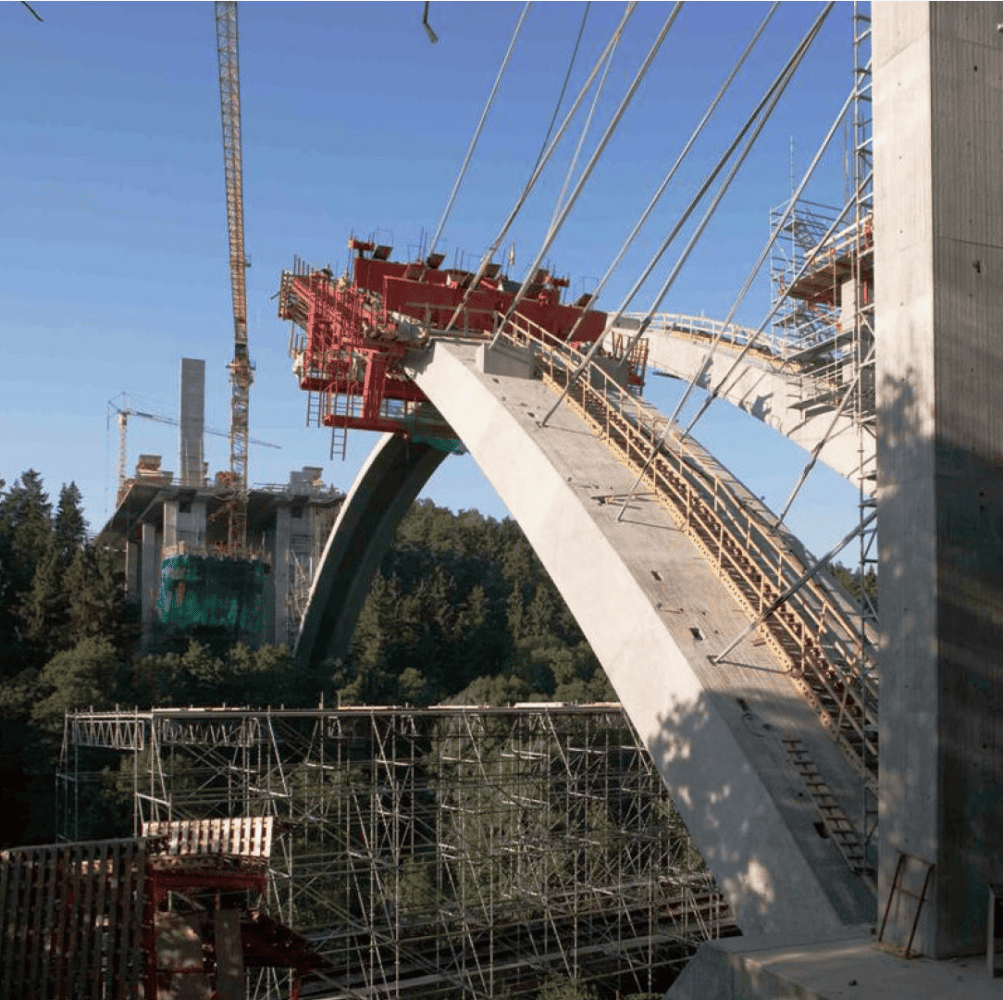
Form Travelers for casting arch segments in concrete, or deck wings also in concrete, round out our Form Traveler solutions.

Overhead Form Traveller system
Underslung Form Traveller system
Wing Form Traveller system
Arch Form Traveller system

Overhead Form Traveller system

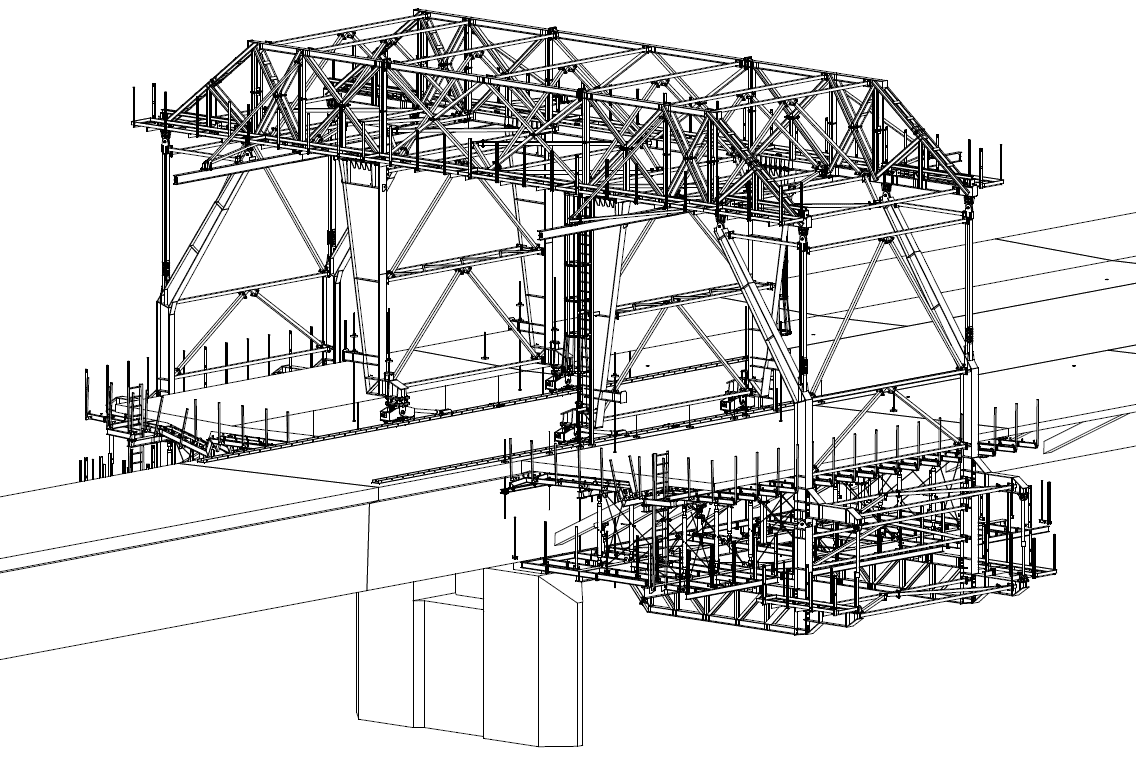
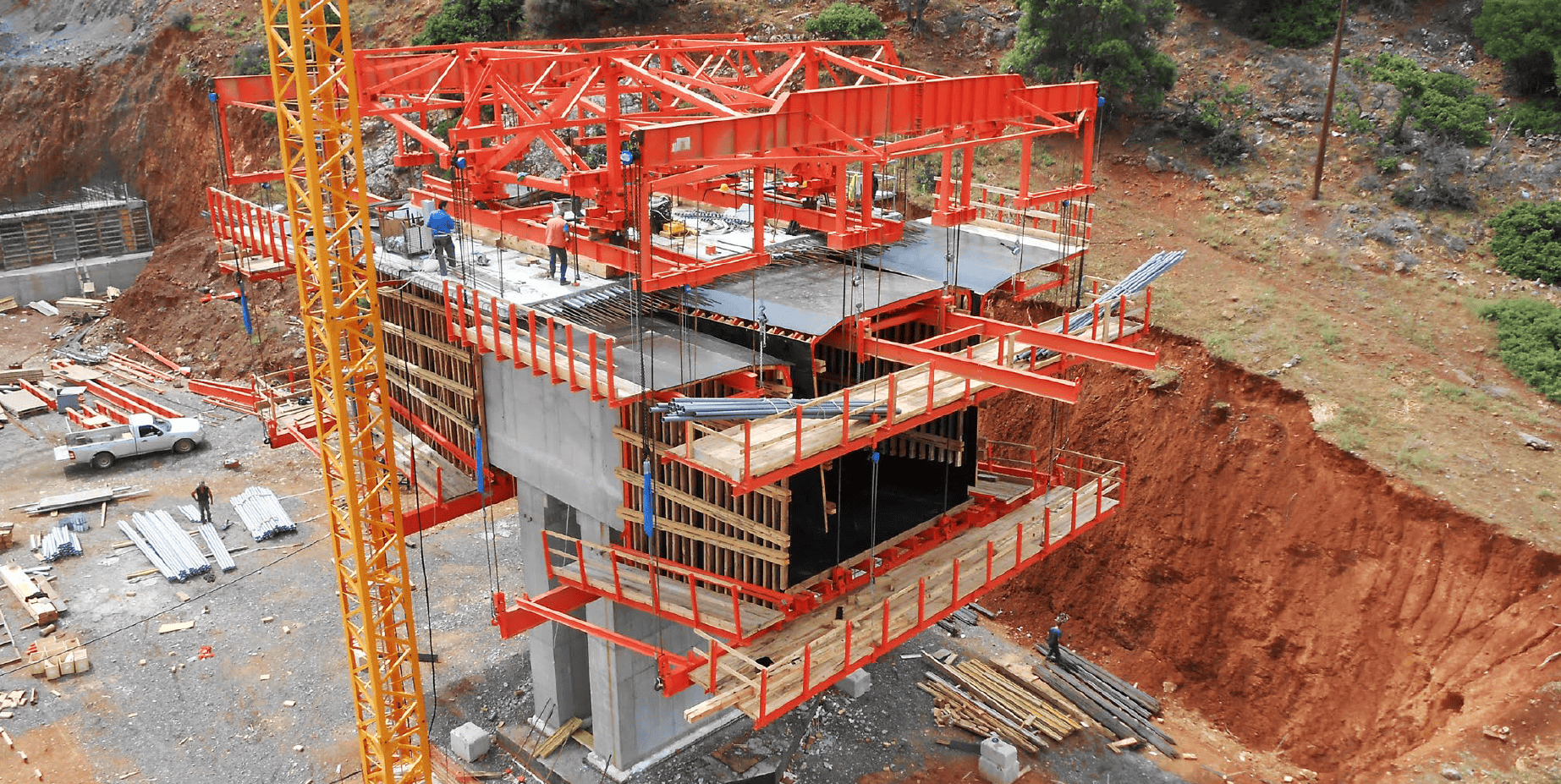
The Overhead Form Traveller system is the solution most commonly used for casting bridge and viaduct decks built with the balanced cantilever method whose span varies from around 60 to 250 meters in length.

A standard Overhead Form Traveller is normally designed to be used in casting segments up to 5 meters in length and up to around 300 tons in weight.

For longer or heavier segments, “tailor-made” Form Travellers can always be designed to work in these special conditions.

Because of our extensive design experience, we can find the perfect solution for all different segments geometries.
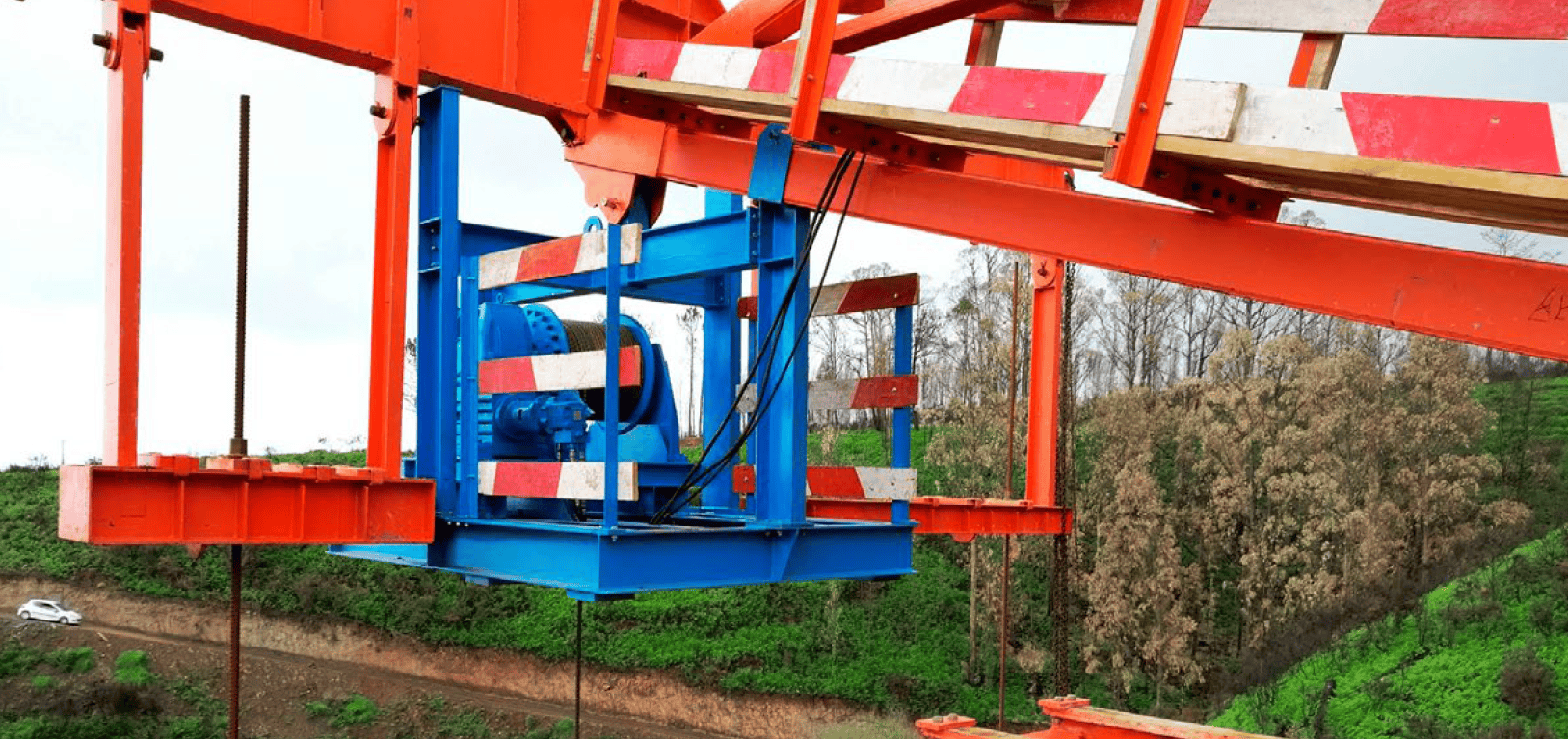
Overhead Form Traveller (FT)

Main components


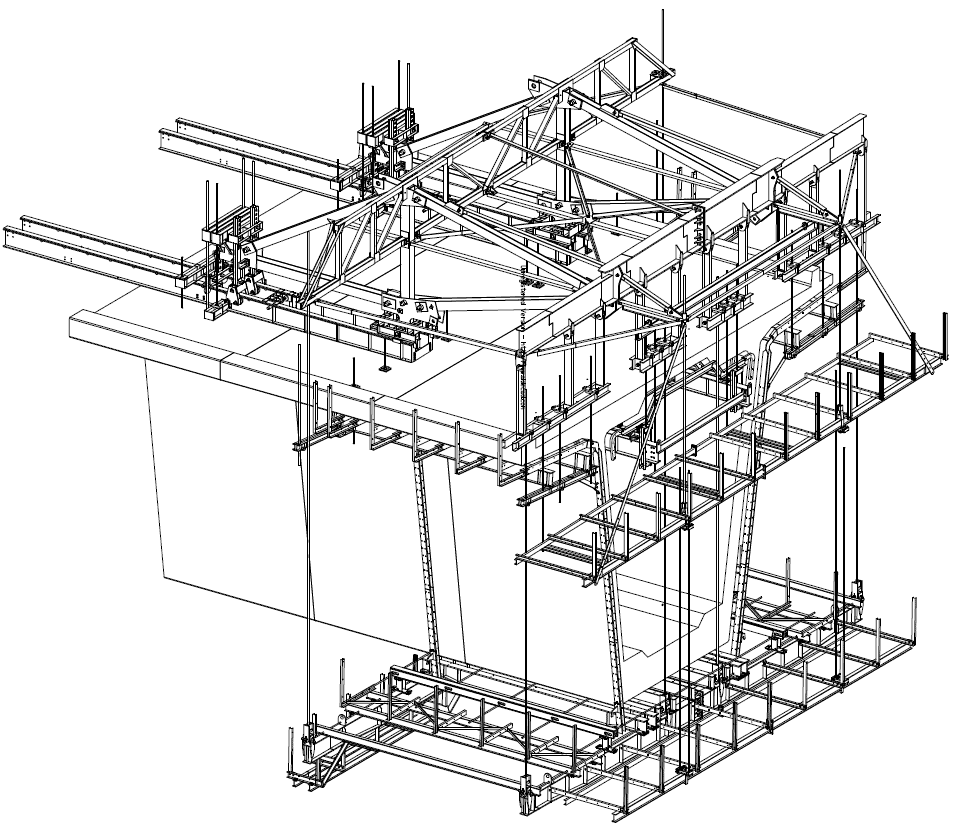
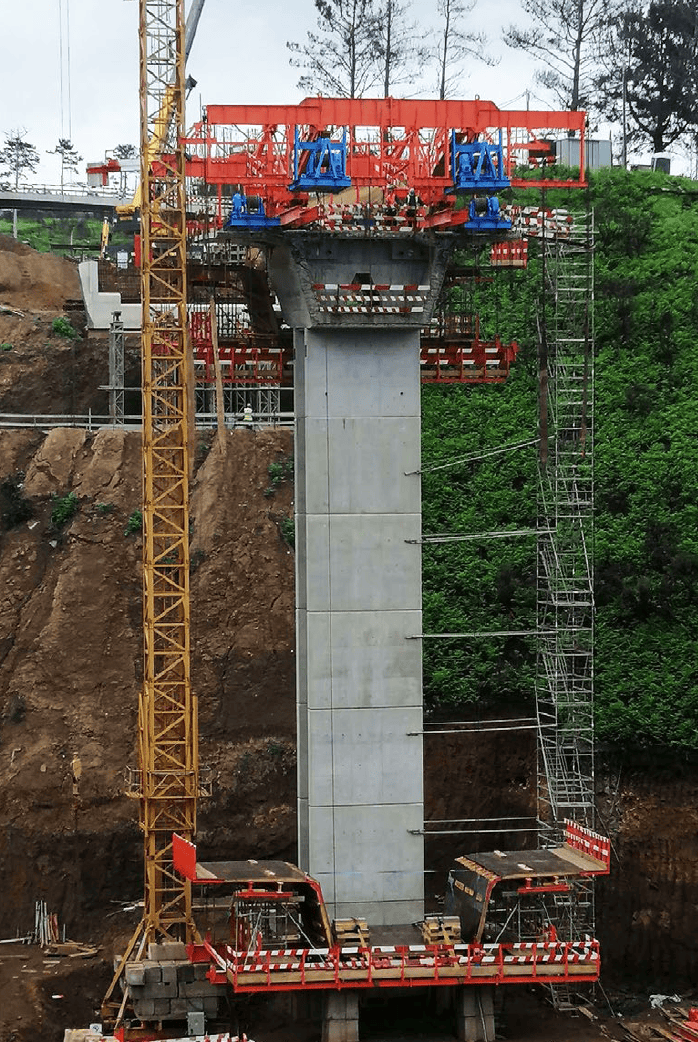
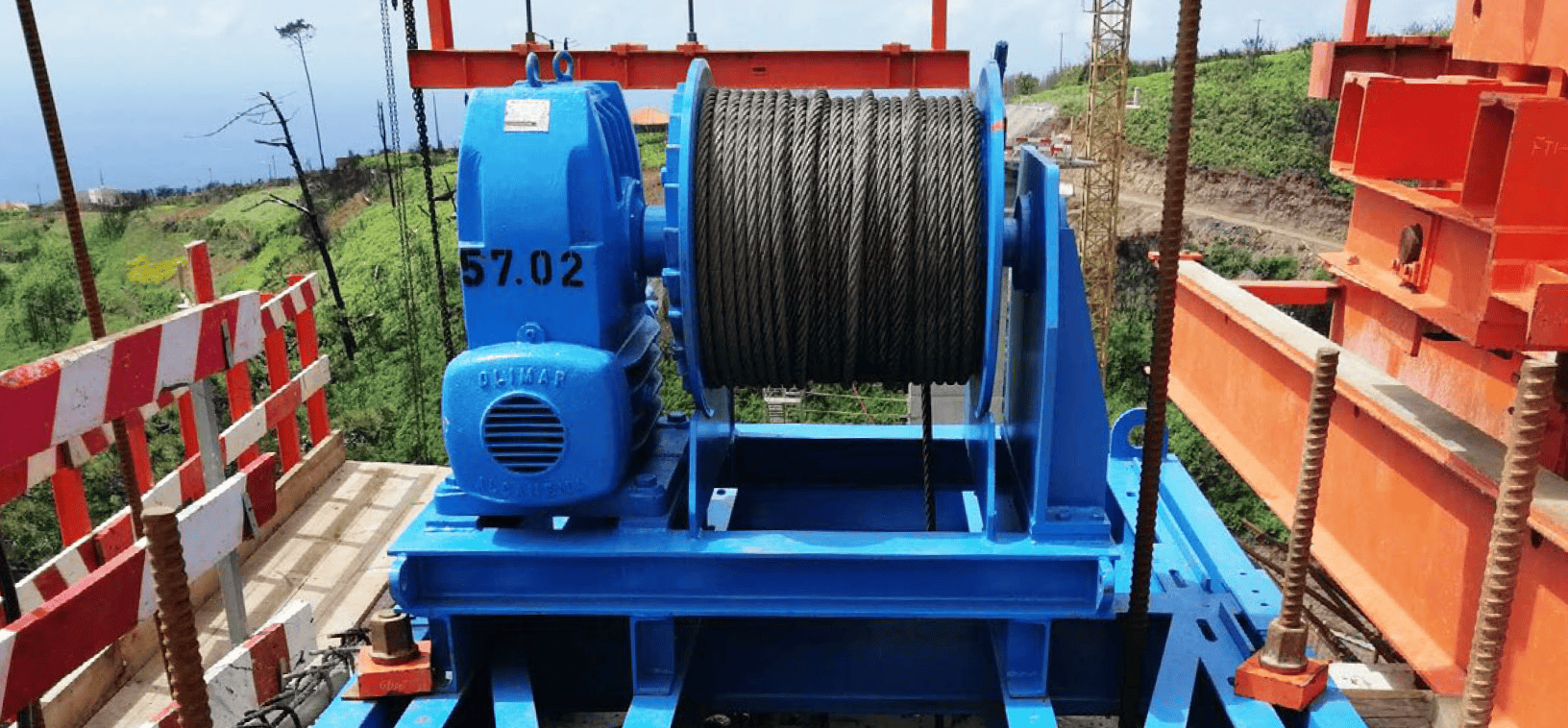
A typical Overhead Form Traveller (FT) consists of a main self-supporting structure and a launching system combined with a specific formwork.

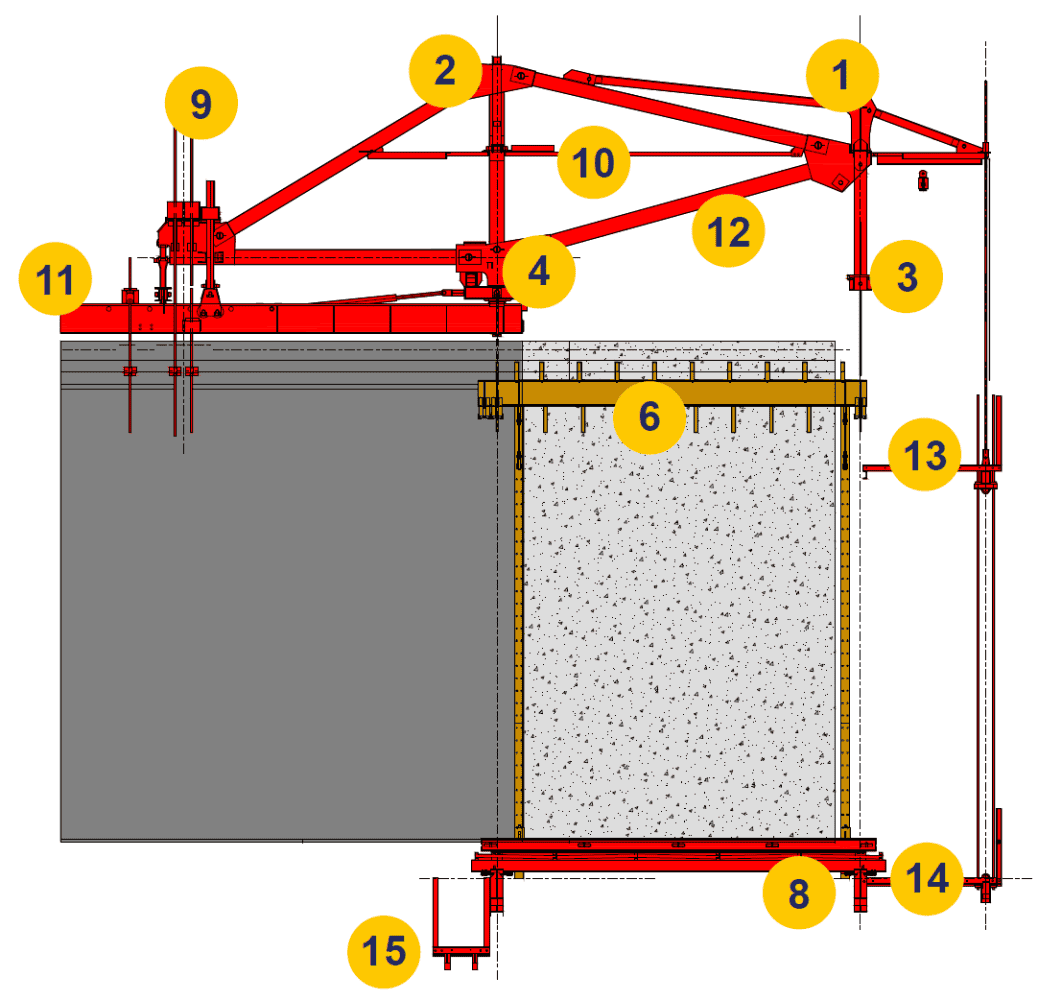
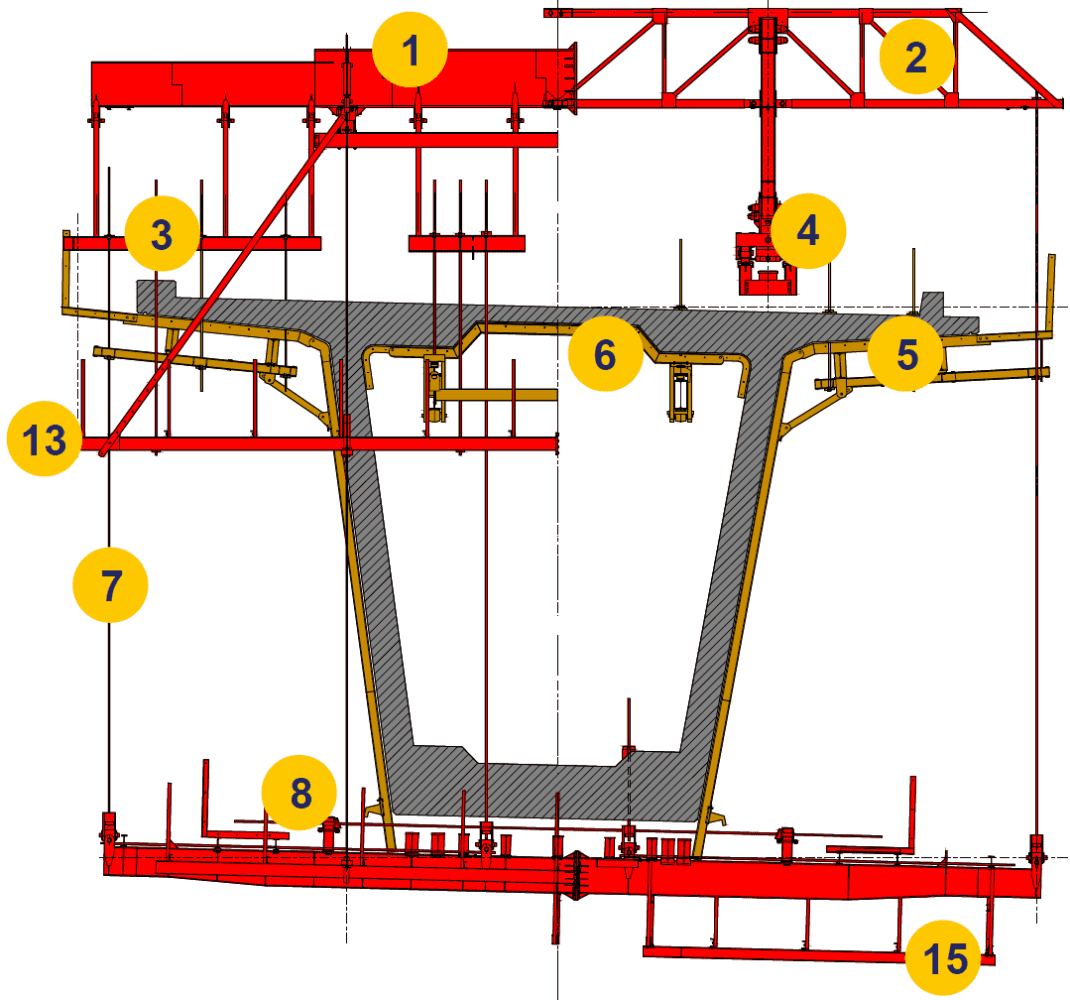
Main components:

  1. Front beam
  2. Rear truss
  3. Transverse beams
  4. Front bogie
  5. External formwork
  6. Internal formwork
  7. Threaded bars
  8. Bottom slab platform
  9. Rear bogie
  10. Wind bracing
  11. Main rails
  12. Main frame
  13. Upper working platform
  14. Lower working platform
  15. Rear working platform
Overhead Form Traveller (FT) Longitudinal view
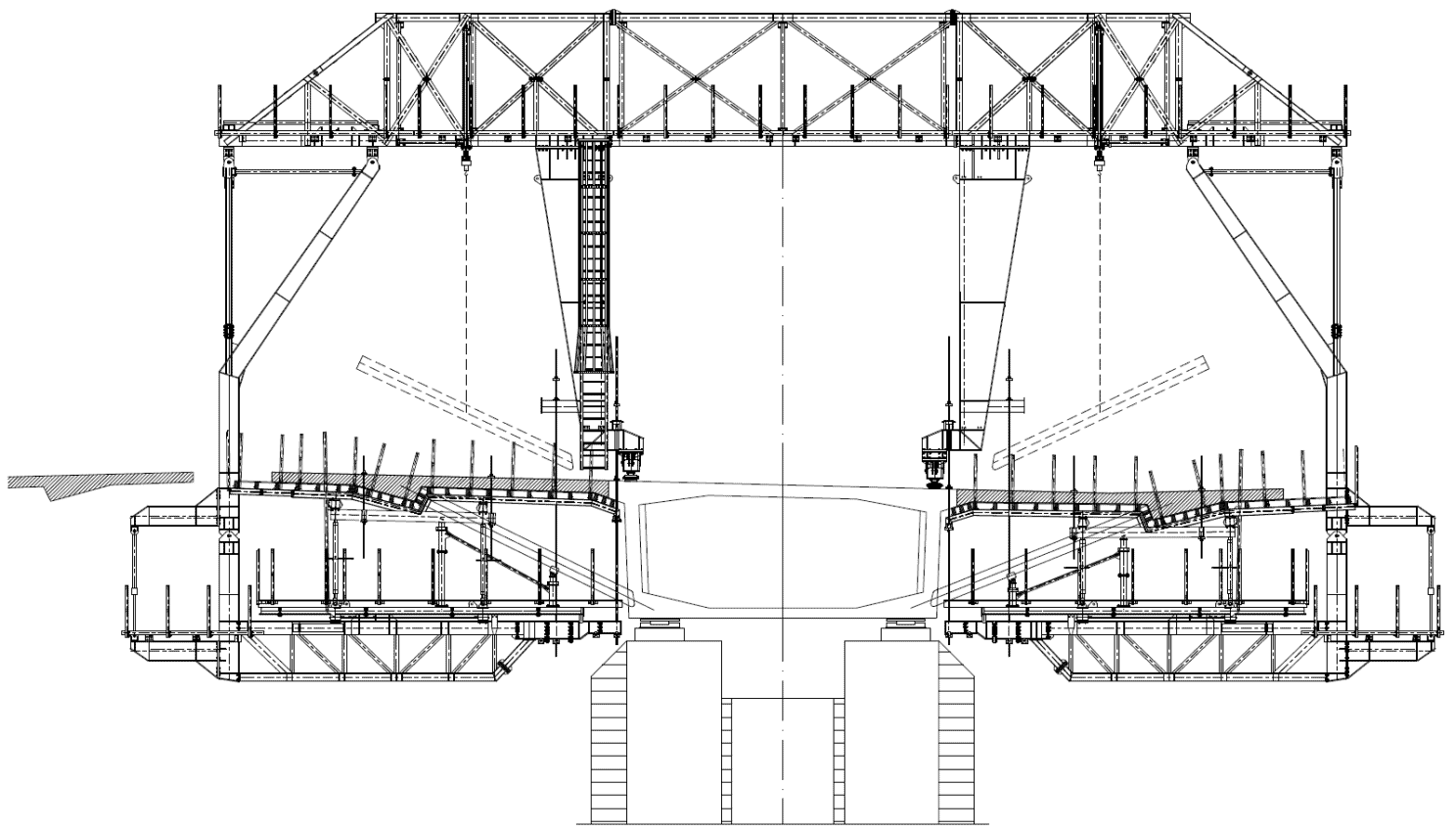
Overhead Form Traveller (FT) Cross section

Formwork

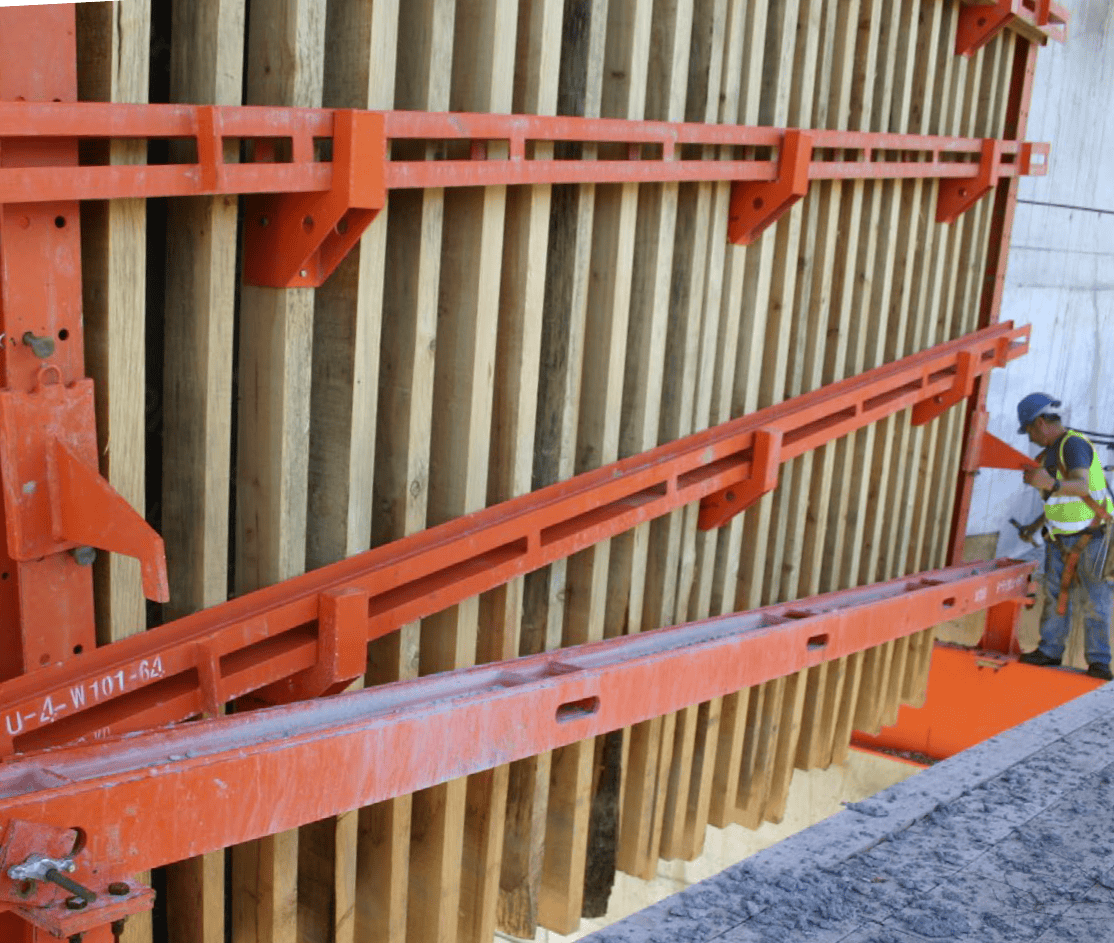
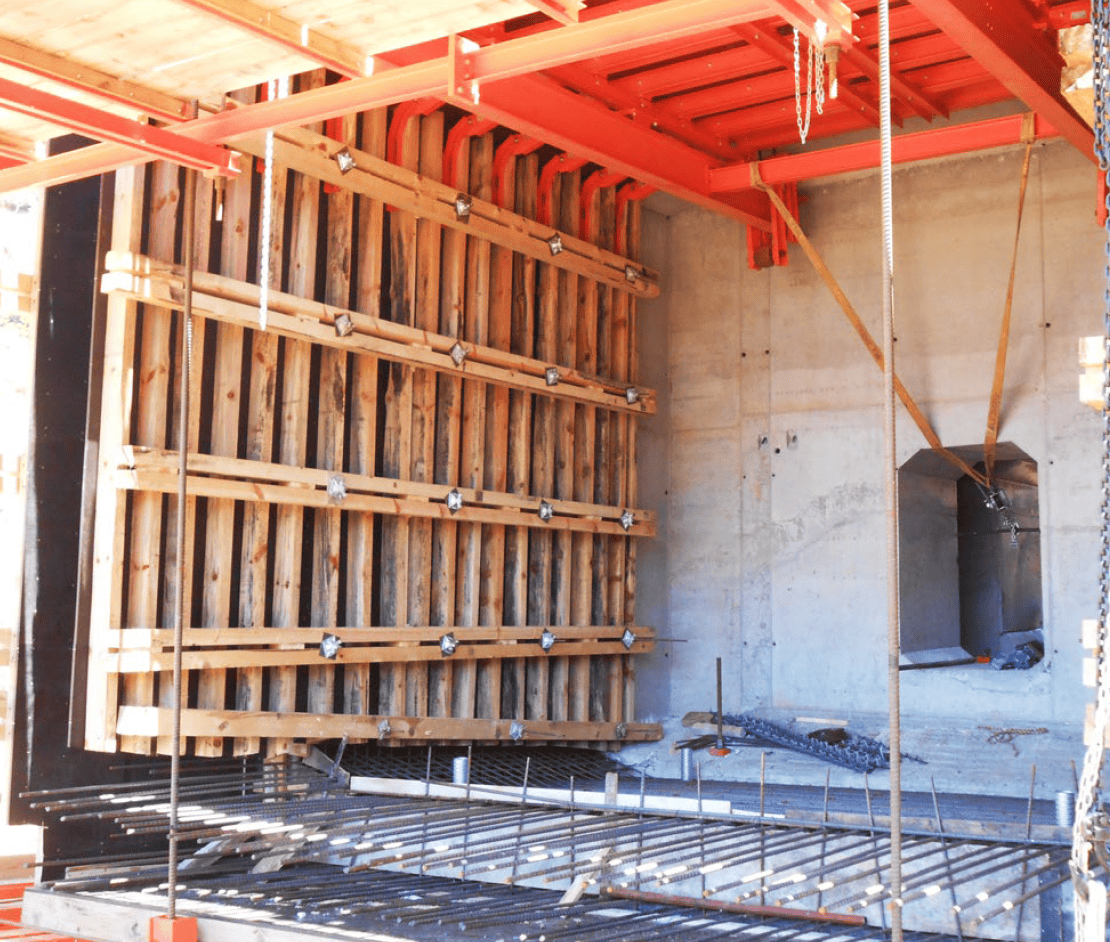
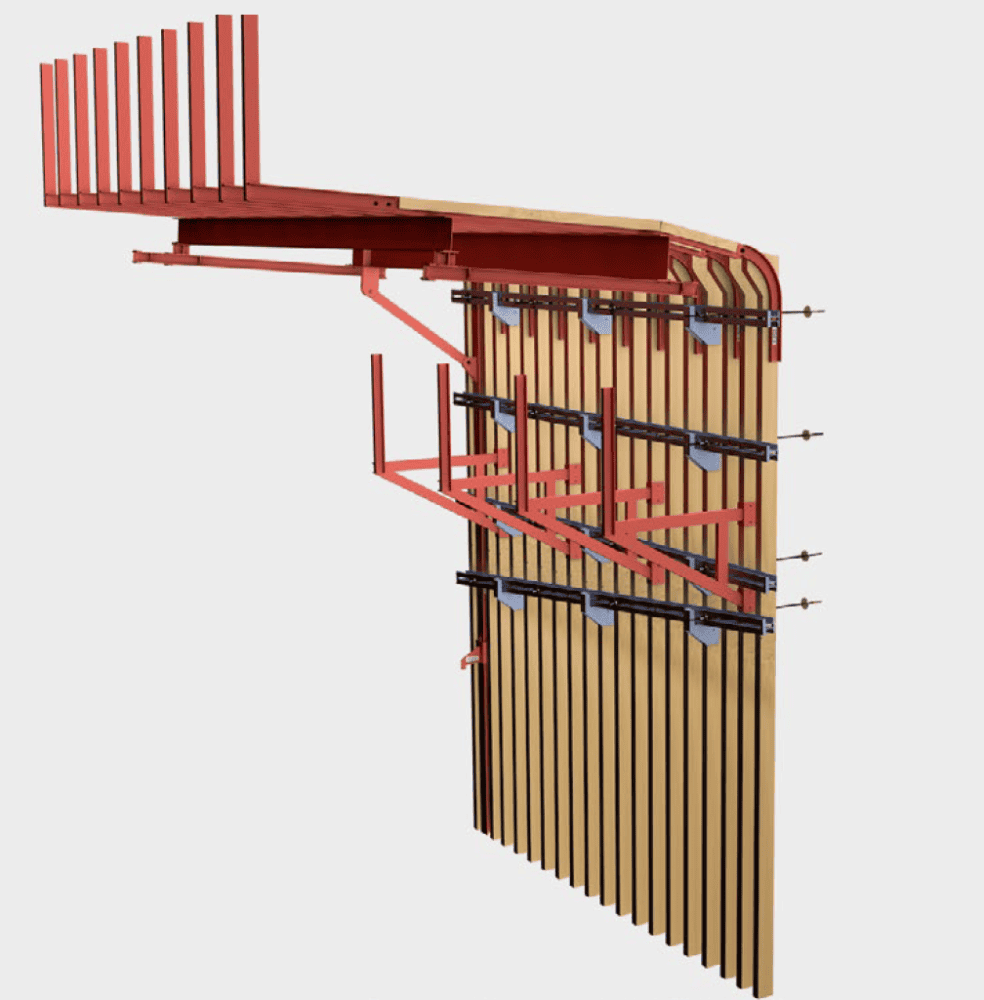
The typical formwork of a Strukturas as Form Traveller is comprised of a steel structure supplemented by saw wooden beams. Beams such as H20 and others can be used instead of saw wooden beams, especially in external formwork where the beams of the web formwork’s panels do not need to be sawn to adjust to the height, since they pass through the bottom slab platform of the Form Traveller (FT). Strukturas as Form Traveller design includes also the wooden components design.
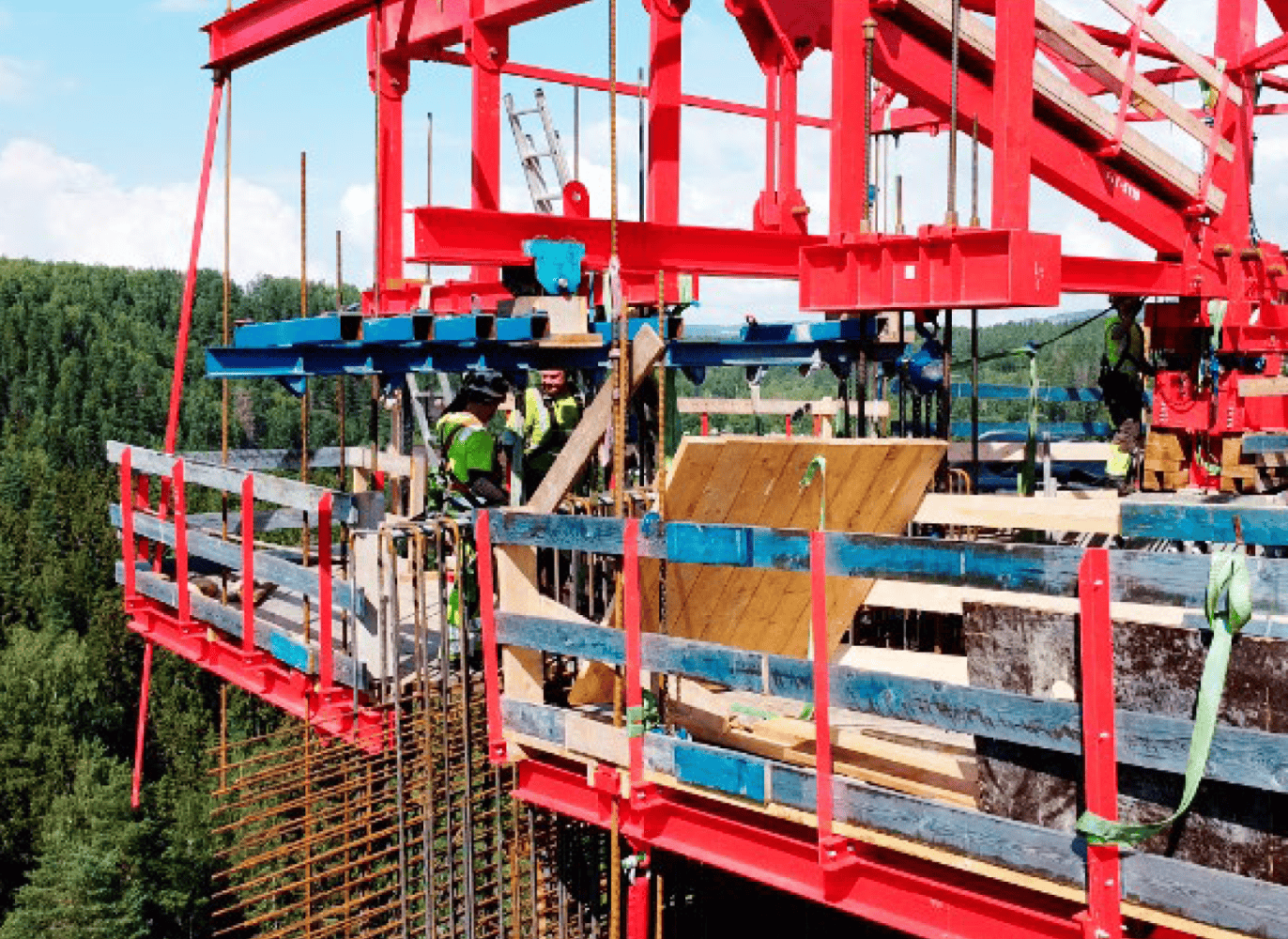
Main advantages:

Internal formwork is easily adjustable to the varying height of the section Easily adaptable to future sections of other decks Economical solution. 

In many special projects, the internal and external formwork includes devices tailored to these specific situations to ensure the Form Travellers’ high level of performance, minimizing cycles, auxiliary equipment and the amount of manpower needed for their operation.

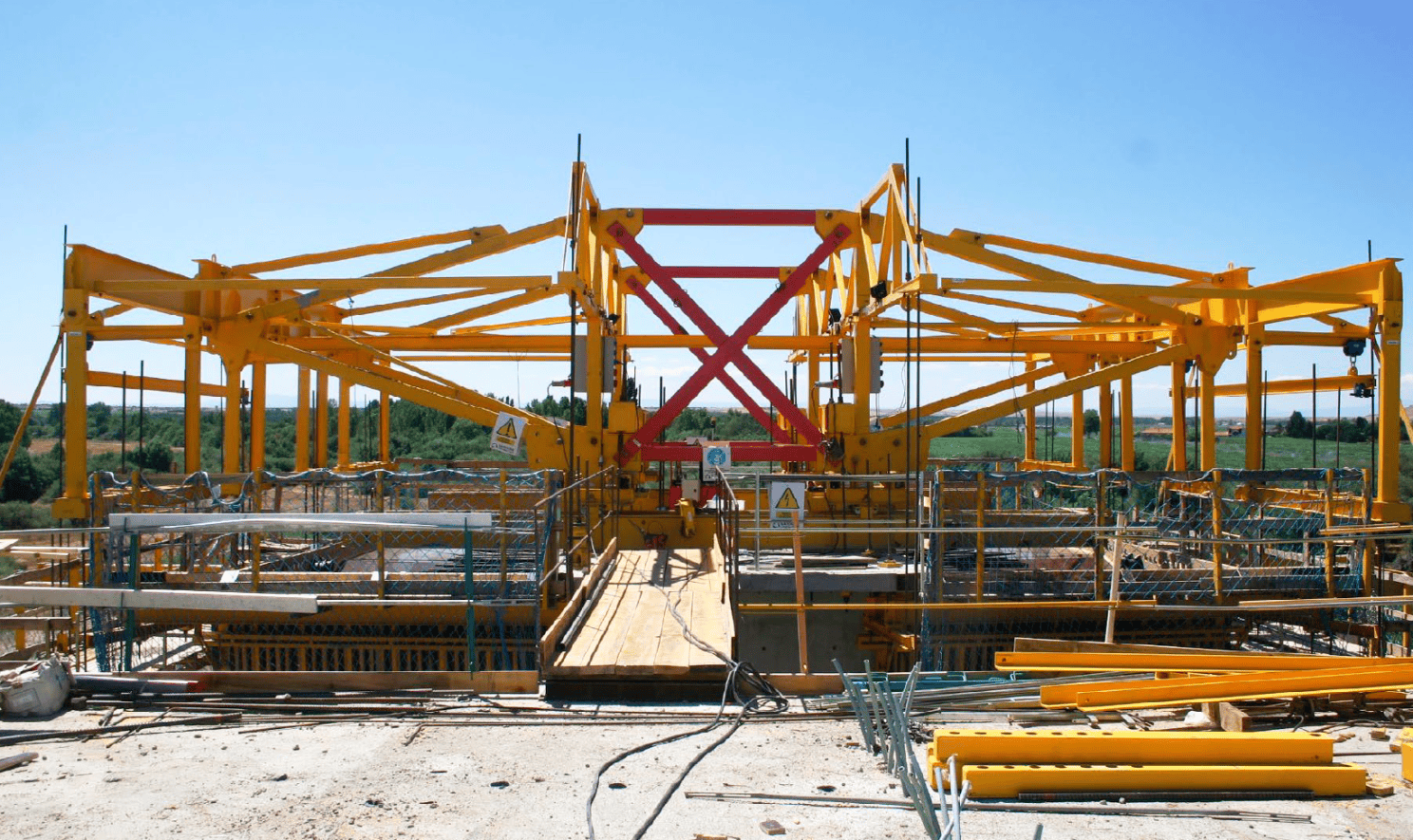
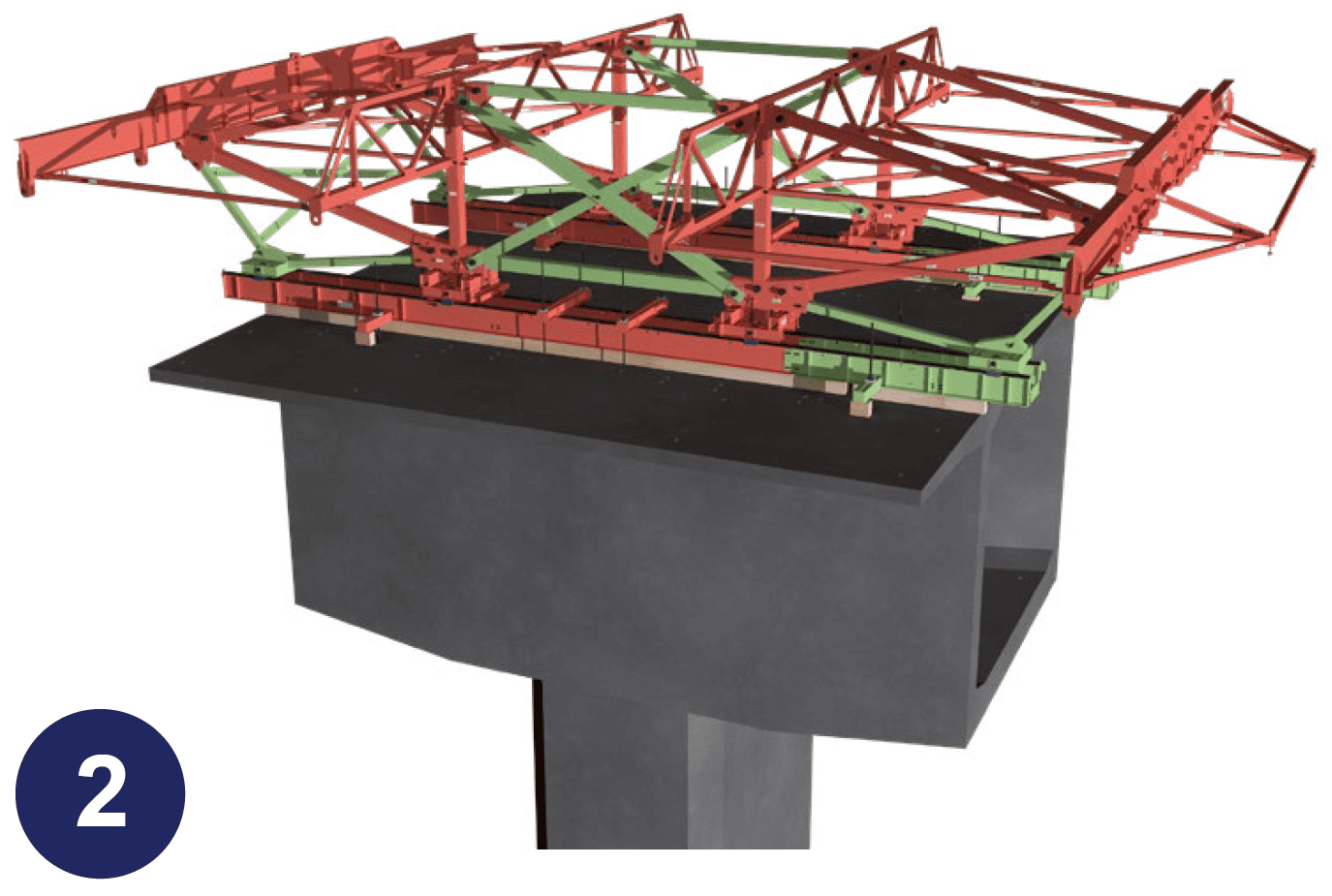
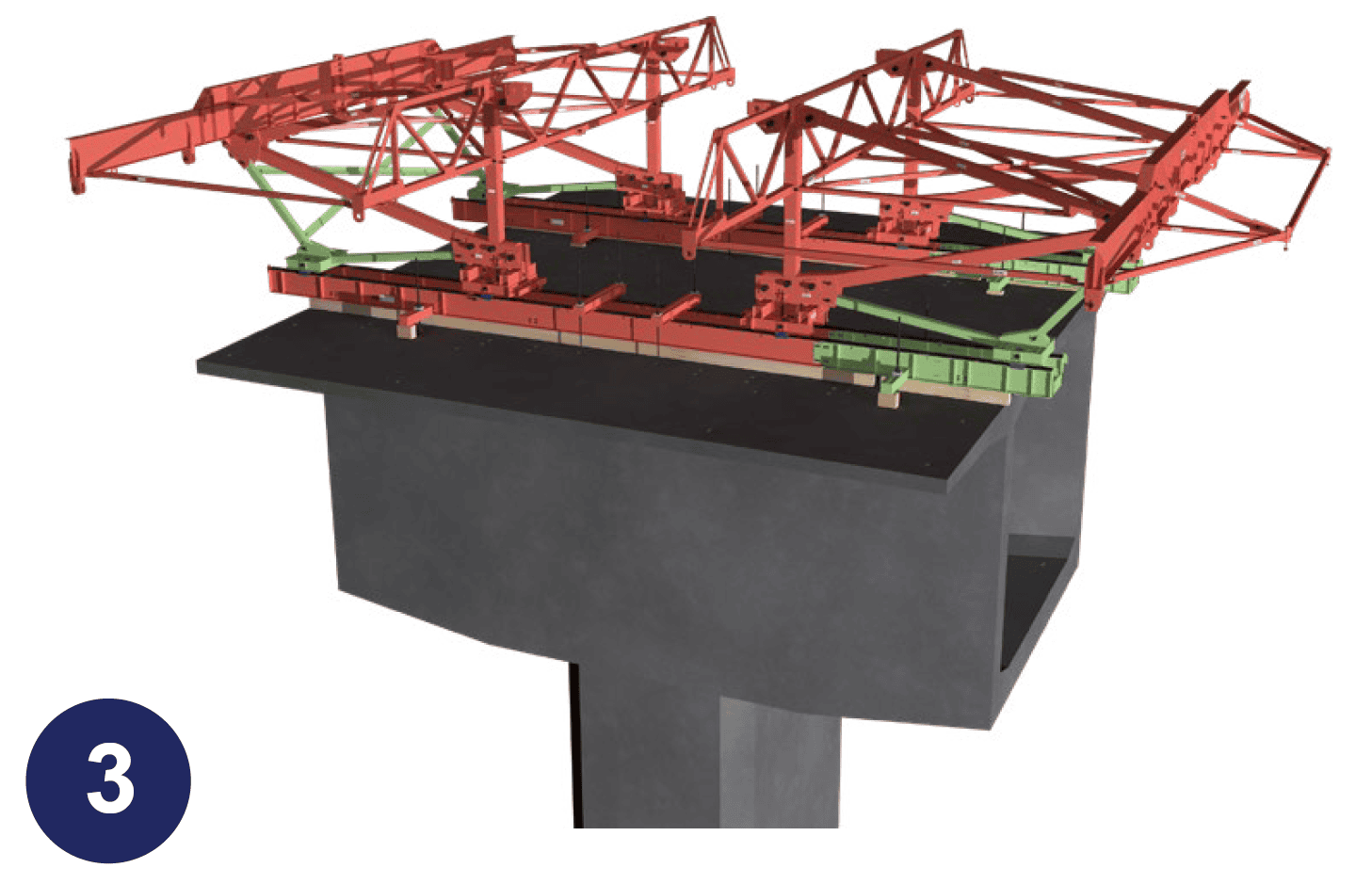
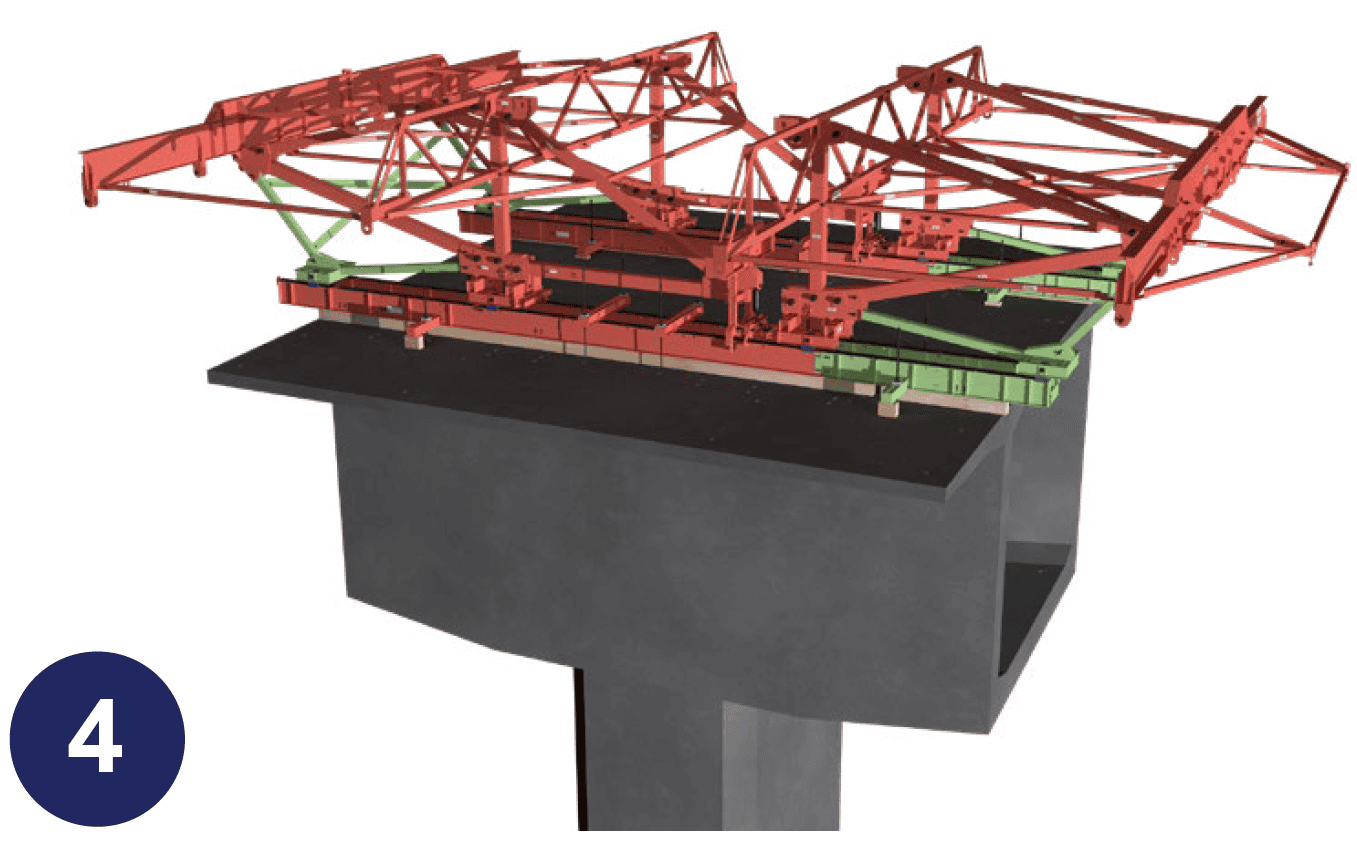
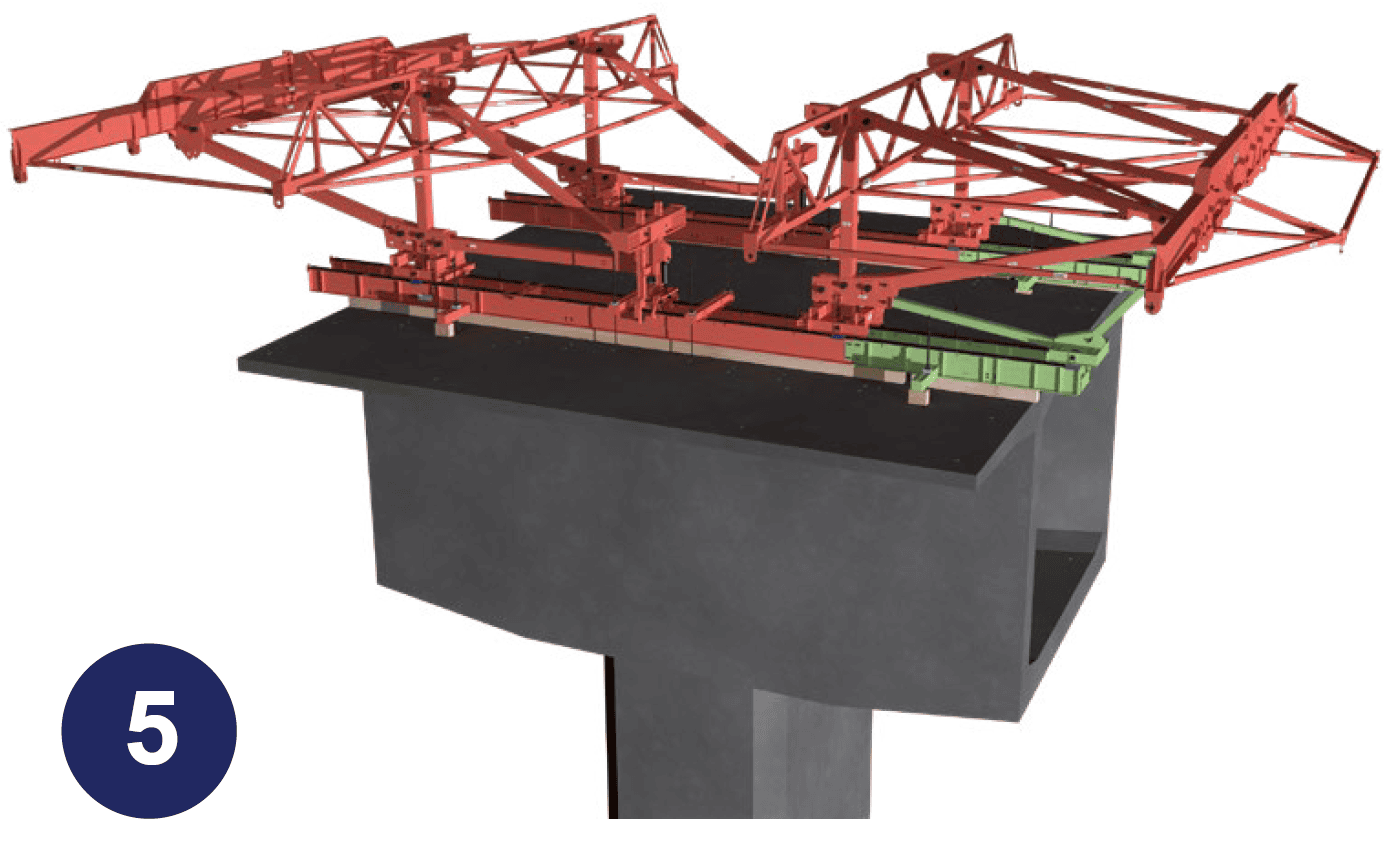
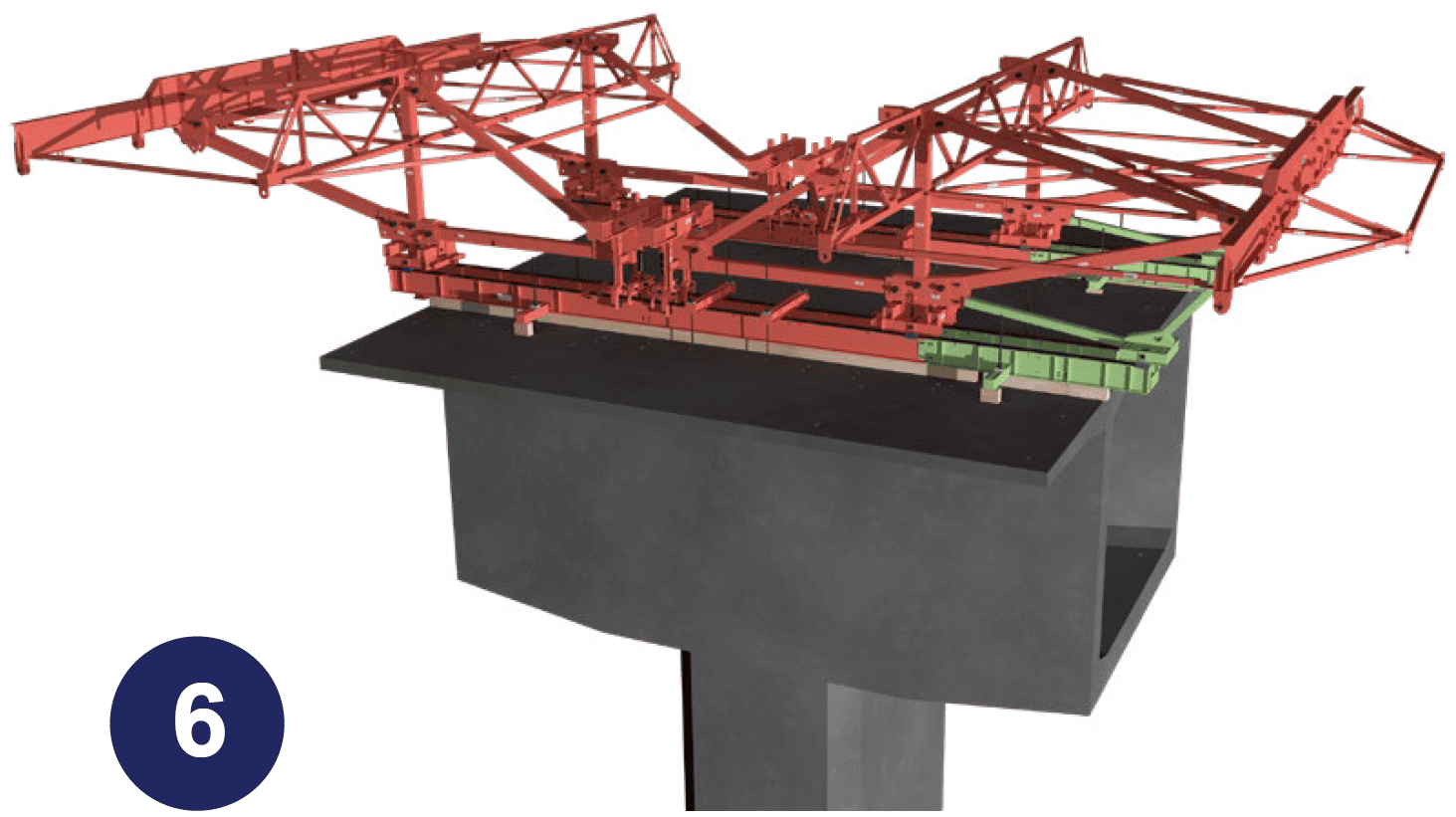
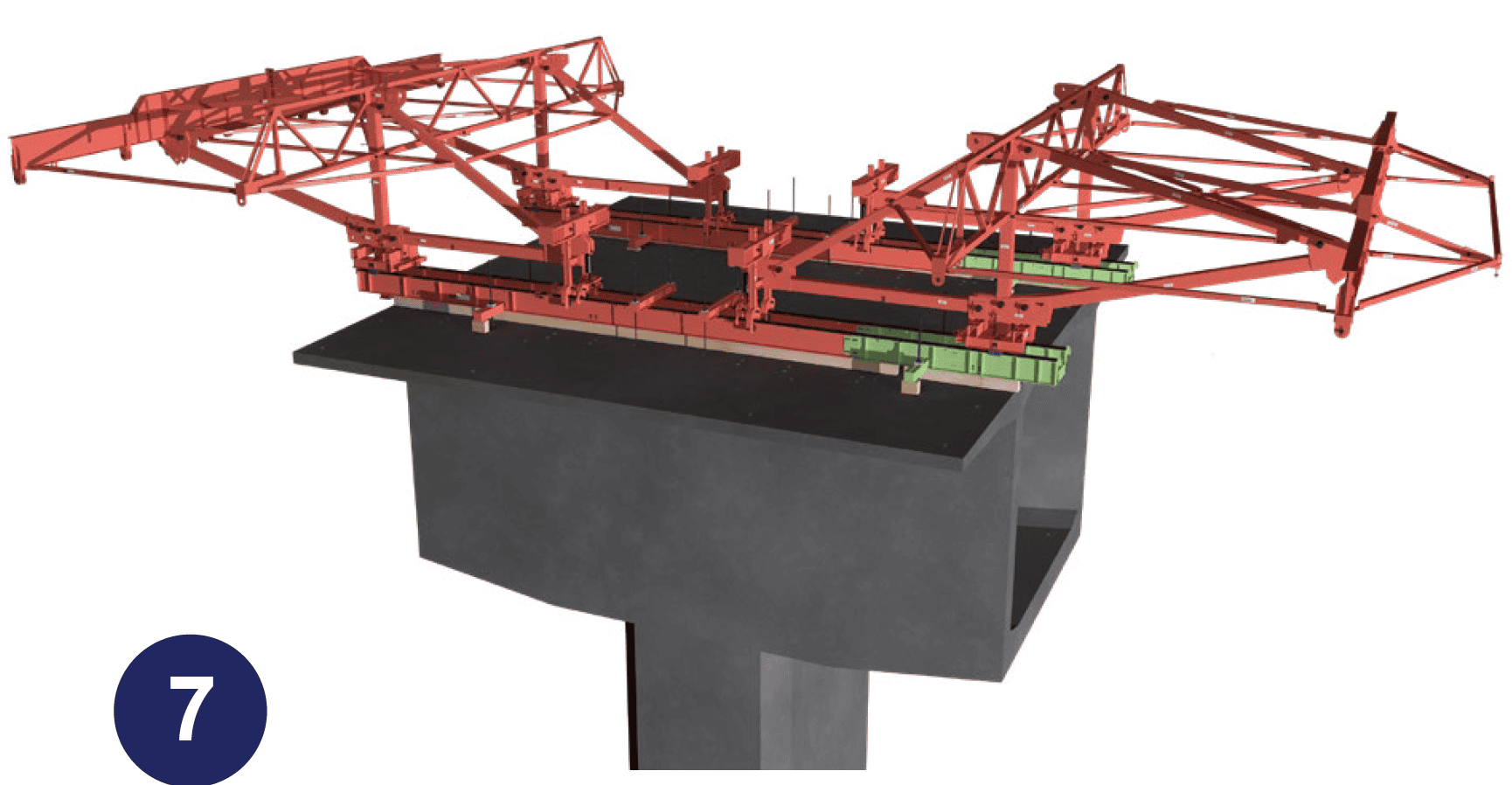
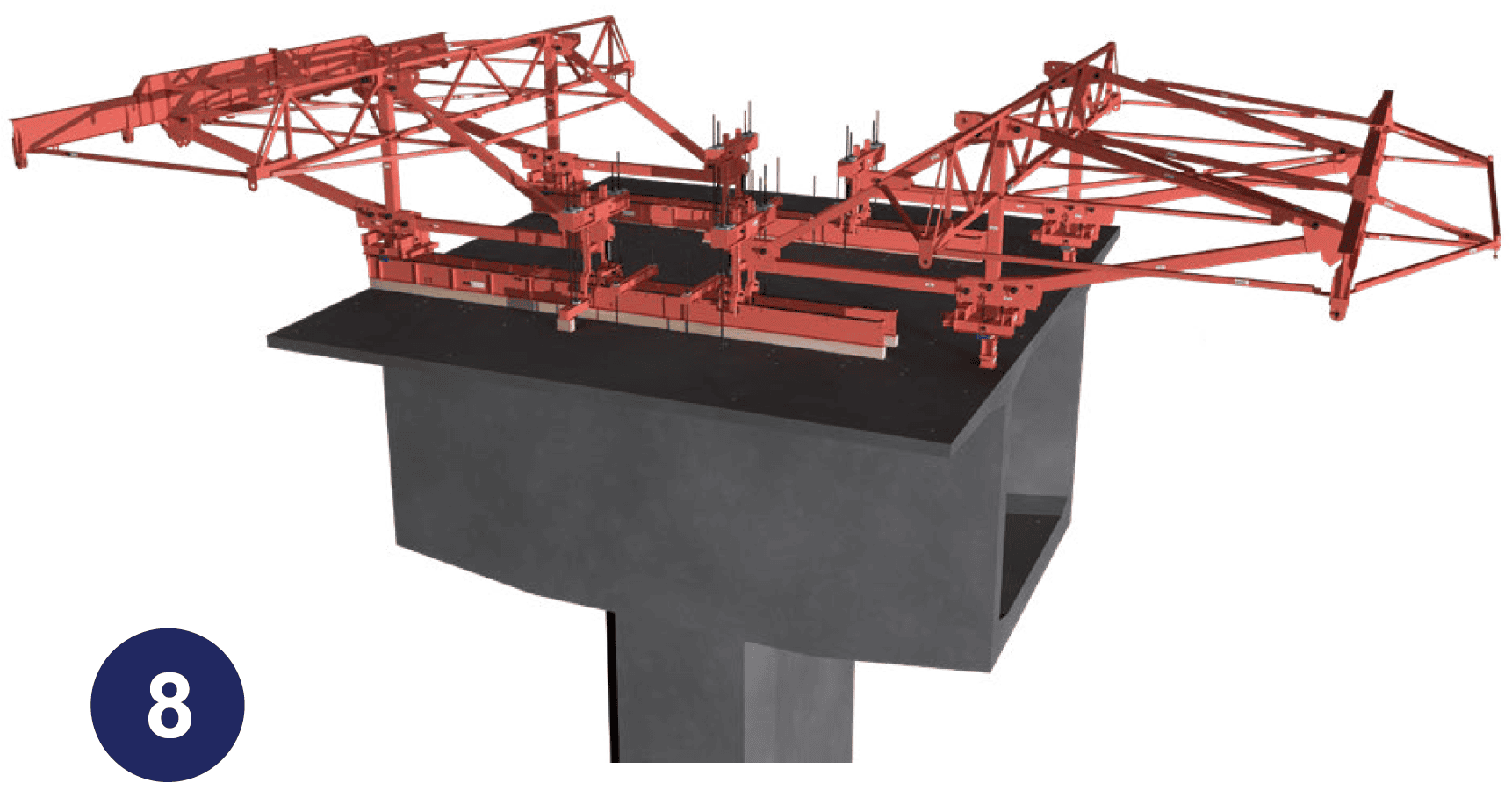
Assembly over hammerhead The Cross-Support Concept

The hammerhead of a deck built with the balanced cantilever method must be at least 12 metres long in order to assemble the pair’s Form Travellers simultaneously. 

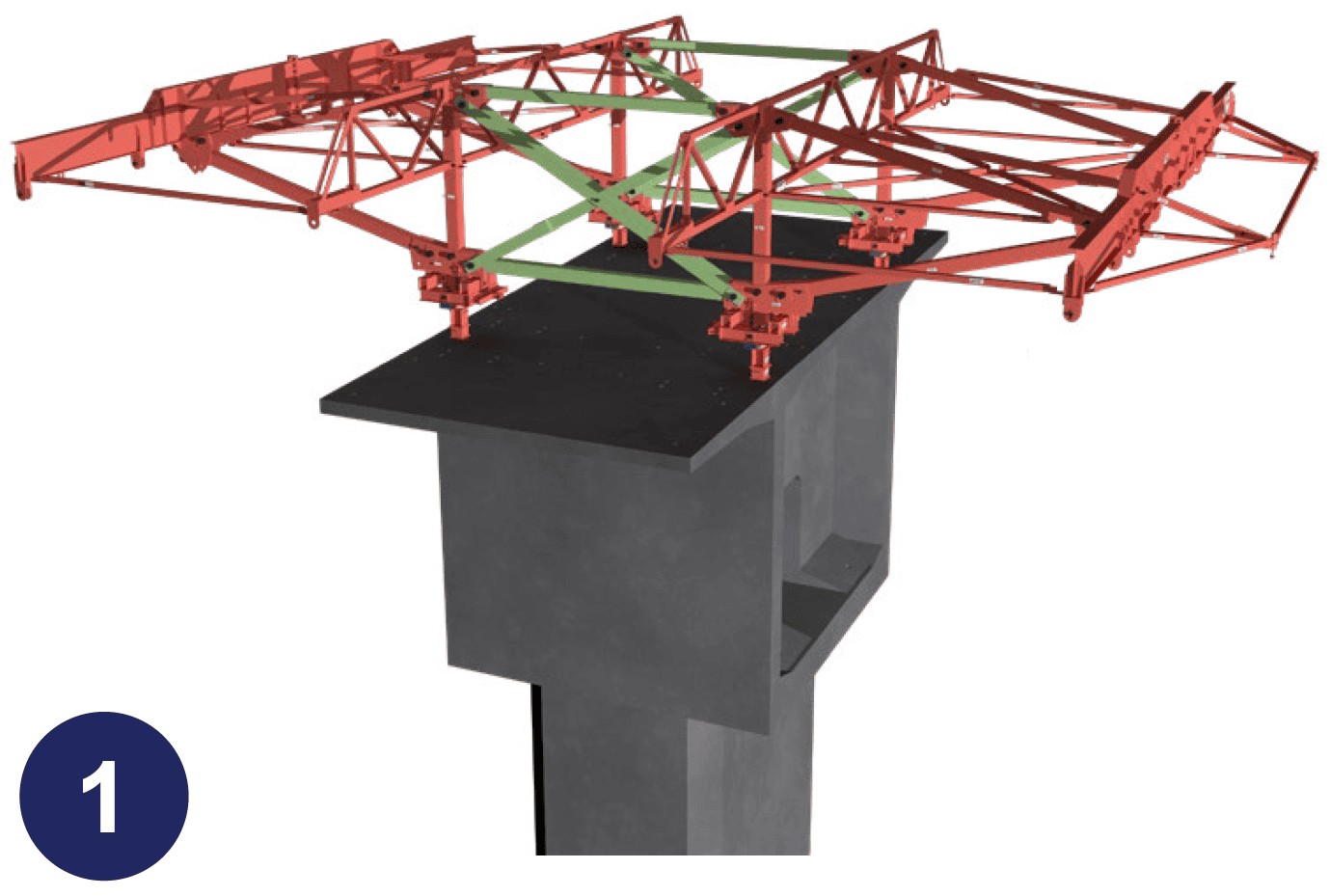
The auxiliary structure, called Cross-Support (CS), helps to minimize the hammerhead’s length, thereby making its construction less complex and costly.

The Cross-Support Concept

Main stages:

Form Traveller ready to cast 1st segment
Rail and auxiliary bogies installed
Cross-Support central structure dismantled
Left Form Traveller main frame rear part installed
Launch left Form Traveller after its auxiliary bogie is dismantled
Right Form Traveller main frame rear part installed
Launch right Form Traveller after its auxiliary bogie is dismantled
Dismantle auxiliary rail

Assembly over hammerhead Non-symmetrical casting

In many cases, non-symmetrical casting of the first segment can be the solution as an alternative to Cross-Support.

The use of this method corresponds to the initial assembly of only one Form Traveller (FT) and casting of the corresponding segment.

This Form Traveller (FT) is then moved to the end of the cast segment, and the pair’s second Form Traveller (FT) is assembled. The pair’s second segment is then cast. Subsequent segments will be cast symmetrically.

Non-symmetrical casting

Launch back system

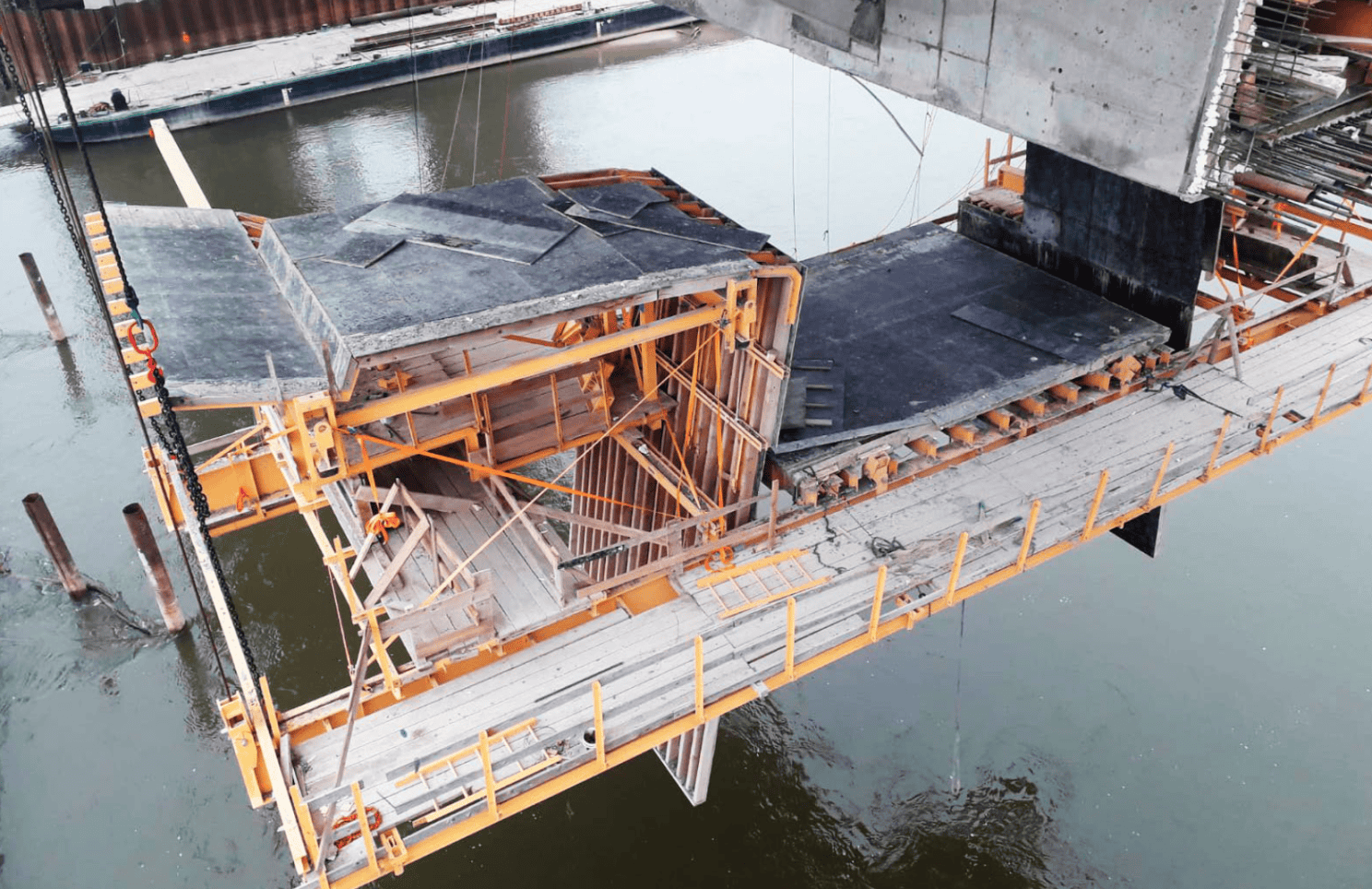
The use of the singular optional launch back system allows the Form Traveller (FT) to be disassembled close to the hammerhead, after being used in casting the deck’s last segment. This procedure streamlines operation and minimizes cost.

External formwork during launch back

Bottom slab platform lifting system

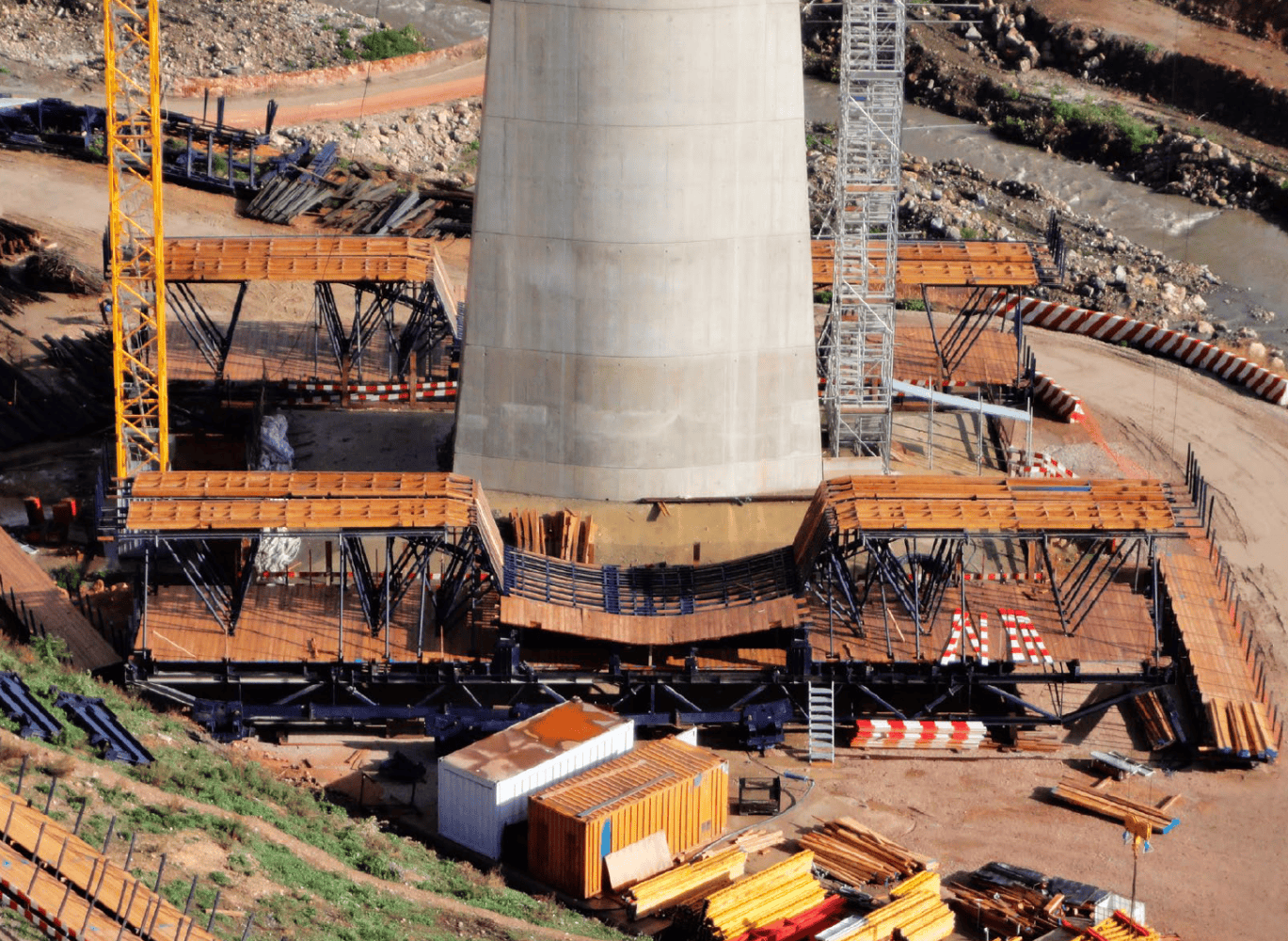
The lifting of the bottom slab platform from the level of the foundation where it was fully assembled, using the optional lifting system, allows the Form Traveller (FT) to be installed quickly and safely.

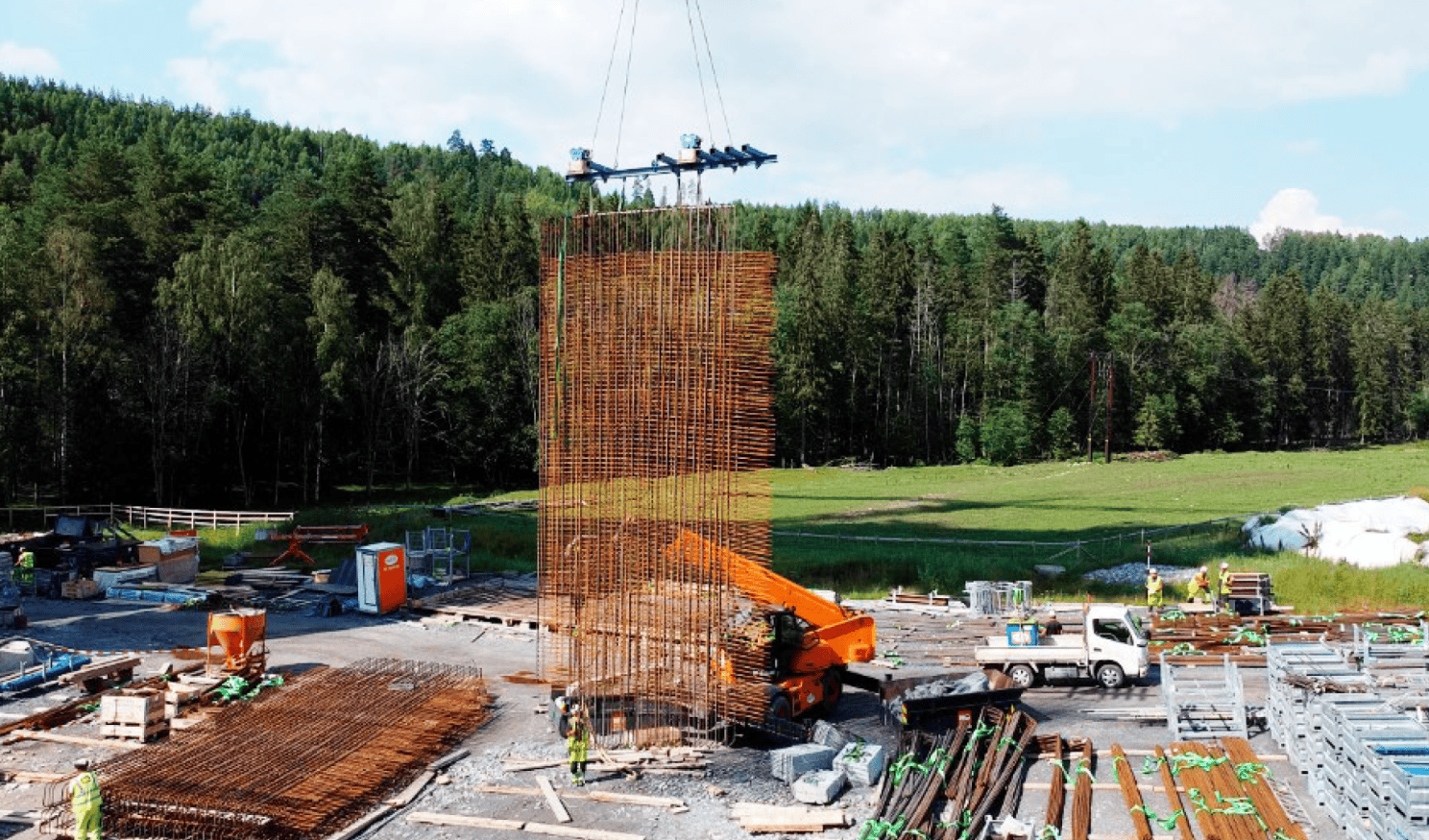
Installation of pre assembled rebar cage


The Overhead Form Traveller (FT) system can be equipped with a web rebar cage installation device, allowing the panels of this rebar cage preassembled at ground level to be positioned in the formwork.

Lifting of pre assembled rebar cage
Installation of pre assembled rebar cage

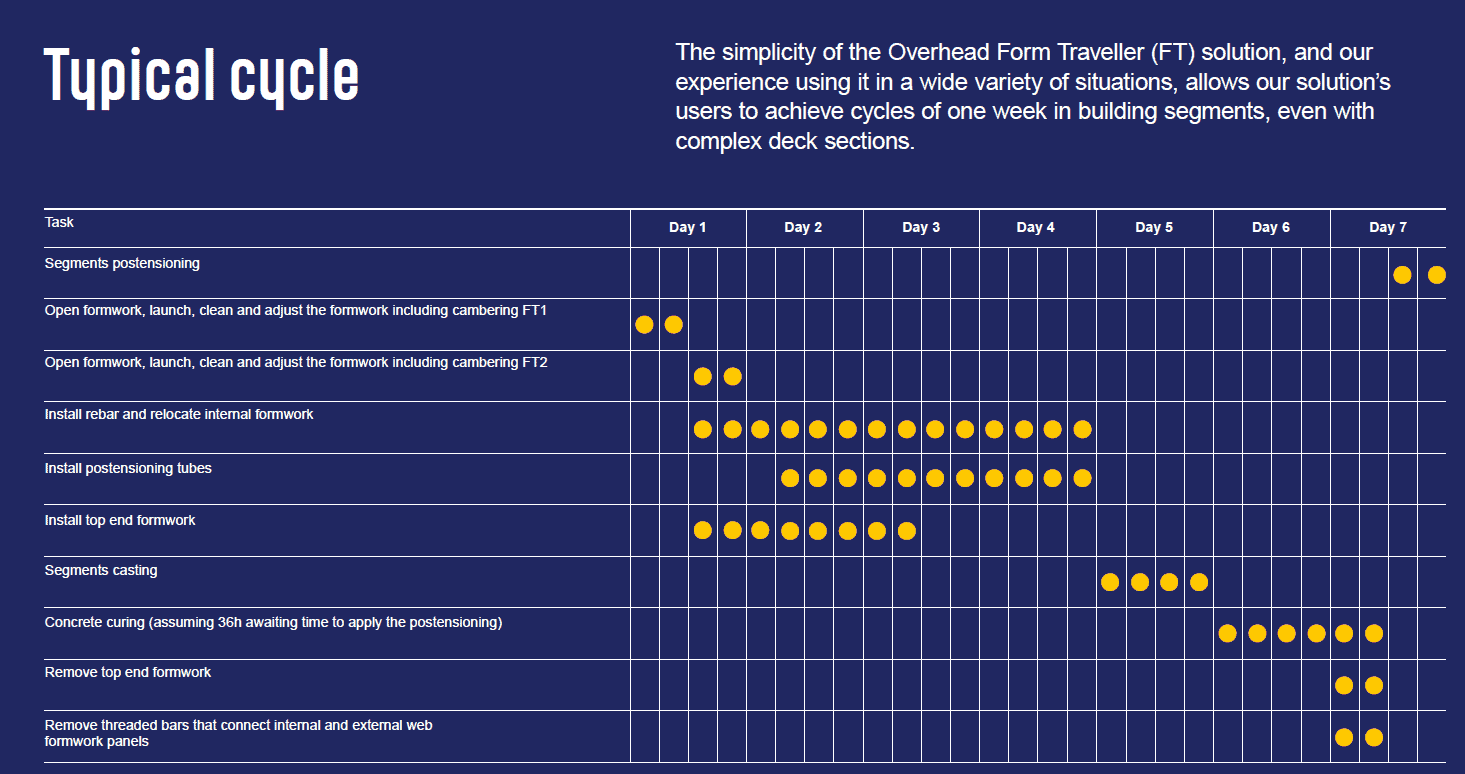
Typical cycle


The simplicity of the Overhead Form Traveller (FT) solution, and our experience using it in a wide variety of situations, allows our solution’s users to achieve cycles of one week in building segments, even with complex deck sections.

Typical cycle - 1 week

Underslung Form Traveller system

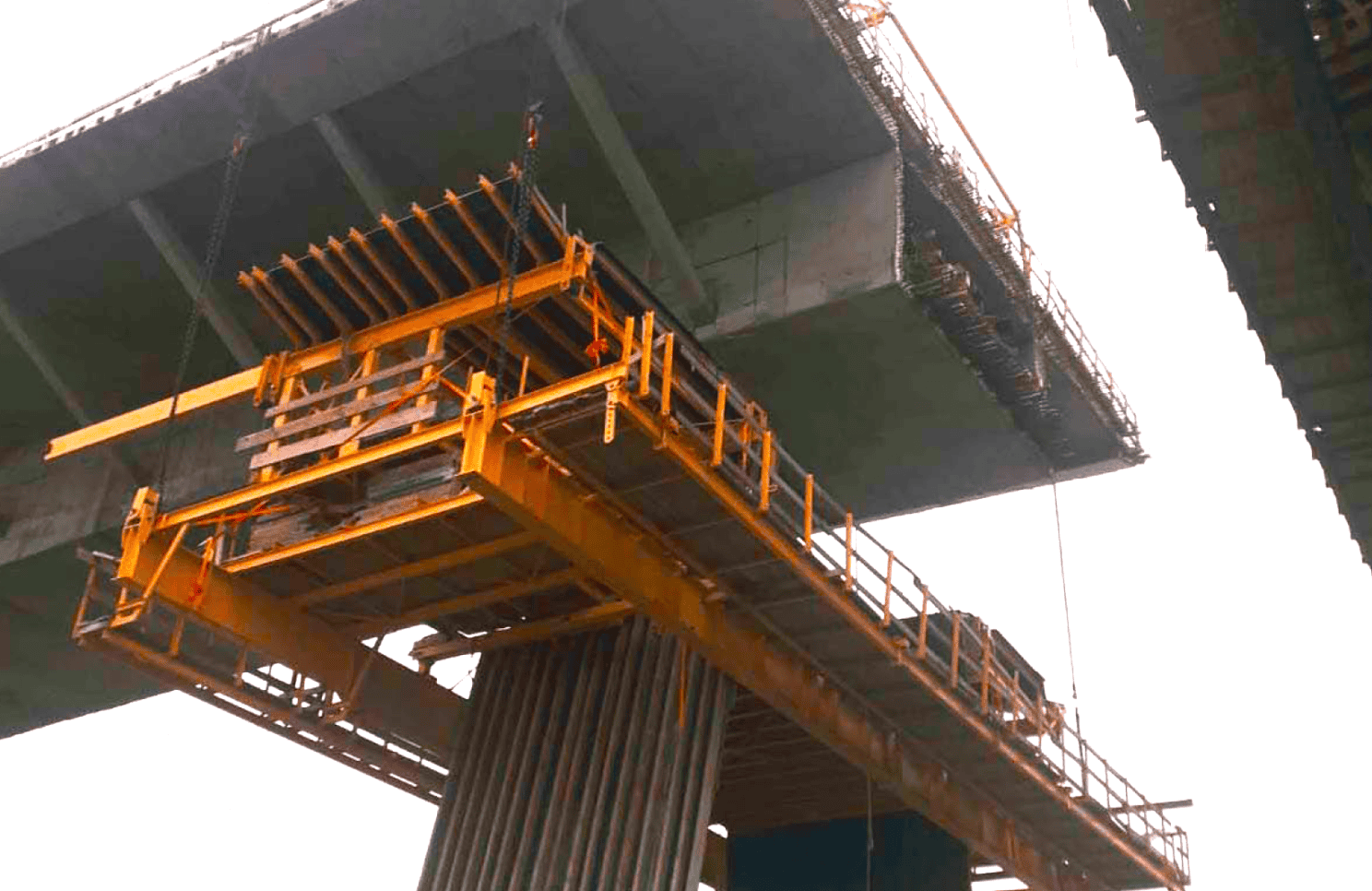
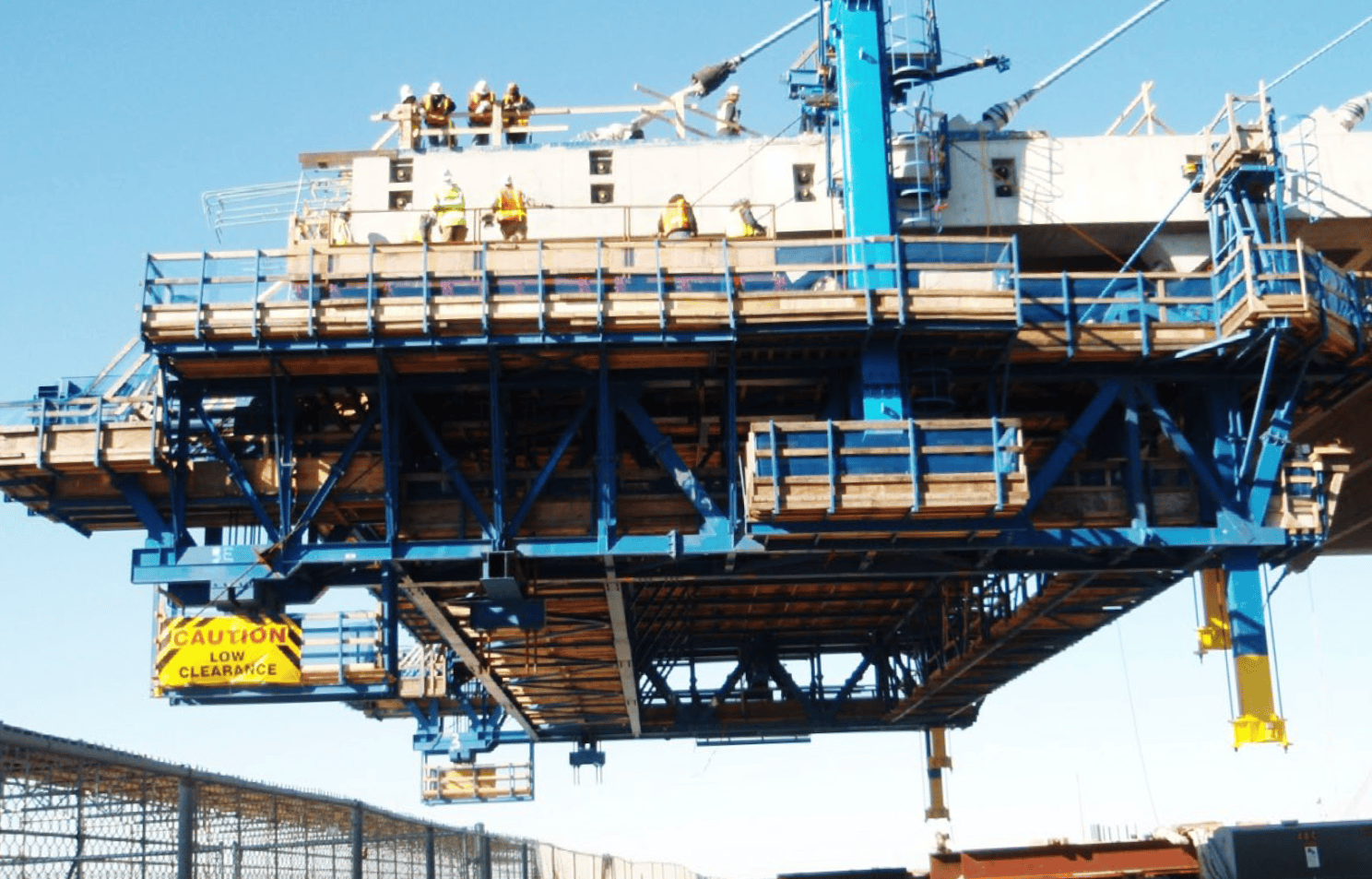
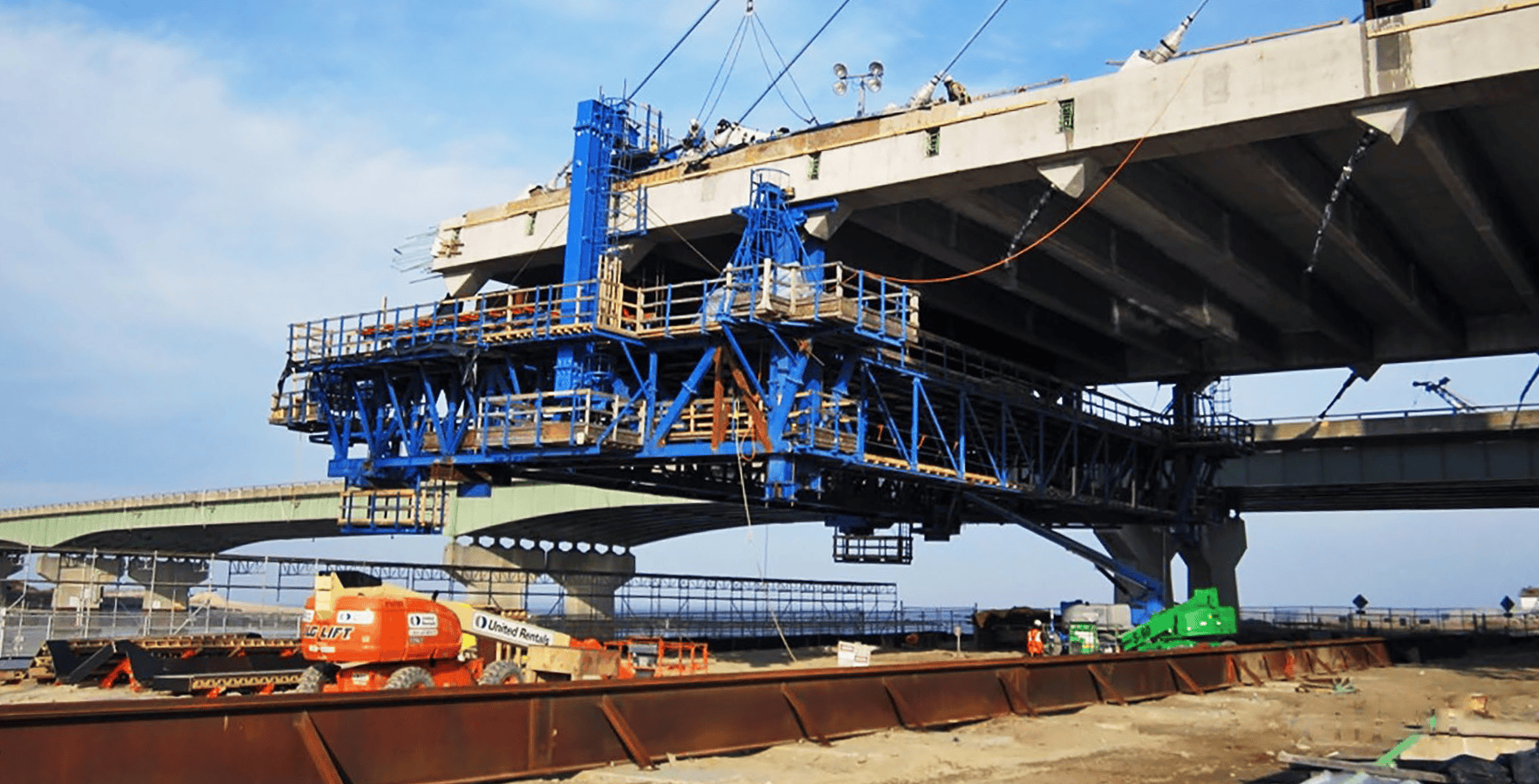
The Underslung Form Traveller solution can be adapted to different types of bridge decks, such as arch bridges and cable stayed bridges, leaving enough room to assemble the temporary or final cable stays, and allowing easy launch back to the initial assembly position.

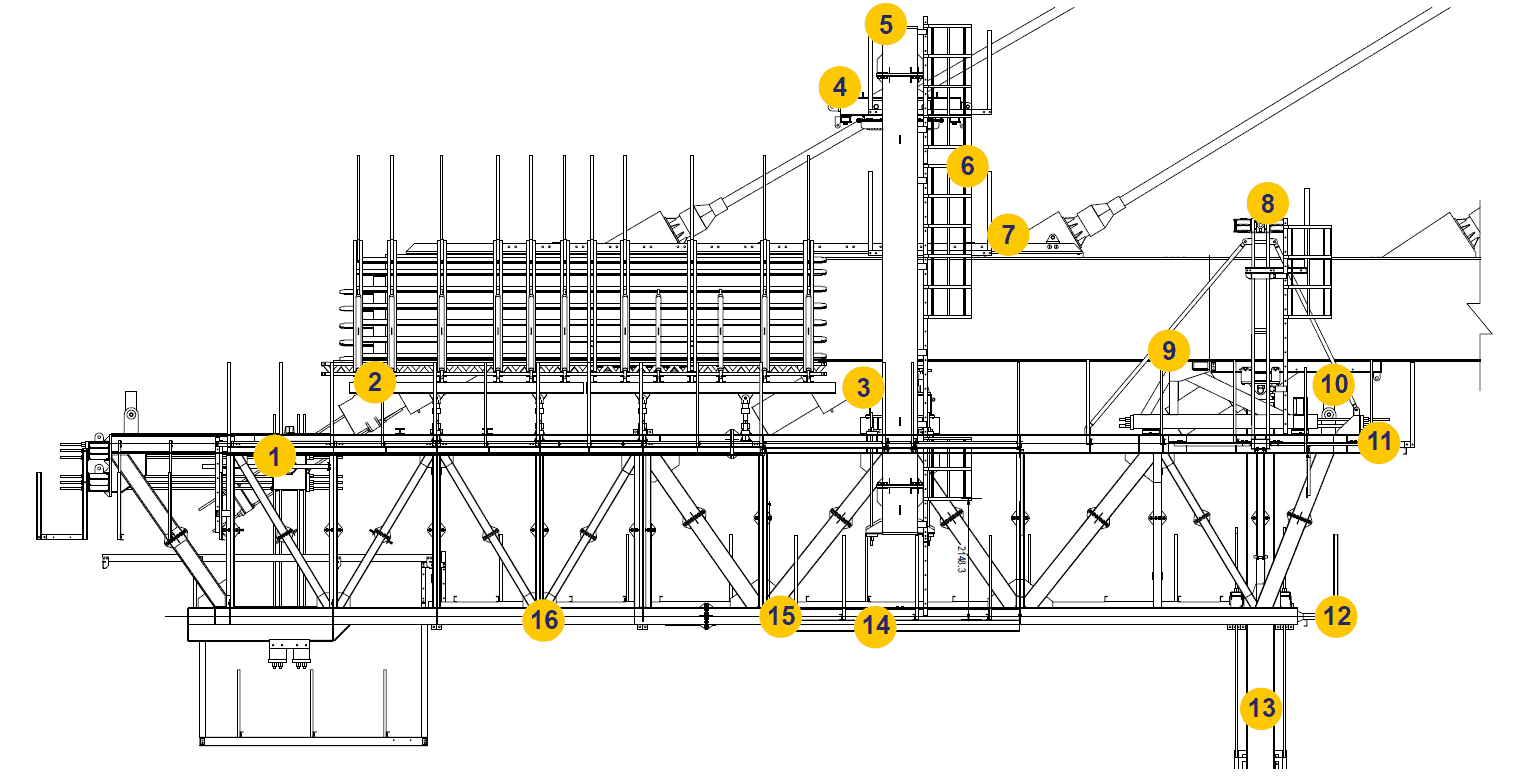
Main components:

  1. Front anchor
  2. External formwork
  3. Middle anchor
  4. Front bogie 
  5. C-hook
  6. Ladder
  7. Main rail
  8. Lateral guiding
  9. Longitudinal guiding
  10. Rear anchor
  11. Upper chord
  12. Lower chord
  13. Rear bogie
  14. Lateral platform
  15. Access platform
  16. Main frame
Main components of UFT

When the rebar cage is preassembled, the Strukturas Underslung Form Traveller is the perfect choice.

The external formwork of this type of Form Traveller is supported by the main structure, leaving enough room to install the preassembled rebar cage.

Underslung Form Travaller - UFT

Wing Form Traveller system

The Wing Form Traveller system is used to cast the deck wings in a second stage. The Wing Form Traveller’s length can be specifically sized to each project. Normally, sections up to 15 meters in length are cast.

Arch Form Traveller system

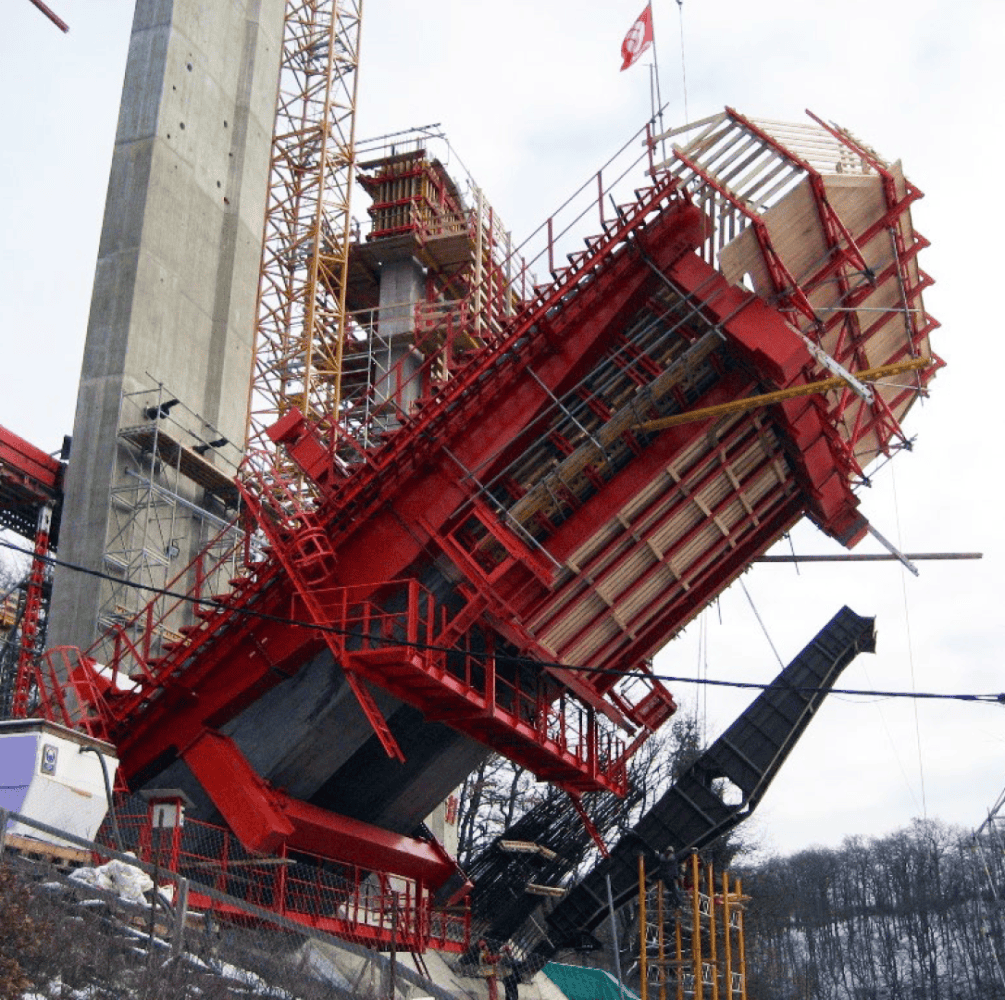
The Arch Form Traveller system is used in casting bridge arches, allowing normally symmetrical sections to be cast from the abutments.

Safety and quality

More than 50 years of our experience in designing and supplying bridgebuilding equipment are leveraged by norms to uphold the high quality, simplicity and user safety of the resulting solutions.

A proper set of work platforms and ladders provides operators with safe access in carrying out all everyday tasks during span construction cycle.

The FT steel structure is produced in CE-certified steel workshops. High risk components such as hydraulic systems end threaded bars are manufactured by the world’s best and credible suppliers.

Services

Our integrated services that ensures full Quality Control and Quality Assurance during all project cycle:

Tailored technical estimations and qualified quotes during tender stage
Tailor made design, fabrication, delivery and technical assistance
Redesign of existing equipment
Assembly, operation and dismantling done by specialized professionals

Equipment assembling, operation and dismantling

A professional team at your service.

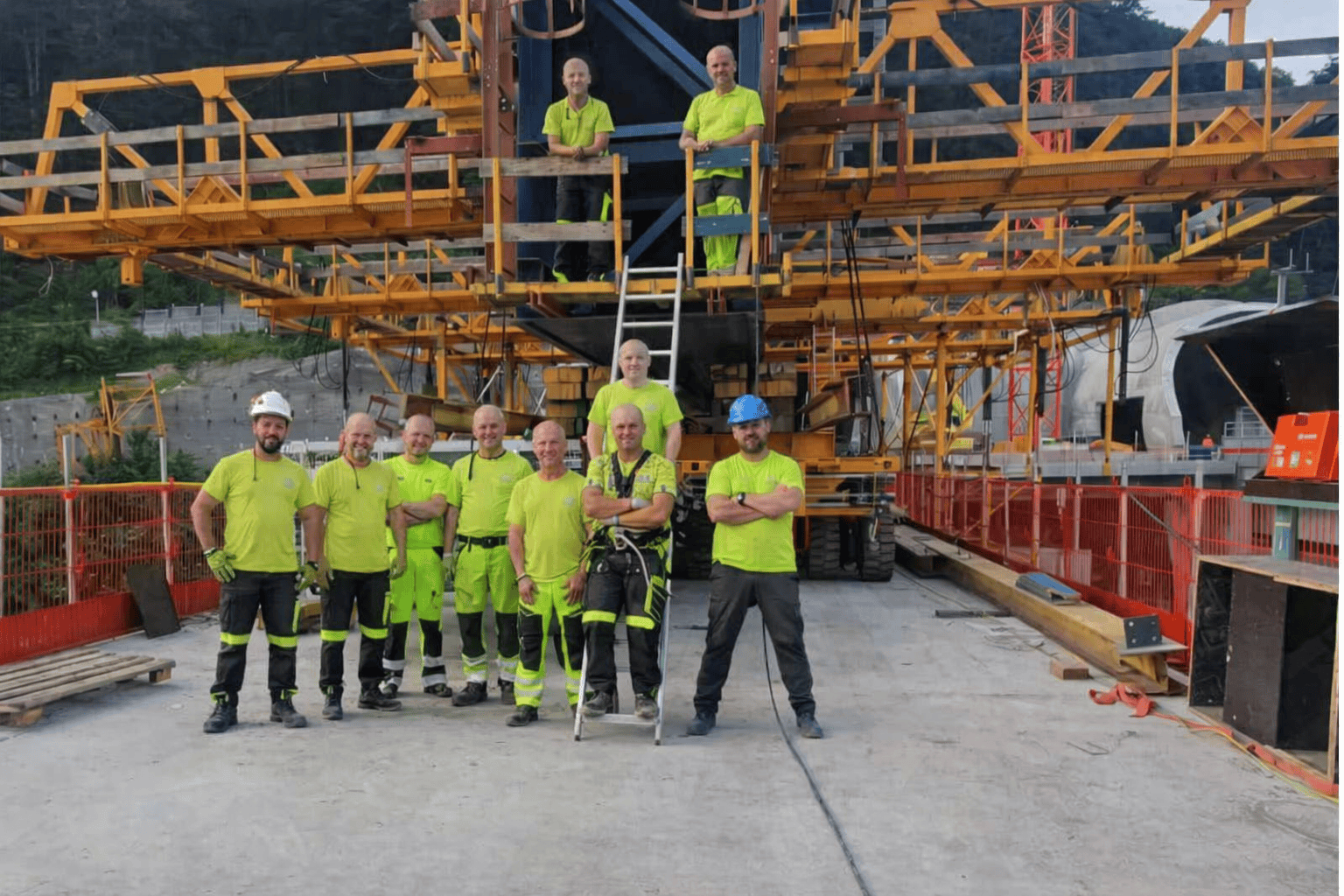
Strukturas AS has teams specializing in planning, assembly, operation and dismantling of its MSS, allowing it to offer its clients turnkey solutions.

By using our teams we are able to reduce costs for the client, given that this minimizes the use of auxiliary support equipment, such as cranes, forklifts, platforms, trucks, support towers, etc.

To see the FT in action visit our Youtube channel. Be sure to subscribe not to miss the new projects.

If you wish to see more detailed and visual information about the Strukturas Form Travellers (FT) – you can download the full catalogs on the link below: