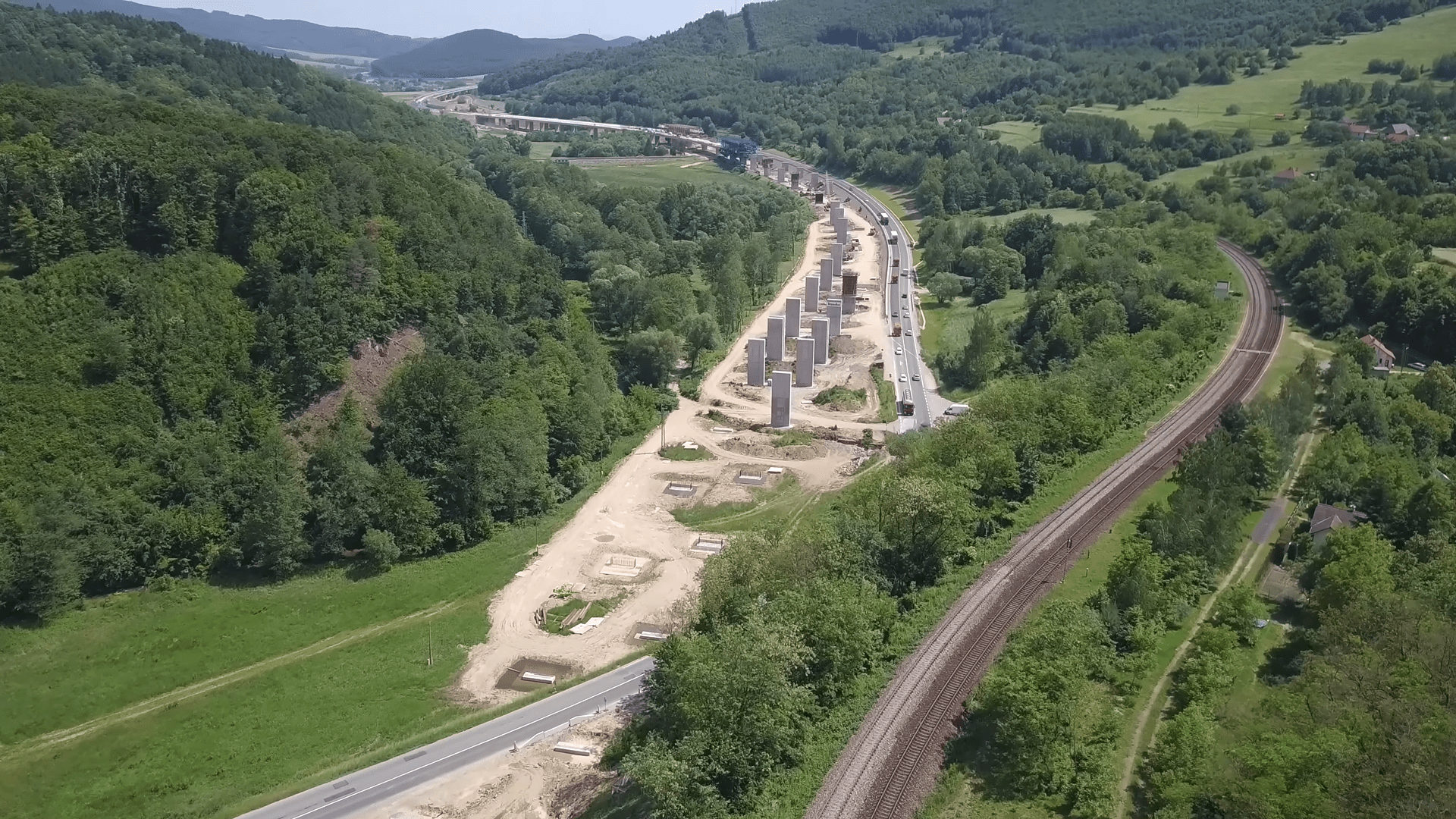
Span by span demolition of the bridges using the MSS

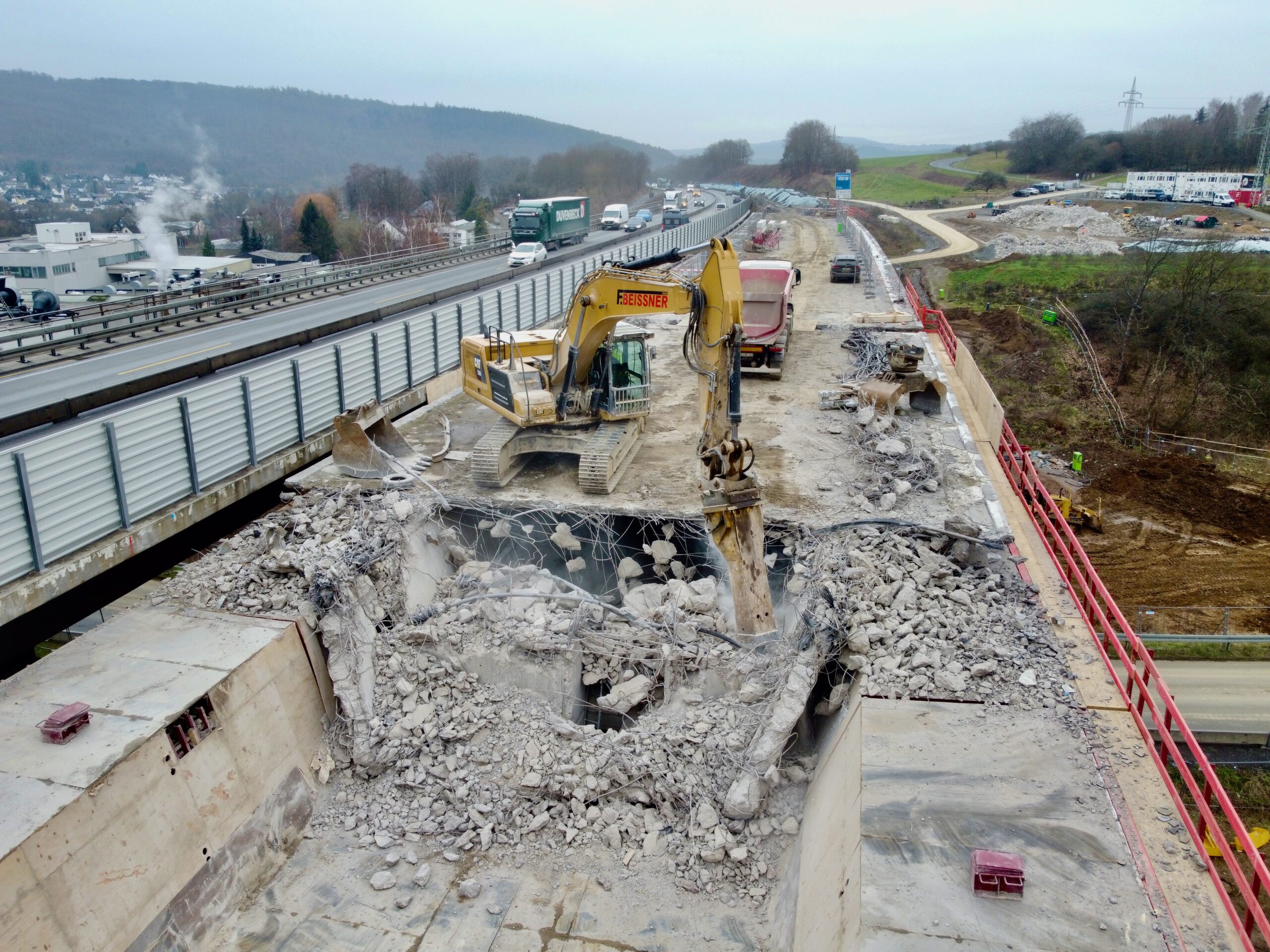
Krondorf Demolish first span

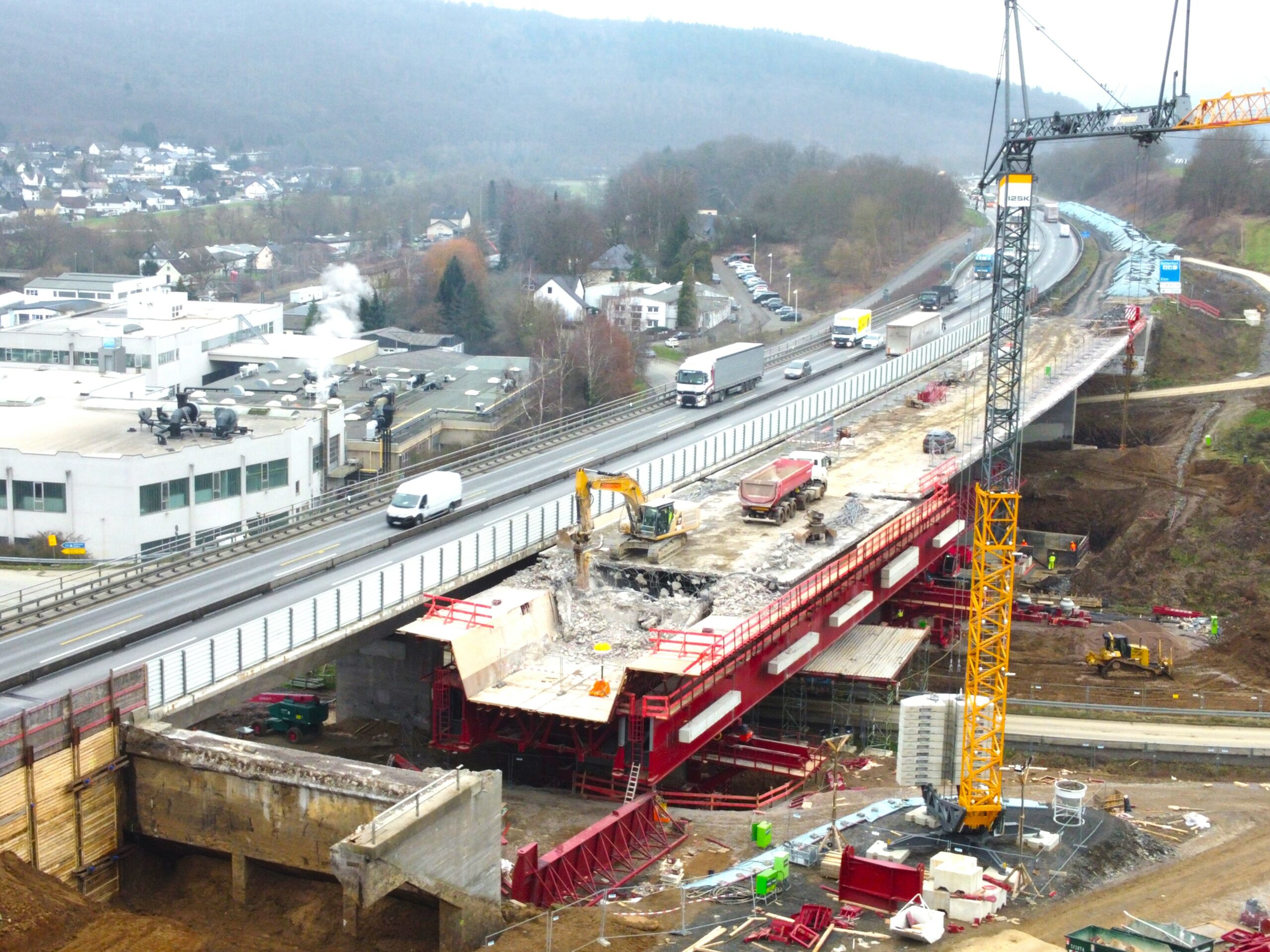
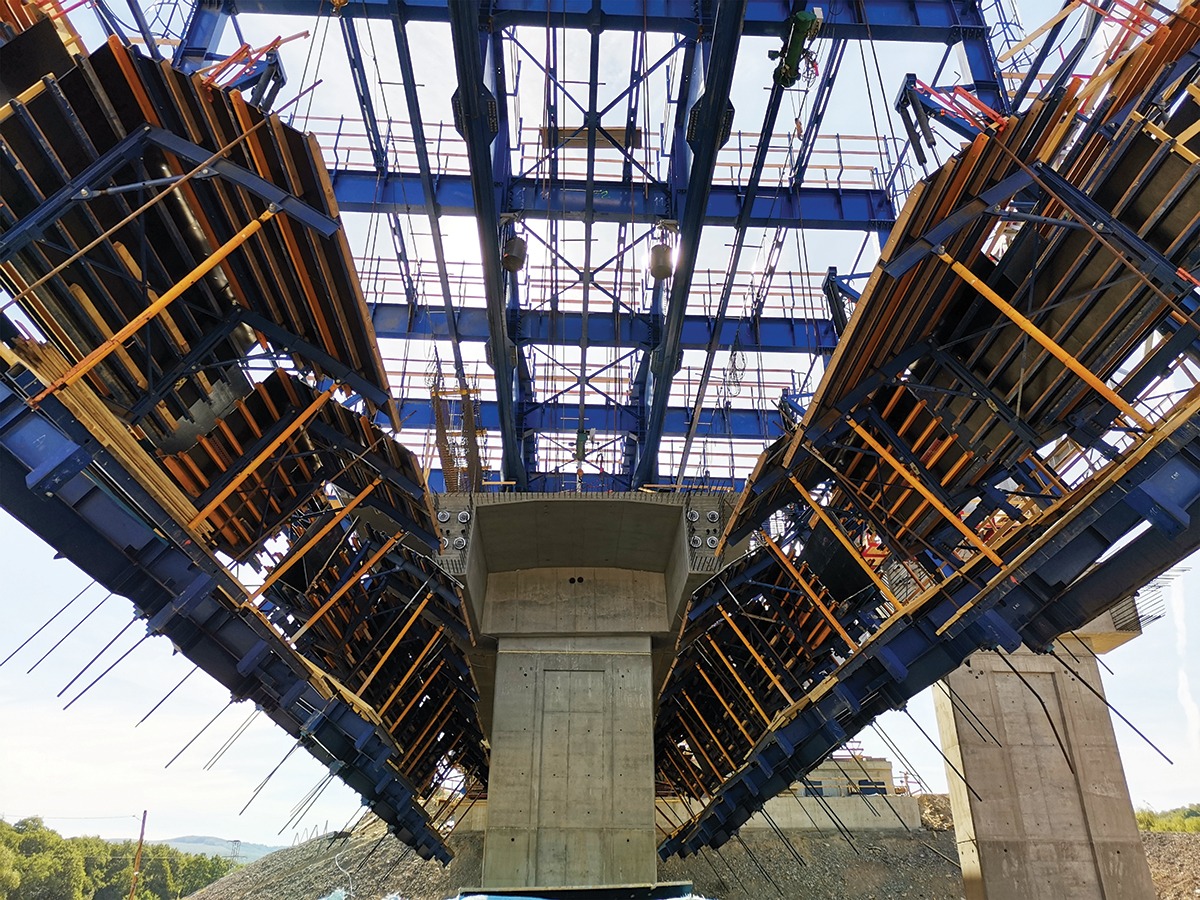
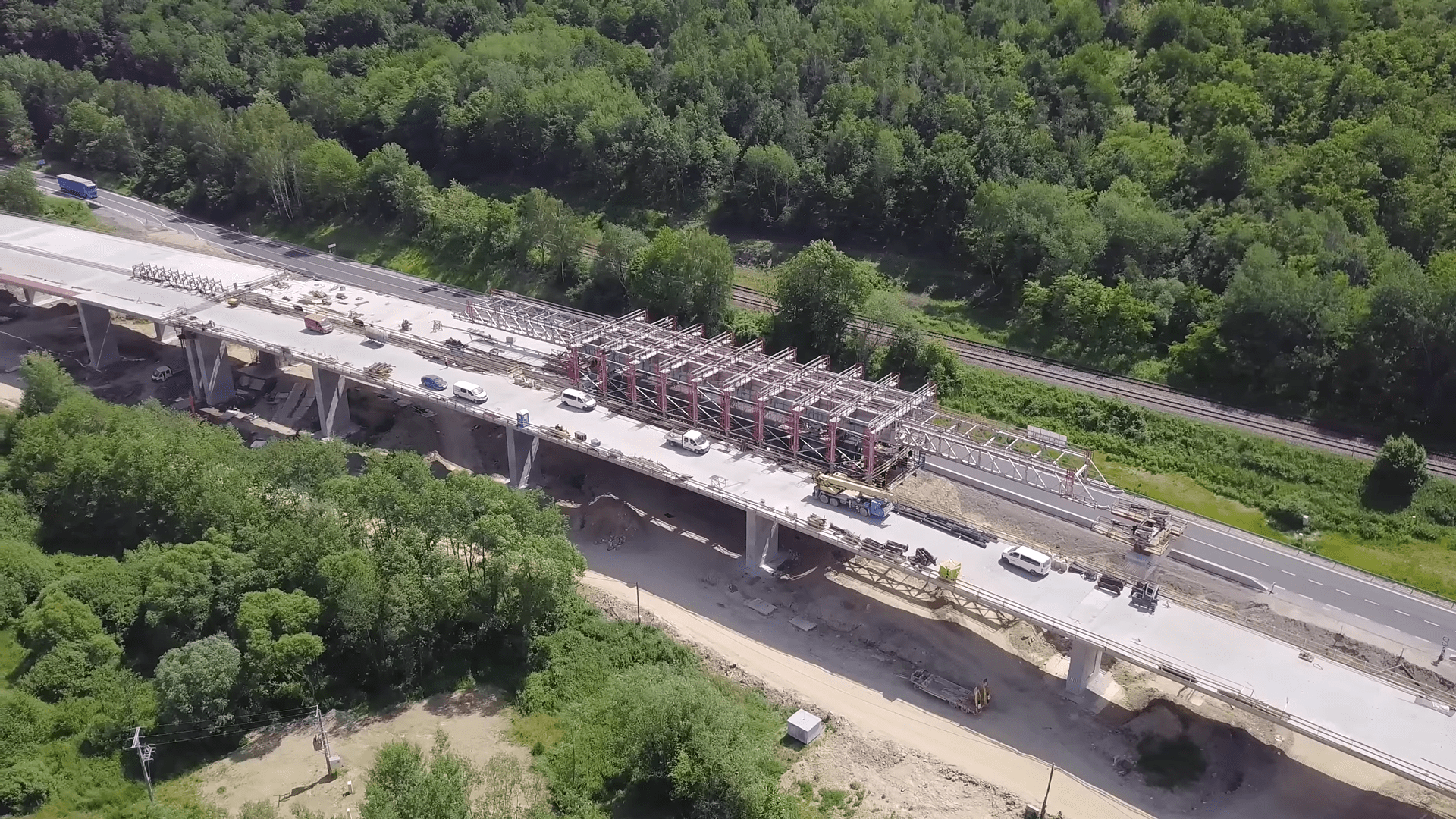
Span by span demolition of the bridges using  STRUKTURAS MSS – Movable Scaffolding System.

Contractors Eiffage , Implenia and Arlt Bauunternehmen GmbH are using this demolition method for their client Die Autobahn GmbH.

See the video about the project. For more videos about our projects, visit and subscribe to our Youtube channel  STRUKTURAS YOUTUBE CHANNEL

The demolition of the old bridge with MSS is an effective and safe solution:

– Minimal intervention to existing infrastructure.

– Using MSS for demolition allows the existing highway to remain open throughout all of the demolishing period.

– Moreover MSS allows the existing railway to remain open throughout most of the demolishing period.

– The MSS could be assembled on the ground and later could be lifted with 4 strand jacks.

– After finished demolition MSS could be lowered with 4 strand jacks on the ground for safe and productive MSS dismantling.

– The challenging MSS installation conditions can be carried out by professional site crew from Strukturas.

– The engineering challenge is to avoid an overload of the superstructure during the demolition and to ensure a safe load transfer within the load capacity of the MSS.

– After the demolition this same MSS could also be used for the construction of the bridge deck. This approach saves time and resources, making the construction process more efficient.

If you would like to learn more about bridge demolition using Movable Scaffolding System, send us an email la@strukturas.no and we will contact you as soon as possible!

STRUKTURAS

WE MAKE IT SIMPLE!

#SpanBySpan #Bridge #Demolishing

#Brücke #Vorschubrüstung #Rückbau

#Bridge #ConstructionMethods

#Concrete #Project #Innovation

#Engineering #Technology

#Sustainability #Productivity


Span by span bridge demolition using the MSS

Span by span bridge demolition using MSS

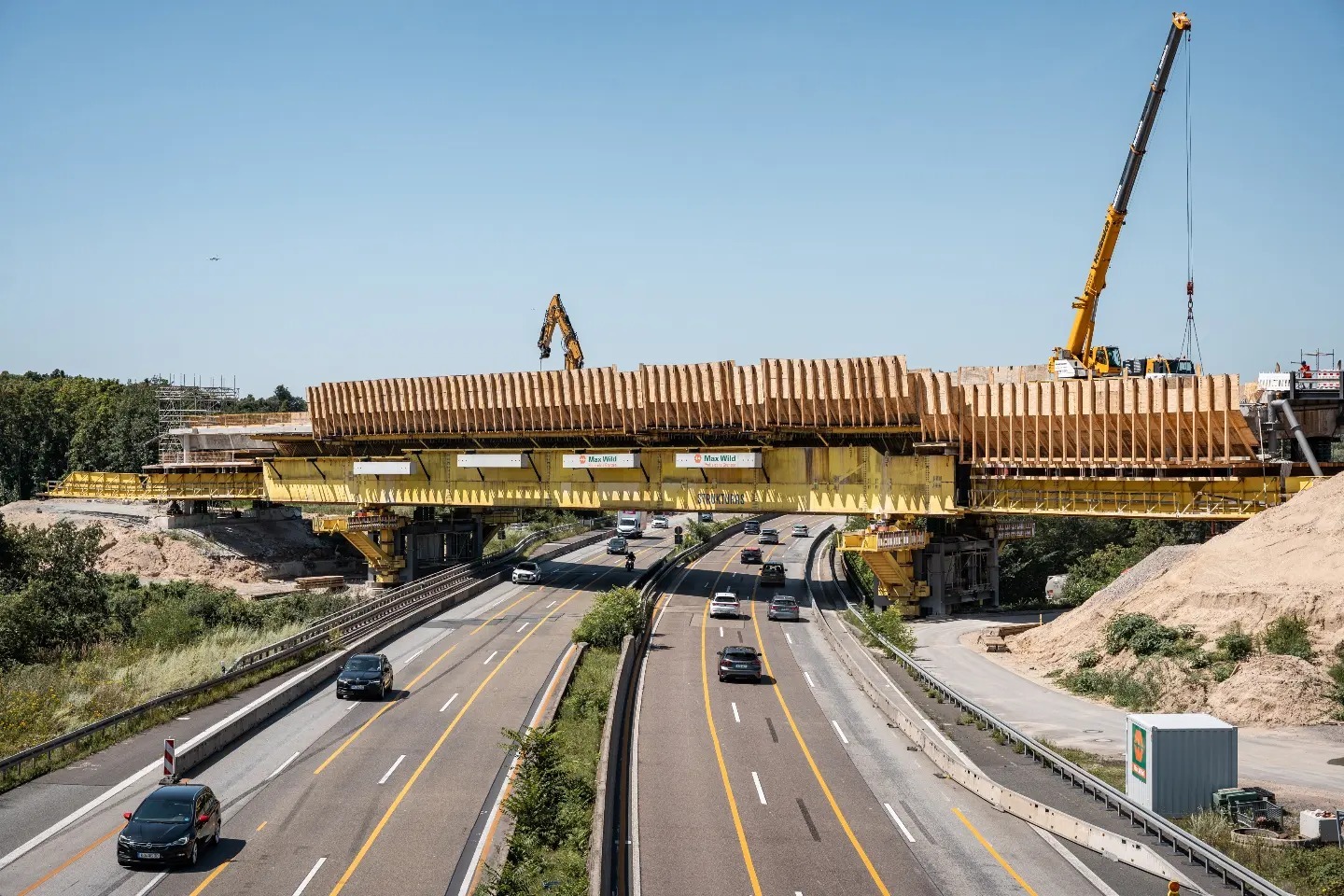
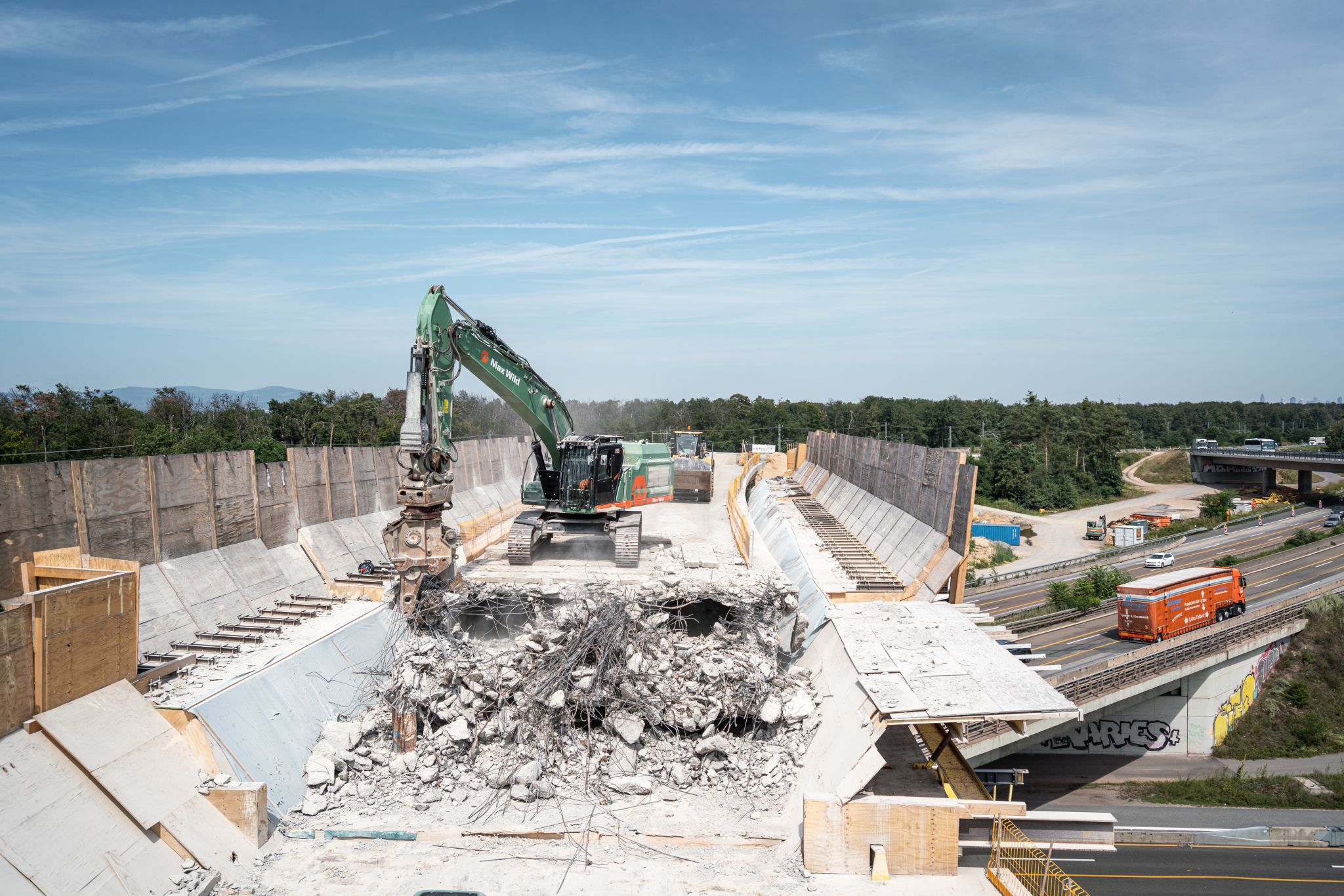
At Raunheim, Mönchhof-Dreieck, 3 level crossing the old viaduct over the A3 and A67 was demolished by Max Wild GmbH.

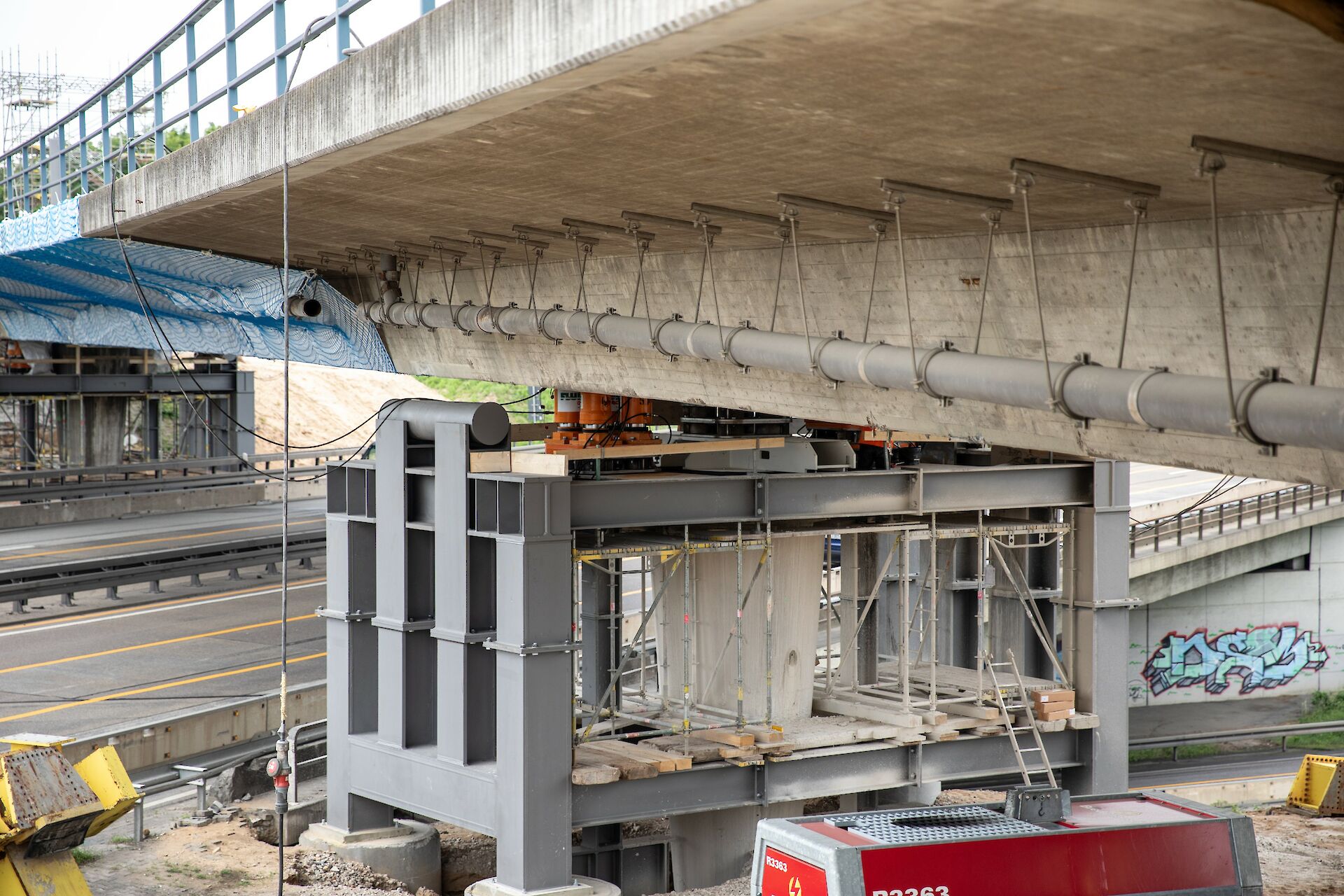
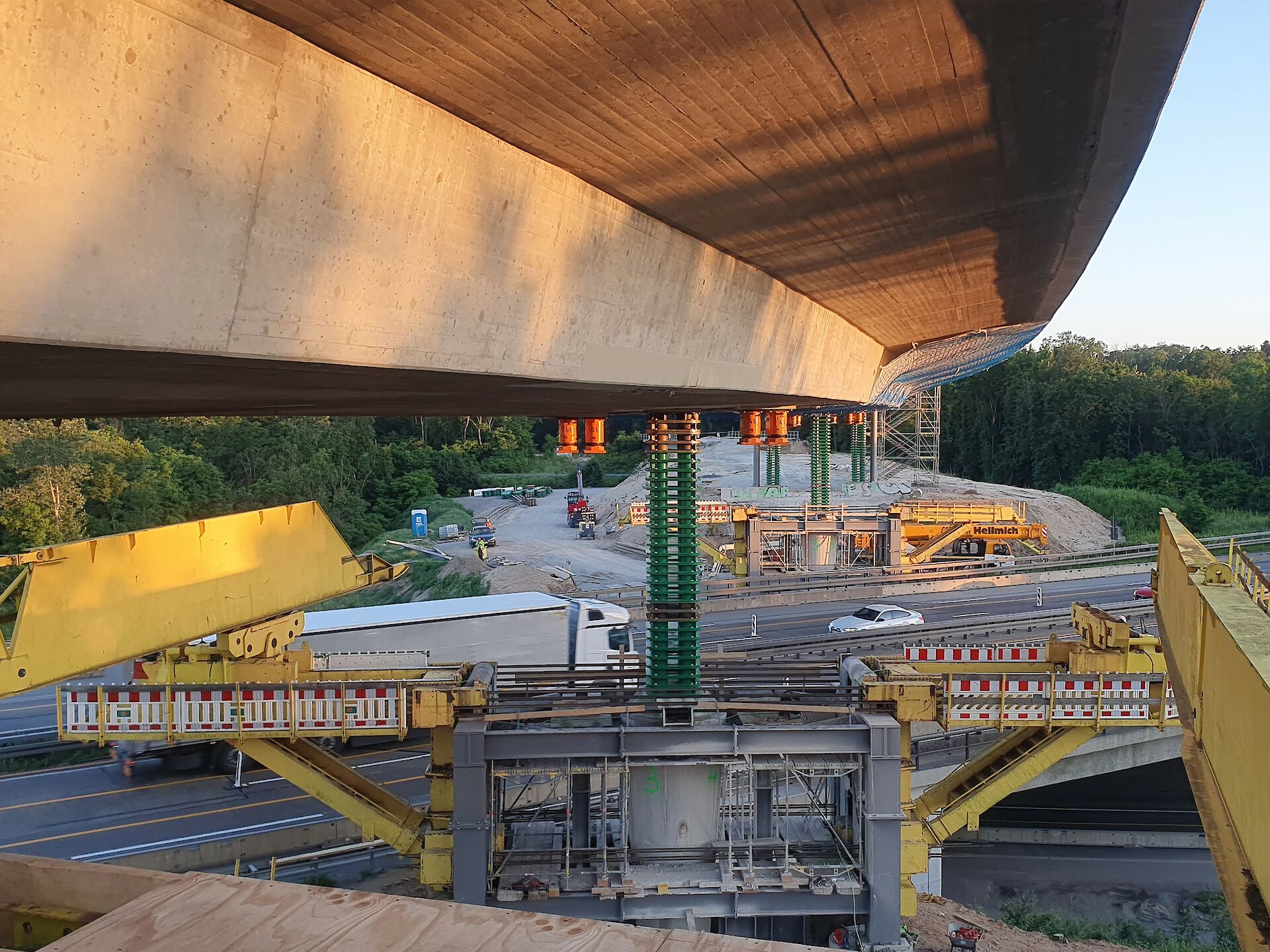
Strukturas Underslung MSS was assembled behind the abutment and launched forward below the lifted bridge deck.

It was minimal intervention to the traffic on the highway below the deck.

The challenging MSS installation conditions were carried out by a professional site crew from Strukturas.

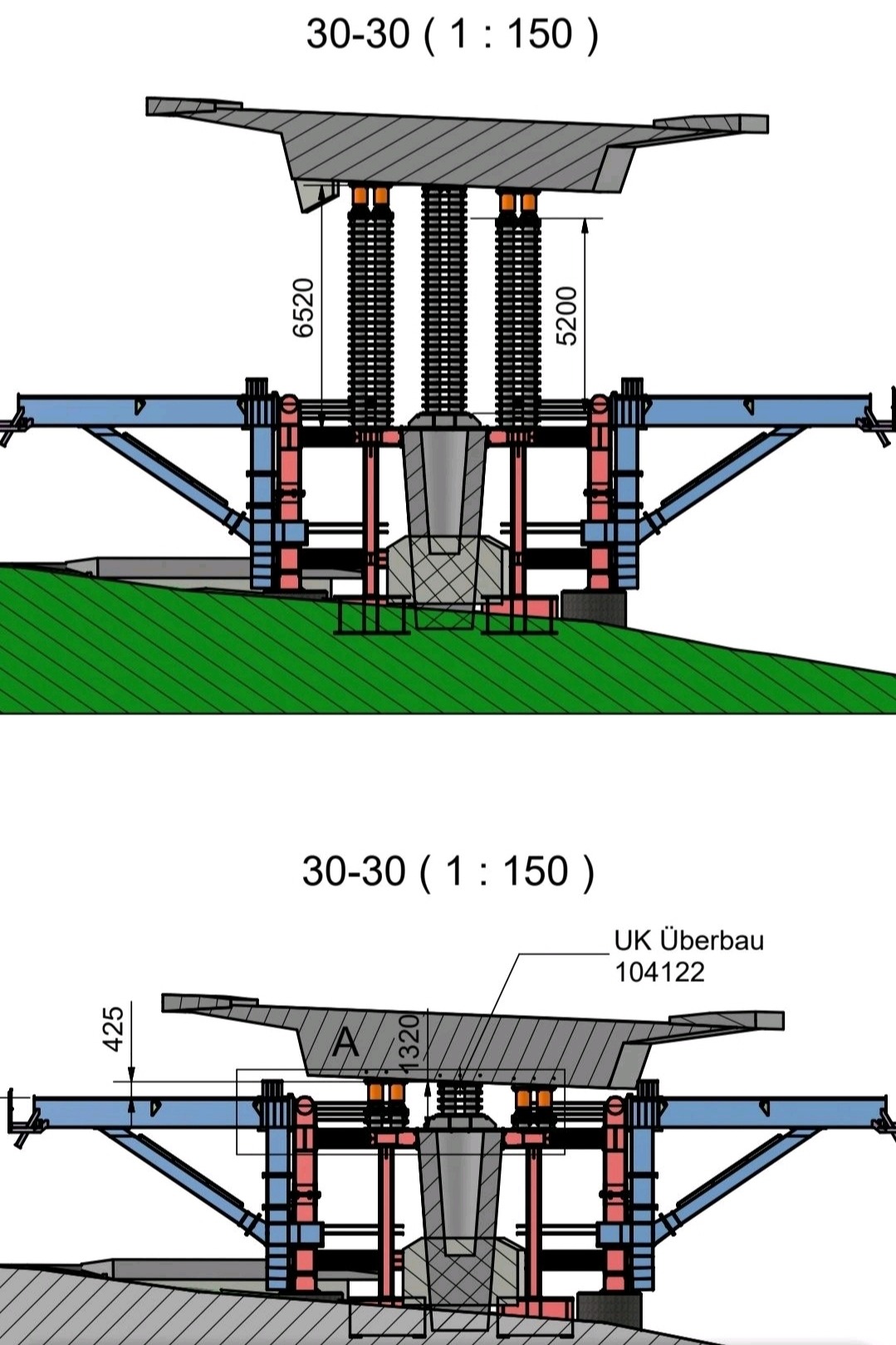
In order to carry out the demolition work efficiently and safely while the motorways were in use, the 3,200-tonne bridge superstructure was first raised by 5.20 metres and then a 130-metre-long supporting Underslung Movable Scaffolding System was inserted below. As general contractor, Max Wild GmbH took over the complete service for the demolition work at the Mönchhof Triangle and spent six months preparing and planning the actual demolition.

Thanks for good cooperation to our professional client Max Wild GmbH

The demolition of the old bridge with MSS is an effective and safe solution.

Stay tuned for more information about this exciting project!

If you would like to learn more about bridge demolition using Movable Scaffolding System, send us a private message and we will contact you as soon as possible!

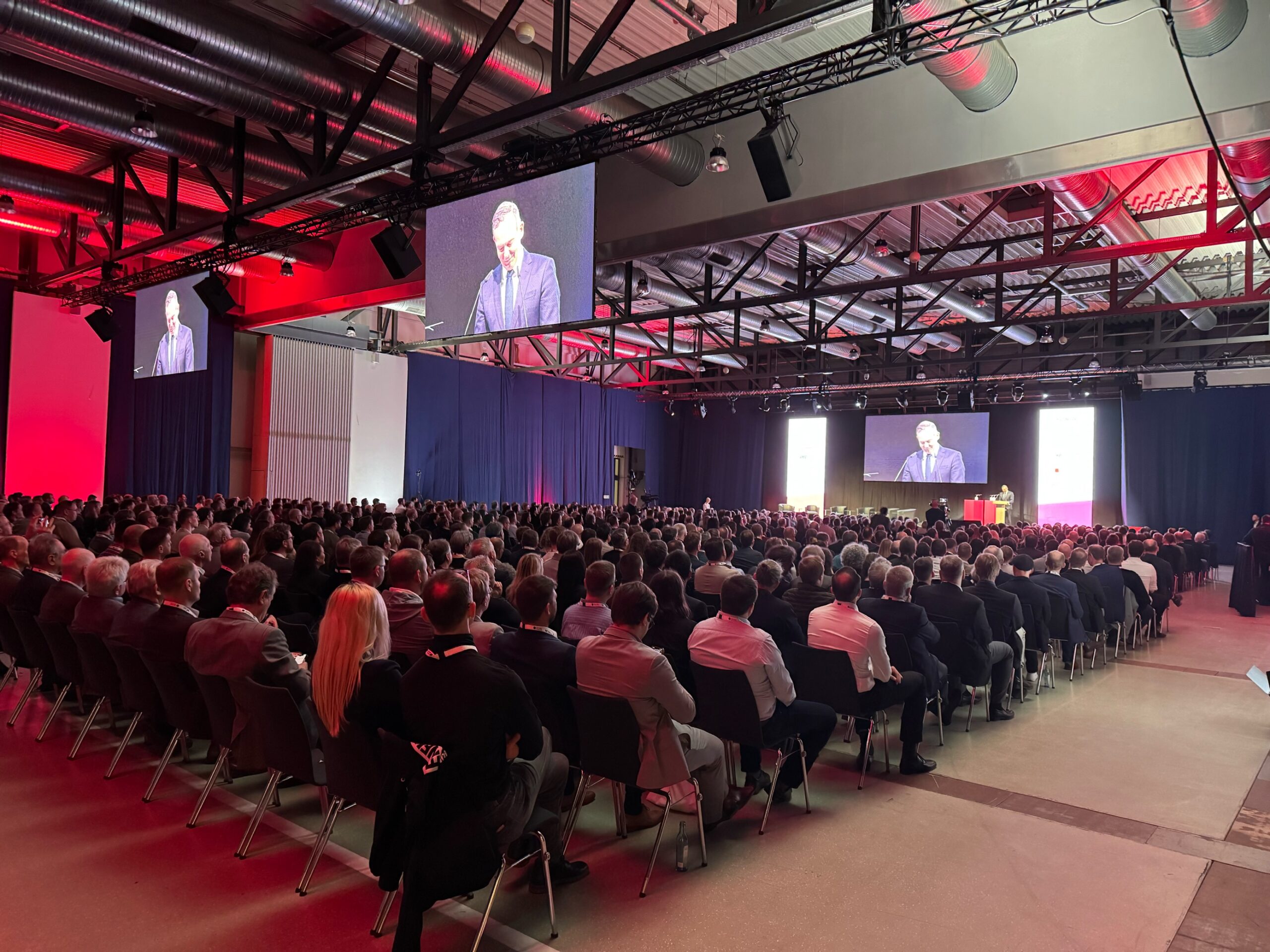
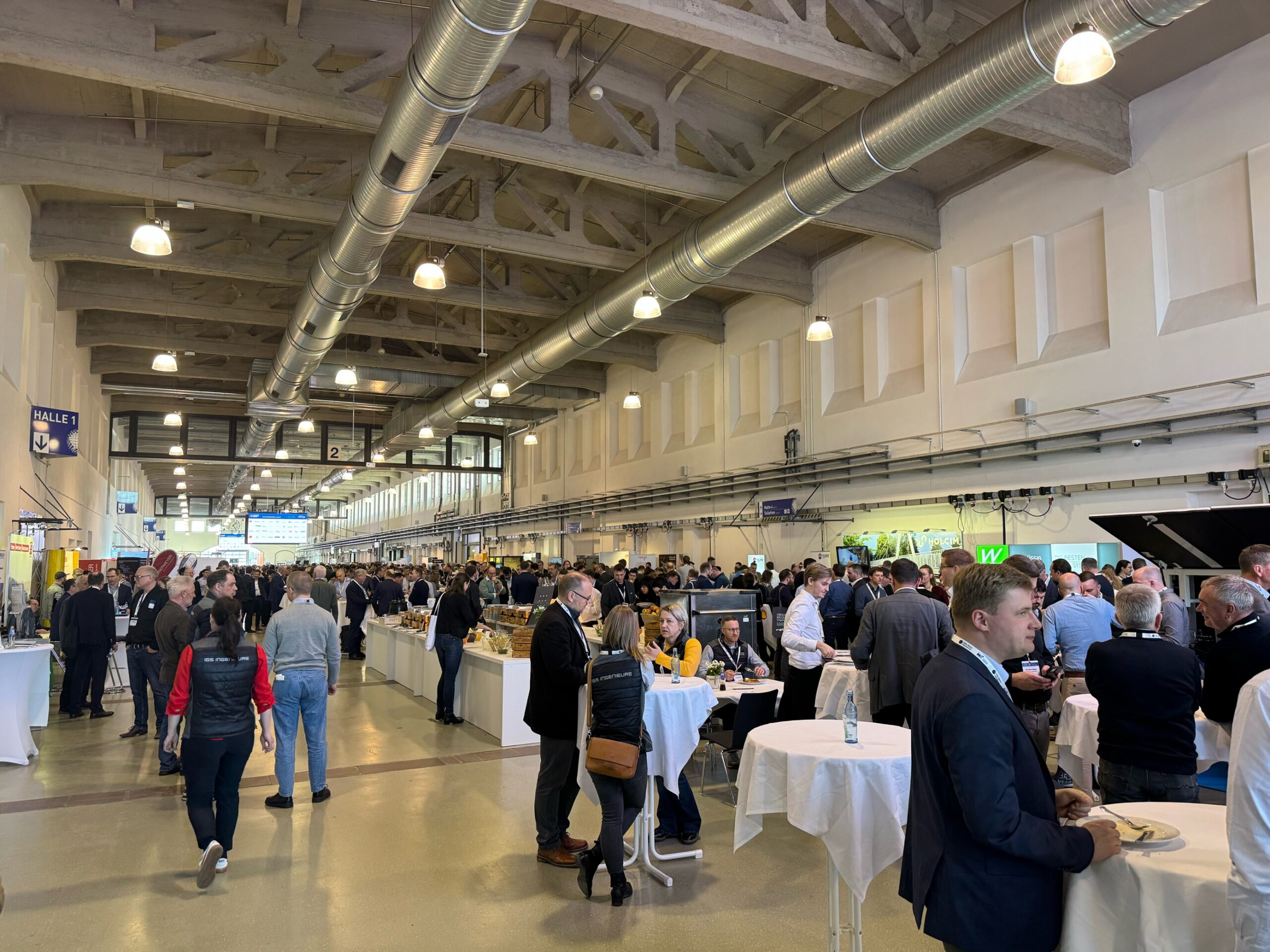
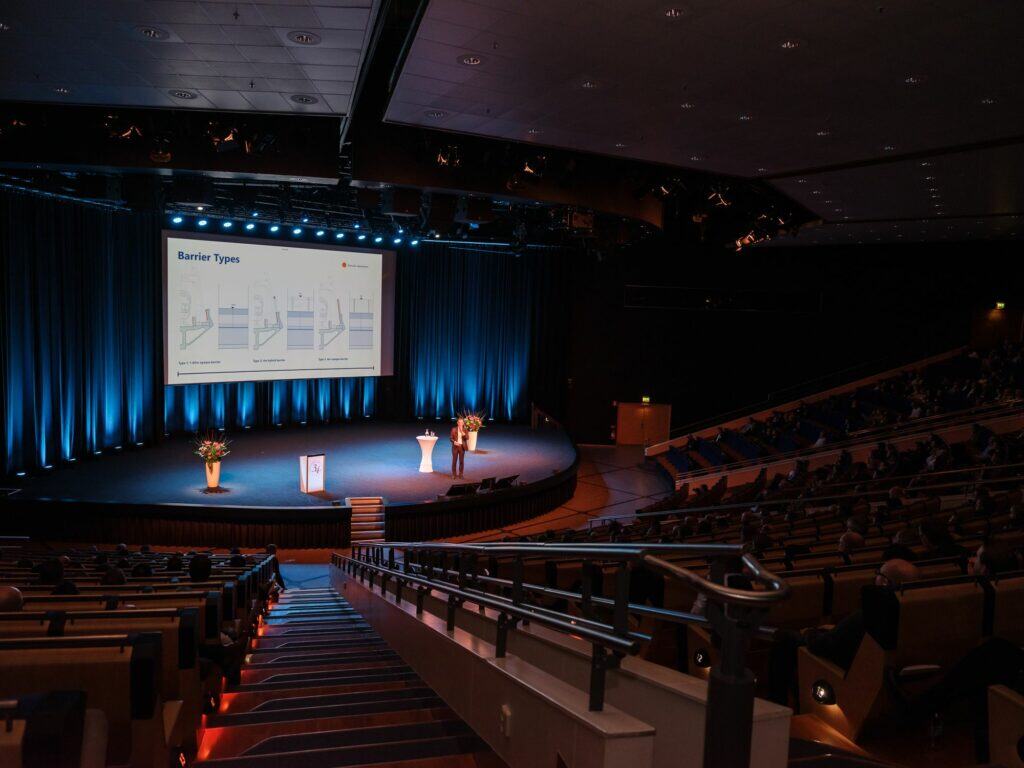
Strukturas at 35th Bridge Builder’s Day in Sweden

Important information for Swedish Bridge Builders and Designers!

We’re excited to announce that we will be participating as exhibitors on the 35th Bridge Builder’s day in Sweden.

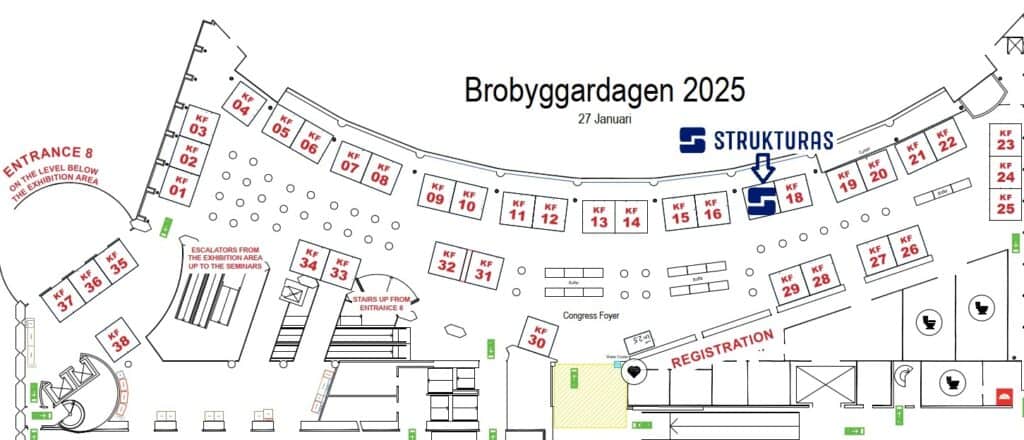
The event will be held at SVENSKA MÄSSAN – GÖTEBORG, 27 January 2025 and it is coming soon.

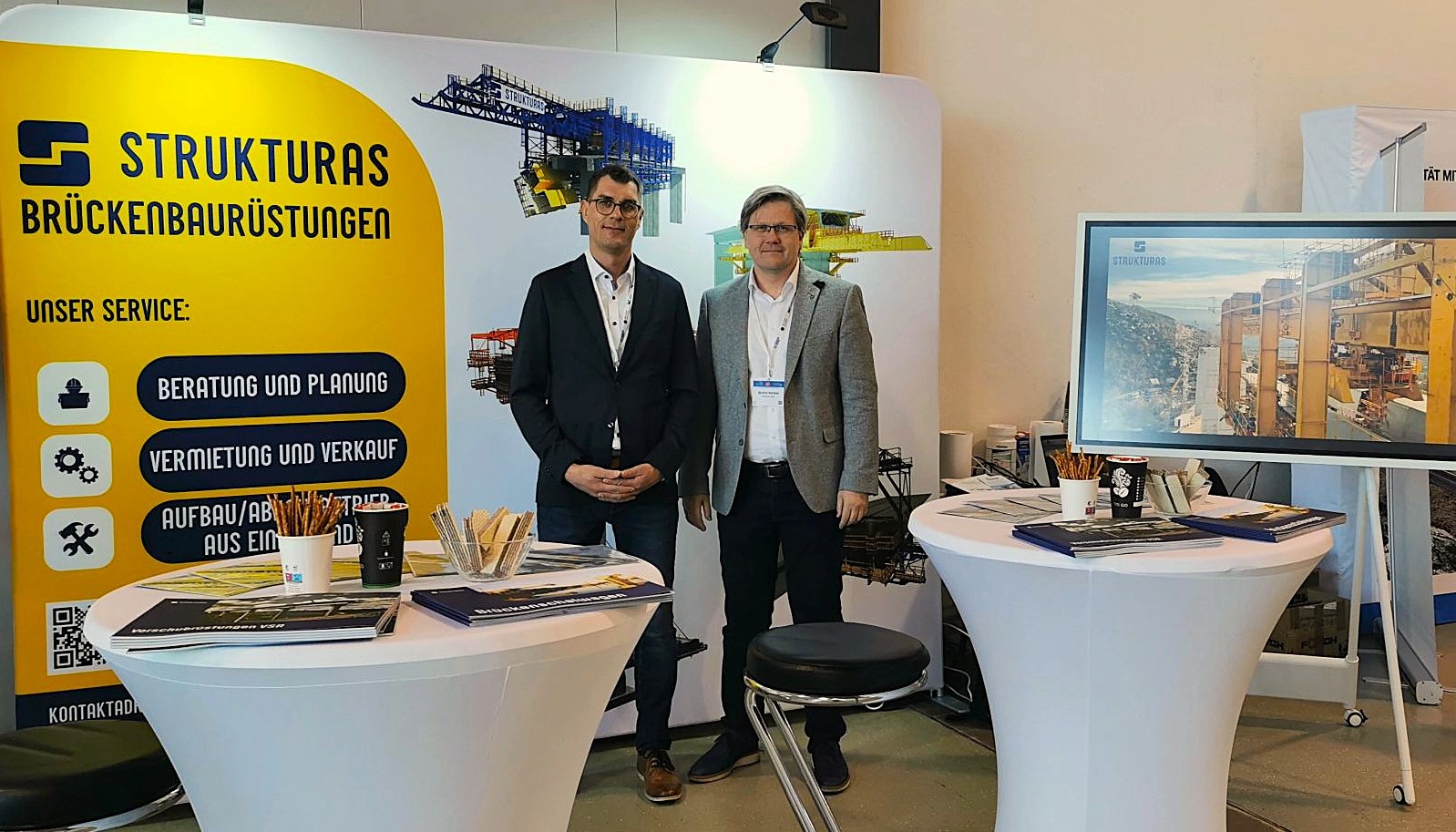
We will participate as exhibitor at Stand KF17.

Let’s meet and discuss productive and sustainable cast in situ bridge construction methods using:

  • Span by span Movable Scaffolding System – MSS
  • Balanced Cantilever Form Travellers – FT
STRUKTURAS

We make it simple!

This year’s foreign contributions come from the USA and Norway. First out of New Jersey is the new construction of a longer railroad bridge with three extensive steel arches over water, which are assembled with the smallest possible tolerances. Afterwards, a combined infrastructure and urban development project from Miami will be presented, i.a. containing a bridge with a very unique design. The bridge consists of six concrete arches with vertical cables that hold up the bridge decks.

From Norway we then get a presentation of the new Sotra bridge, a roughly 900m long suspension bridge near Bergen, where everything from planning to execution is handled digitally.

Regarding the Swedish projects in this year’s program, we will hear about the extensive renovation of the Tingstad Tunnel that was completed during the year and about the Lilla Lidingö Bridge from an architectural perspective.

Other program items are news and changes in the regulations for bridge construction, insight into a research project at LTH regarding the volume increases that have occurred in civil engineering in recent years and how georadar can be used to check concrete structures.

Strukturas plan

Program

 
08:00Registration and coffee 
09:20IntroductionMaria Fuxborg, West Swedish Chamber of Commerce
09:40News and changes in the regulationsKarl-Magnus Krona, Swedish Transport Agency
10:00 amQuantity increases in constructionIvar Björnsson, Lund University of Technology
10:20New possibilities for clamping systems in the new EurocodeKlaus Lanzinger, General Technologies Inc.
10:40 a.mBreak with refreshments and fruit in the exhibition 
11:10Ground radar for checking concrete structuresChristophe Loraux, Bridgology SA
Jamshid Lodhi, Northscan AB
11:30 amPortal North Bridge, New JerseyDaniel Nola, Skanska US
12:10 p.mLunch and then coffee in the exhibition area 
1:25 p.mInspirational lecture 
14:25Signature Bridge project, MiamiScott Gombar, Florida Department of Transportation
15:05Bridge Builder of the Year 2024The jury
15:10Coffee break and time to mingle in the exhibition 
15:40Lilla Lidingöbron – architecture for users and contractorsMartin Knight, Knight Architects
16:00Sotrasambandet NorwayMarie Broo, Norconsult
16:25Tingstadtunneln, Renovation in cooperationRobert Engström, Swedish Transport Administration
Kristoffer Ekfeldt, PEab
Hristo Sokolov, Sweco
16:50Closing and award ceremony 
16:58“After Bridge” mingling in the exhibition 
19:00Dinner with entertainment at RondoAdvance registration is required!

Formwork, Mechanisation and Site Operations in Movable Scaffolding Systems

Formwork, Mechanisation and Site Operations in Movable Scaffolding Systems

Beyond the main steel structure, the formwork system and site operations are critical to the performance and cost-effectiveness of a Movable Scaffolding System.


Internal and external formwork: configuration and mechanisation

In box-girder decks, both internal and external formwork can be integrated into Overhead or Underslung MSS. The internal formwork configuration is governed by the internal geometry of the box, not by the MSS type, so the solutions are broadly similar.

Typical characteristics:

  • Normal panel length (both internal and external): 5–6 m.
  • Internal formwork systems are most efficient when they are hydraulically operated:
    • The system often consists of formwork panels 5–6 m long,
    • A rail system, and
    • A transport trolley that moves the folded internal formwork from span to span, powered hydraulically.

To ensure efficient operations, external and internal formwork panels are usually connected by threaded ties (e.g. Dywidag bars) passing through the deck webs.


Geometric conditions for using mechanised internal formwork

To make full use of mechanised internal formwork, some design decisions must be taken early in the bridge conception:

  • The internal diaphragm typically located above the pier axis should be designed with a central opening of adequate size.
  • This opening must allow the passage of the folded internal formwork on its transport trolley.
  • Traditional diaphragms with narrow man-access openings are not compatible with fully mechanised formwork.

In theory, diaphragms can be concreted in two stages to create a larger passage opening, but:

  • This usually requires extensive use of reinforcement couplers.
  • The resulting cost is high and usually not competitive.

A better solution is to adjust the slab and web thicknesses near the diaphragm, allowing the diaphragm to be sized with a sufficiently large opening for the internal formwork.


Crossfall, rotation of the section and pour sequence

Deck geometry in cross-section is also important for MSS optimisation:

  • Ideally, the deck cross-section should be geometrically constant, and variations in transverse slope should be obtained by rotating the whole cross-section.
  • If the top slab rotates with the change in crossfall while the bottom slab remains horizontal, the web height becomes variable.
  • This often forces the deck to be concreted in two stages, complicating both the formwork and the construction cycle.

Designing with MSS in mind means favouring simple, repeatable cross-sections and rotations.


Formwork surfaces: plywood vs steel

The most common formwork surface in MSS is:

  • Phenolic plywood, typically 21 mm thick.

Steel formwork skins are technically possible but usually less attractive in practice:

  • Rebuilding or adapting steel formwork for future projects is expensive.
  • With plywood:
    • The underlying steel structure is easily reused and modified for new projects.
    • Plywood sheets are screwed to timber sections bolted to the steel ribs and can be replaced if the number of spans is large or the surface wears out.

For typical deck lengths and project sizes, phenolic plywood offers the best balance of cost, flexibility and finish quality.


Handling of reinforcement with Overhead MSS

Overhead Movable Scaffolding Systems are often equipped with electric winches that allow the transport of pre-assembled reinforcement cages or large reinforcement modules.

Some winch systems use toothed racks and toothed wheels, which:

  • Ensure safe handling of loads on decks with longitudinal slopes.
  • Reduce manual handling and increase productivity on site.

MSS as machinery under the Machinery Directive

Due to the presence of movement (launching, formwork opening/closing, internal trolley, etc.), Movable Scaffolding Systems and Formtravellers fall under the definition of machines in the Machinery Directive.

This classification implies:

  • Detailed risk analyses must be carried out.
  • The design must consider the risk hierarchy defined in the Directive.
  • All user safety aspects (access, fall protection, emergency stops, guards, etc.) must be addressed systematically.

The result is equipment that is not only structurally safe, but also safe to operate.


Construction cycle, crew and launching speed

The typical operations when using an MSS include:

  • Opening the formwork
  • Launching the MSS to the next span
  • Closing and adjusting the formwork (including cambering)
  • Preparing for reinforcement
  • Concreting and prestressing

The crew size required depends on span length, deck width and cycle time, but typically:

  • An MSS requires a team of around 12–14 people to handle operations efficiently.

Regarding launching:

  • A typical launching speed is about 10 m per hour.
  • Higher launching speeds are technically possible, but:
    • The kinetic energy of the moving MSS increases with speed.
    • Any accidental contact with supports or obstacles leads to much higher impact forces.
    • The small time savings from faster launching rarely justify the increased risk.

In practice, controlled, moderate speed is the standard for safe MSS operations.


Pre-assembly, transport and bolted connections

During original manufacture:

  • MSS steel structures are usually partially pre-assembled in the workshop.
  • All components are marked with references to simplify correct on-site assembly.

For transport:

  • Parts are typically designed to fit into 40’ containers or onto standard TIR truck platforms.

On site, proper planning of assembly and dismantling is essential:

  • Correct definition of lifting points and sequences.
  • Control of the centre of gravity in each assembly phase.
  • Safe access for cranes and auxiliary equipment.

Bolted connections in MSS can be:

  • Friction (slip-critical) connections with pre-stressed bolts, or
  • Shear connections with non-pre-stressed bolts.

Each option has implications:

  • Friction connections require:
    • Calibrated torque wrenches,
    • Strict tightening procedures,
    • Non-reuse of pre-stressed bolts.
  • Shear connections are usually simpler and cheaper, and are commonly adopted when design allows it.

Design Criteria Document: the key to choosing the right MSS

To evaluate whether a given MSS is suitable for a specific deck, a Design Criteria Document is essential. This document must clearly define:

  • Loads from the fresh concrete
  • Safety factors
  • Wind speeds:
    • During launching
    • During concreting
    • Under storm conditions
  • Materials and steel grades
  • Maximum span and deck weight
  • Live loads and construction loads, among other parameters

The cost and site performance of an MSS depend heavily on these technical definitions. A well-prepared Design Criteria Document is the foundation for choosing or designing the right system for each project.

STRUKTURAS
WE MAKE IT SIMPLE!

If you have any questions or would like to discuss the possibilities for your bridge project, please get in touch with your local agent or our head office in Norway: CONTACTS  

Movable Scaffolding Systems (MSS): Types, Design Rules and Advantages

Movable scaffolding system

Movable Scaffolding Systems (MSS): Types, Design Rules and Advantages

Movable Scaffolding Systems (MSS) have become one of the most efficient solutions for constructing prestressed concrete bridge and viaduct decks on piers, span by span. They combine structural efficiency with repeatable construction cycles and long equipment life.

Types of Movable Scaffolding Systems

There are two main types of MSS:

  1. Overhead Movable Scaffolding Systems
    • The main steel structure is located above the deck.
    • The formwork is suspended from this upper structure.

  2. Underslung Movable Scaffolding Systems
    • The main structure is located under the deck.
    • The formwork rests on the lower structure.

From the point of view of weight and cost, both types are generally equivalent when designed for the same maximum span and deck weight per meter.

Site assembly: practical differences between Overhead and Underslung MSS

The main difference between the two systems appears during on-site assembly and dismantling:

  • Overhead MSS
    • Can typically be assembled and dismantled behind the abutments.
    • This can simplify logistics, especially where access under the bridge is difficult (rivers, railways, deep valleys, congested traffic).

  • Underslung MSS
    • Is usually assembled between the abutment and the first (or last) pier.
    • Dismantling is typically done between the abutment and the first/last pier as well, unless a phased construction of the abutment allows part of the MSS to pass through it.

These aspects are crucial when planning crane operations, temporary works, and site sequencing.

Structural performance and deformability limits

In the structural design of MSS, deformations are carefully controlled:

  • For the overall MSS span, a maximum total deformation of L/400 is usually adopted, where L is the span of the MSS (axis-to-axis distance of its supports).
  • For local elements, such as individual formwork profiles, a typical limit is L/250 for the relevant element span.

This control ensures that the final deck geometry (including camber and alignment) stays within strict tolerances and that formwork reactions are close to those assumed in design.

Design codes and fabrication standards

The steel structure of a Movable Scaffolding System is usually designed and manufactured under well-defined standards:

  • Eurocode is used for the assessment of structural safety.
  • EN 1090 governs the quality control of steel fabrication.

In practice, MSS structures are also:

  • Modelled in 3D or represented in detailed 2D drawings.
  • Supplied with precise weights for all components, essential for planning lifting and assembly operations safely.

General advantages of MSS solutions

Key advantages of Movable Scaffolding Systems include:

  • Optimized material consumption in the bridge deck (concrete, reinforcement and prestressing) due to favorable construction load conditions.
  • Environmental benefits: MSS equipment typically has a useful life exceeding 50 years, making it reusable on many projects.
  • Low operating energy consumption compared to many alternative heavy construction methods.
  • Independence from ground bearing capacity and terrain relief, since the system is supported by the piers.

These features explain why MSS is often the preferred solution for repetitive spans on viaducts and long elevated structures.

Longitudinal slopes and safety in MSS launching

In theoretical terms, there is no strict limit on longitudinal slope for decks built with MSS. The longitudinal launching system is:

  • Hydraulically driven, and
  • Equipped with a mechanical brake, typically a pin system, that holds the MSS safely in place when the drive cylinder is retracted.

In addition, the hydraulic cylinders used for MSS launching are usually equipped with safety valves:

  • In case of a hydraulic pipe rupture, these valves block the oil inside the cylinder.
  • This stops unintentional movement and prevents uncontrolled displacement of the MSS.

These safety and control systems allow MSS to be used safely even on decks with significant longitudinal slopes.

STRUKTURAS
WE MAKE IT SIMPLE!

If you have any questions or would like to discuss the possibilities for your bridge project, please get in touch with your local agent or our head office in Norway: CONTACTS  

Modern methods for constructing prestressed concrete bridge decks and viaducts

Strukturas Underslung MSS

Modern methods for constructing prestressed concrete bridge decks and viaducts

The construction of prestressed reinforced concrete bridge decks and viaducts is currently dominated by a set of well-established methods and specialist equipment. Broadly, these solutions can be divided into in situ concrete bridges and prefabricated bridges, each with its own structural and construction logic.

Among in situ methods, three types of equipment are particularly widespread today:

  • Ground-supported falsework
  • Pier-supported falsework
  • Incremental Launching equipment


Pier-supported falsework: Formtravellers (FT) and Movable Scaffolding Systems (MSS)

Pier-supported falsework is especially relevant when the site conditions make ground-supported systems impractical.

Two types of equipment are currently dominant:

  • Formtravellers (FT)
  • Movable Scaffolding Systems (MSS)


They serve different structural solutions:

  • Formtravellers are used for decks constructed by the cantilever method, typically segment by segment, balanced around piers.
  • Movable Scaffolding Systems are used for decks designed as continuous concrete beams supported on the columns, where each span is concreted in its final position.


In both cases, the deck is concreted in sections:

  • With Formtravellers, typical segment lengths are up to 5 m, and in special cases can reach 10 m.
  • With Movable Scaffolding Systems, the deck is cast span by span. Construction joints are usually placed at about 1/5 of the span length, where bending moments are close to zero.


Incremental Launching Method (ILM)

The Incremental Launching Method is used for the construction of continuous decks in concrete, steel or composite (steel–concrete) solutions. The deck is prefabricated in sections behind an abutment and then pushed longitudinally over the piers using hydraulic cylinders.

Structurally, ILM is also suited to beam-type decks, which naturally raises the comparison with MSS.


MSS vs Incremental Launching: key differences

Both MSS and ILM are used to build continuous beam decks, but the way the deck is formed and loaded during construction is very different:

  • In Incremental Launching:
    • The deck is prefabricated by sections behind the abutment.
    • The entire deck is pushed over the top of the columns with hydraulic cylinders.
    • During construction, any given section of the deck may be subjected to very high stresses, often close to or higher than those in service.


  • In Movable Scaffolding Systems:
    • The MSS incorporates the full formwork and support structure.
    • Each deck span is concreted directly in its final position, supported by the system and the piers.
    • The forces in the deck and columns during construction are of the same order of magnitude as in the final service stage.


Material efficiency and structural design implications

From a structural design perspective, Movable Scaffolding Systems typically allow the minimum consumption of concrete, reinforcement and prestressing steel. The reason is simple:

  • With MSS, construction loads resemble service loads, so the deck does not need to be over-dimensioned for extreme temporary load cases.
  • With ILM, the launching process causes unfavourable and often critical stress states along the deck during construction, which must be considered in design.

There are also geometric and project-level advantages that favour MSS in many cases:

  • MSS allows decks with variable radii both in plan and elevation, adapting well to complex motorway or railway alignments.
  • MSS solutions are independent of ground bearing capacity and relief, since they are supported on the piers rather than the ground.


For designers and contractors, this often translates into more flexible geometry, leaner structures and fewer constraints from site ground conditions when MSS is used.

STRUKTURAS
WE MAKE IT SIMPLE!

If you have any questions or would like to discuss the possibilities for your bridge project, please get in touch with your local agent or our head office in Norway: CONTACTS  

New Managing Director at Strukturas GmbH

Strukturas in Germany
Stefan Flachhuber Strukturas GmbH

We’re excited to welcome Stefan Flachhuber new Managing Director at Strukturas GmbH.
With his extensive expertise in bridge construction, Stefan is committed to lead our activities in Germany, Austria and Switzerland.
We’re confident that his service will have a significant positive impact on Strukturas services and customer satisfaction.

To discus bridge building equipment solutions with Stefan please contact:

STRUKTURAS GmbH
Wallbrunnstrasse 24
D-79539 LÖRRACH
Tel.: +47 35 96 82 00
Mail: sfl@strukturas.com

STRUKTURAS

We make it simple!

To see all contacts of agents and branches of Strukturas SEE THIS LINK

Elbebrücke underslung MSS relocation

Strukturas MSS Underslung Elbebrucke
Underslung MSS equipped with tower crane 

Elbebrücke underslung MSS relocation in Germany – solution when the tower crane is fixed on MSS – Movable Scaffolding System and moves together during launching boosts span by span construction productivity and saves money.

Complex and sustainable bridge construction by Implenia
Design and build the new A14 Elbe bridge near Wittenberge.

With a total length of 1,100 meters (land and river bridge together), the new Elbe bridge of the A14 near Wittenberge is the longest bridge of the entire A14 northern extension.
Implenia, together with its partners DSD and Stahlbau Niesky, received a 100% evaluation of the technical criteria for the processing of the two planning packages. On the basis of this assessment and the overall economics, the bid of the bidding consortium, which came second in terms of price, was awarded the contract.

Environmental aspects and sustainability play an important role in the planning and construction of the new bridge. The water levels of the Elbe have to be taken into account during construction.
Henning Schrewe, Head of Civil Engineering Germany at Implenia, commented:
“We are delighted to be able to demonstrate our expertise in the planning and execution of challenging bridge projects with this contract. Winning this important contract also testifies to the consistent implementation of Implenia’s strategy of positioning itself as a partner for the realisation of complex major projects.”

Stukturas AS underslung Movable Scaffolding Systems – MSS is equipped with tower crane on it.
During launching the tower crane moves together with MSS.
This is the main cast in situ construction equipment ensuring high productivity and sustainability of Elbe bridge construction.
Stukturas MSS solution ensures continuous bridge construction when water level increases during river floods.

Technical information:

• Bridge max. span length = 50,00 m
• Max. (MSS) span = 41,20 m / max.
• Max. deck weight = 42,70 ton/m
• Cantilever length = 10,00 m
• Width superstructure = 10,50 m
• Height superstructure = 2,10 m
• Min. horizontal radius = 2350 m
• Crossfall = 2,50%
• Max. longitudinal slope = 0,76 %
• Deck geometry = constant

New agent in Sweden

New agent of Strukturas in Sweden

Strukturas is welcoming a new agent in Sweden – Formmax.

Formmax company is leading supplier to the construction sector of the market’s safest, smartest and most flexible assembly support. 

Formmax was founded in 2012 by Mats Hamrén, Tommy Olsson and Rolf Hillberg. Then they bought the business and the products from Hünnebeck. All three of them have worked for the German company for many years and acquired solid expertise in both material and market. Hünnebeck is known for its good quality and they continue in the same spirit. Therefore, they work continuously with both customers and suppliers to constantly develop both the products and safety. They say that the product range is unique to the market. From 2024 they have a new CEO Johan Kanedal and Formmax became a part of Svevik Industri AB.

The feedback they receive from customers confirms this: “Competent, flexible, reliable”. Today, Formmax has a turnover of over 40 million and is in constant growth. More and more people, even outside Sweden’s borders, are discovering the advantages of their products and services.

Therefore we are happy to welcome Mats Hamren from Formmax to be our agent in Sweden. If you have projects to discuss in this region feel free to contact him:

mob.: 070-535 83 60
email: mats.hamren@formmax.se

Mats_Hamren Sweden agent

STRUKTURAS

We make it simple!

To see all agents and branches of Strukturas SEE THIS LINK

First bridge span casted at STAWOLA WOLA in Poland (Overhead MSS)

Stalowa Wola Poland Year 2024 project no. 33650 Client STRABAG
New MSS project – STAWOLA WOLA – POLAND
 
We are thrilled to announce that we have started the Overhead Movable System mobilization in Stalowa Wola where STRABAG is building an extradosed bridge over river San. Construction of the bridge is part of STRABAG construction of DW855 on the Zaklików – Stalowa Wola section.

The extradosed bridge will be 1.76 km long and will be the longest bridge in the Podkarpacie region in the provincial road network. It will consist of four sections – independent piers.
 
Do you wonder what an extradosed bridge is? Check this: https://en.m.wikipedia.org/wiki/Extradosed_bridge
 
Highlights and facts:
  • Max. Span: 45,8m / 40m (Approach / River)
  • Max. MSS Span: 42m / 35.5m (Approach / River)
  • Weigth Of Superstructure: 257,2 Kn/M / 439.6 Kn/M (Approach / River)
  • Cantiliver: 9,160m / 6.0m (Approach / River)
  • With Bridge Slab: 16.48m / 19.38m (Approach Span)
  • Min. Hor Radius: 1200m (Approach Span Only)
  • Max. Crossfall: 2%
  • Max Long Slope: 2,5 % / 1,72 % (Approach / River)
  • Deflection Of MSS: L/400

Photo credits: Screen shots from YouTube video / Miasto Stalowa Wola

STRUKTURAS
WE MAKE IT SIMPLE!

To see more projects we have completed with movable scaffolding systems (MSS) SEE THIS LINK

If you have a project where you would like us to have a look and make a proposal, feel free to contact our local agent or our head office in Norway. CONTACTS